Learn · Electrical
Rigid Metal Conduit and IMC
Part of Journeyman Electrician Exam Prep · step 33 of 73 · next: PVC Conduit
In learning paths: Journeyman Electrician Exam Prep
Assumes you know: EMT
Rigid metal conduit and IMC are the threaded raceways: thick-wall steel pipe joined by tapered threads made up wrench-tight. RMC is the heaviest wiring method in the book; IMC, intermediate metal conduit, delivers nearly the same protection with a thinner wall, the same threads, and the same fittings.
Why it matters on the job
Where the environment or the specification wants maximum protection, service masts, equipment yards, hazardous (classified) locations, anywhere a forklift might win an argument with the wall, the answer is threaded conduit. Threading is also a hand skill examiners and journeyman tests still respect: taper, length, reaming, and the wrench-tight rule all carry marks.
RMC and IMC, side by side
Both are galvanized steel, threaded with the same dies, and share couplings, trade sizes, and most permitted locations. The differences:
- Wall thickness. RMC is the thickest; IMC gives up wall to save roughly a quarter of the weight and cost, and its slightly larger interior makes pulls marginally easier.
- Interchangeability. In most locations the two are specified interchangeably, and IMC has displaced RMC on jobs that once defaulted to rigid. Specifications and a few severe-duty listings still call for RMC by name.
Both, made up properly, are listed equipment grounding conductors, and both accept the corrosion strategy the location demands: galvanizing everywhere, supplemented by PVC-coated rigid in chemical and coastal service.
Threads are the whole game
Field threads are cut with a die at the standard taper of 3/4 in per foot, the same taper as the factory threads on pipe ends. The taper is why a joint tightens: parallel threads would spin forever; tapered threads wedge metal against metal until the joint is both mechanically solid and electrically continuous.
Three rules follow:
- Ream every field cut. Cutting leaves a burr that will skin every conductor pulled across it. Reaming is not optional finishing; it is conductor protection.
- Wrench-tight, always. Hand-tight threads leave a resistive joint in what is supposed to be a fault-current path. At services this is a listed bonding method only because it is made up tight.
- No running threads at couplings. A running thread, straight threads cut long so a coupling can spin on without taper, never wedges tight and is prohibited as a coupling method. Where two fixed pipes must join, use a three-piece coupling designed for the job.
Worked example
A 2-in RMC service mast rises through the roof to a weatherhead:
- RMC is chosen over EMT because the mast takes the service-drop tension and the weather: thick wall, threaded joints, no fittings to pull apart.
- The riser’s lower end threads wrench-tight into the hub on the meter can. The tapered joint is the bonding method here, exactly the listed-means rule from the service bonding lesson.
- Every field cut gets threaded at 3/4 in per foot taper, then reamed bright before assembly.
- Above the roof, the mast carries the drop without extra support only within the span the mast and flashing are rated for; guying takes the load past that.
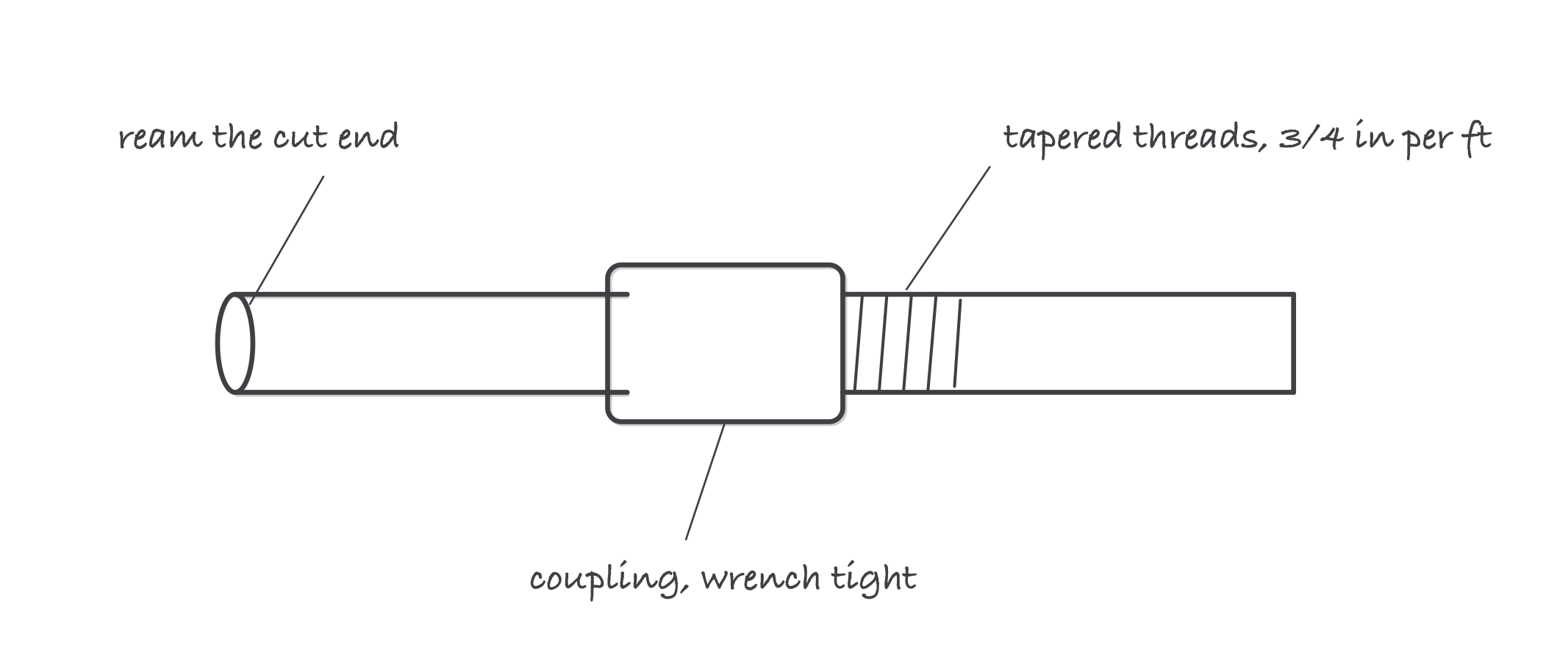
The taper does the work: threads wedge tight enough to carry fault current, which is why hand-tight is not made up at all
Where it bites
- Hand-tight joints pass a glance and fail a fault. The continuity meter reads fine at 200 mA and the joint glows at 2,000 A. Wrench on every joint, and check the ones above ladders that got spun on and forgotten.
- The unreamed cut is invisible damage. The scars it leaves on conductor insulation are inside the pipe where no inspection will ever see them. Ream at the moment of cutting, as one motion.
- Running threads at a coupling. A classic exam distractor and a real-world temptation when two stubs meet and neither can turn. The three-piece coupling exists for exactly this.
- Mixing thread lubricant into bonding. Conductive thread compounds are fine; paint and heavy pipe dope in the threads defeat the electrical joint that the listing assumes.
- Weight is a support problem. The classic pattern supports both RMC and IMC within 3 ft of terminations and every 10 ft, with longer intervals permitted for larger threaded sizes run vertically; your code’s table governs, and the supports lesson collects the family.
Verified requirements
| Where | Expires | Renewal | Continuing education |
|---|---|---|---|
| Texas | Yes | 1 year | 4 hours per annual renewal cycle |
Information comes from issuing-authority sources. Confirm current rules, fees and eligibility with the authority before acting.