Learn · Electrical
Reading NEC Tables
Part of Journeyman Electrician Exam Prep · step 65 of 73 · next: Navigating the Ampacity Tables
In learning paths: Journeyman Electrician Exam Prep
Assumes you know: How the NEC Is Organized
NEC tables are where the Code stops describing and starts dictating numbers, and reading one correctly is a procedure, not a glance: title first, headnotes and conditions second, the body third, footnotes always. Most wrong answers pulled from a correct table come from skipping step one, two, or four.
Why it matters on the job
Conductor sizes, conduit fill, grounding conductor sizes, motor currents: the numbers that size real installations all live in tables, and exams mirror the field by asking you to extract them under time pressure. A tradesperson who reads the whole table, conditions and footnotes included, routinely beats one who memorized values, because the table’s fine print is exactly where question writers and inspectors live.
Anatomy of a table
The title is a filter. Table titles state the conditions under which the values are true. The main ampacity table’s title specifies insulated conductors, not more than three current-carrying conductors, and a 30 °C ambient. Different conditions, different table, or corrections applied, which is the next lesson’s whole subject.
Columns are ratings, rows are sizes. Ampacity tables put conductor size down the rows and temperature rating of the insulation across the columns, with copper and aluminum in separate column groups. Reading the right row is easy; discipline is choosing the right column, because the equipment’s termination rating, not the wire’s insulation, usually decides which column you may use.
Asterisks and footnotes carry law. A footnote on an NEC table is enforceable code, not commentary. The famous example: small-conductor footnotes and 240.4(D) cap the overcurrent protection for 14, 12, and 10 AWG below what the ampacity column alone suggests.
Chapter 9 tables come with Notes. Conduit and tubing fill (Table 1 and the per-raceway tables in Annex C), conductor dimensions (Table 5), and conductor properties (Table 8) are governed by the Notes to Tables at the front of Chapter 9; the notes change how the tables apply, so they are part of the lookup.
Annexes are not code. The informative annexes behind Chapter 9 (including the handy Annex C fill tables) are reference material; enforceable only where an adopting jurisdiction says so, exam-safe only as arithmetic helpers.
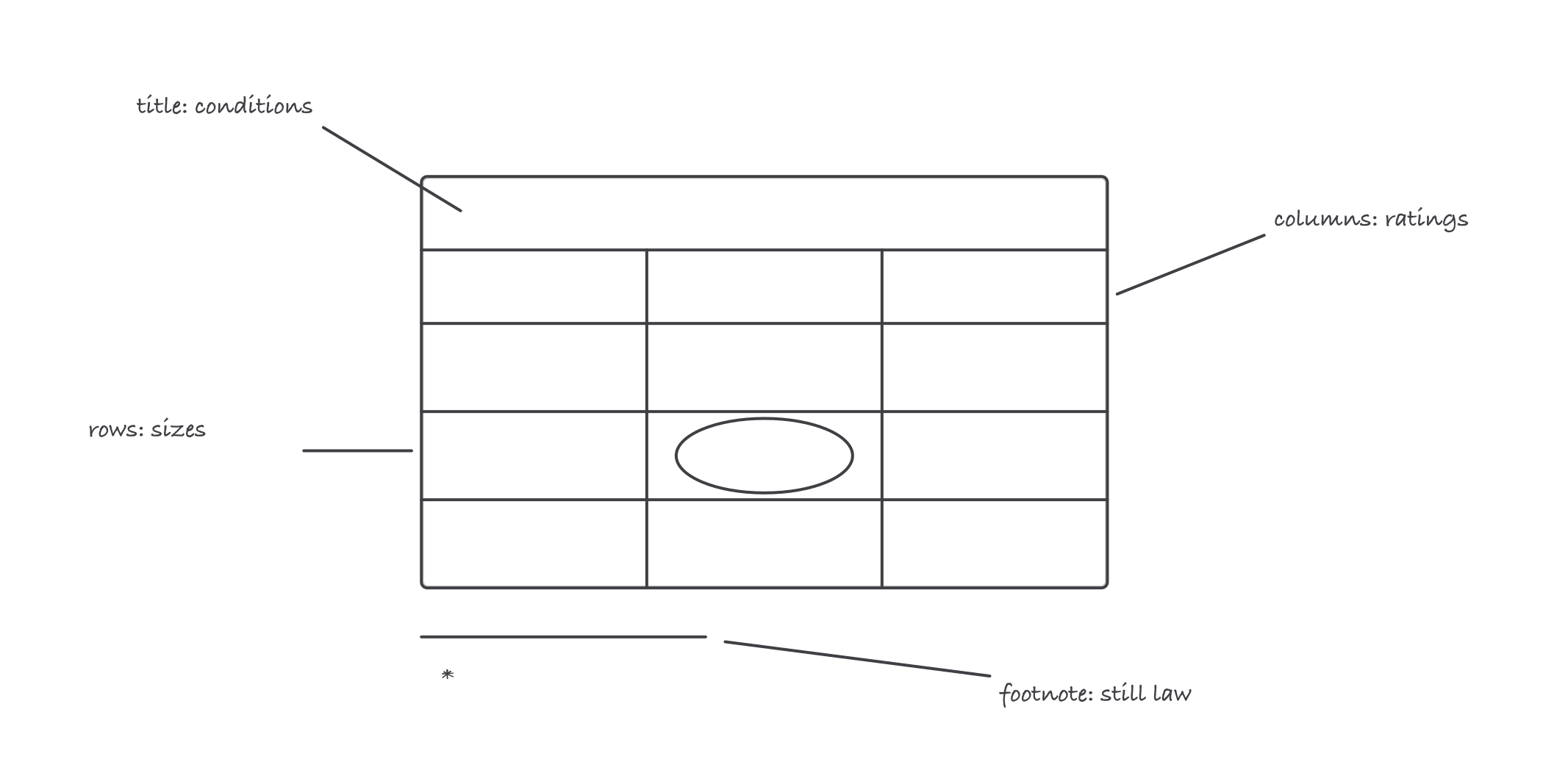
Title, conditions, body, footnote: the value is only true when all four agree
Worked example
Find the ampacity of 8 AWG copper THHN on a circuit whose breaker and lugs are rated 75 °C.
- Table: conductor ampacity under standard conditions is Table 310.16. Check the title’s conditions: three or fewer current-carrying conductors, 30 °C ambient. Our circuit matches, so no corrections.
- Row: 8 AWG, copper side of the table.
- Column: THHN is 90 °C insulation, but the terminations are 75 °C, so the 75 °C column governs the final answer. The row reads 40 A at 60 °C, 50 A at 75 °C, 55 A at 90 °C.
- Answer: 50 A. The 55 A in the 90 °C column is real but usable only as a derating starting point, never as a final ampacity on 75 °C terminations.
Same table, three defensible-looking numbers, one correct answer, and every step was reading, not memory.
Where it bites
- The 90 °C column is bait. It is the biggest number in the row and almost never the final answer, because terminations rated 90 °C are rare. Its legitimate use is as the base for correction and adjustment math.
- Titles quietly exclude your situation. Values for three conductors in a raceway do not cover six; values at 30 °C do not cover an attic. When conditions do not match the title, the table is a starting point plus corrections, not an answer.
- Footnotes outrank the column. Pulling 30 A for 10 AWG from the ampacity column and forgetting the small-conductor cap is the classic table error in both directions, exams and field.
- Chapter 9 Notes change fill answers. Skipping the Notes to Tables, on nipples, on multiconductor cables, produces confident wrong conduit-fill answers.
Exam relevance
Table-extraction questions are guaranteed on journeyman and master exams: ampacity lookups, conduit fill, grounding-conductor sizing, motor tables. The questions are engineered so each wrong choice is a value sitting in the same table, one column over or one footnote ignored. Train the four-step read (title, conditions, body, footnote) until it is automatic, and always ask whose temperature rating governs before choosing a column.
Verified requirements
| Where | Expires | Renewal | Continuing education |
|---|---|---|---|
| Texas | Yes | 1 year | 4 hours per annual renewal cycle |
Information comes from issuing-authority sources. Confirm current rules, fees and eligibility with the authority before acting.