Learn · Electrical
Conductor Types and Insulation
Part of Journeyman Electrician Exam Prep · step 28 of 73 · next: NM Cable
In learning paths: Journeyman Electrician Exam Prep
The letters printed along a conductor’s insulation are a specification you can read like a sentence. Each letter tells you what the insulation is made of, how hot it may run, whether it survives water, and what jacket protects it. Decode THHN, THWN-2, and XHHW-2 and you know where a conductor may live without opening a catalog.
Why it matters on the job
Every wiring method lesson that follows assumes you can match a conductor to its location. Pull a dry-rated wire into an underground raceway and the insulation fails slowly, invisibly, and permanently. Inspectors read the printing on the jacket; so do exam writers, who love giving you a location and four insulation types. The letters are also how ampacity starts: the temperature rating decides which column of the ampacity table the conductor is even allowed to enter.
The letter grammar
Read the letters in order:
- T means thermoplastic insulation. X means cross-linked polyethylene, a thermoset that does not soften with heat.
- H is heat. One H is a 75 °C rating. HH is 90 °C.
- W is water: rated for wet locations. Without a W, the conductor is for dry and damp locations only.
- N is a nylon jacket over the insulation, a tough skin that survives the scrape of a pull.
- -2 raises the wet rating to 90 °C, wet or dry.
Now the common types read themselves. THHN: thermoplastic, 90 °C, nylon jacket, no W, so dry and damp locations only. THWN: thermoplastic, 75 °C wet locations, nylon jacket. THWN-2: the same, but 90 °C wet or dry. XHHW-2: thermoset, 90 °C wet or dry, no nylon because the thicker XLPE is its own armor.
Most building wire on a modern spool is dual-rated and printed THHN/THWN-2: one conductor legal in either world. The trap is old stock or bargain wire marked THHN alone.
Wet is a location, not a weather report
Your code defines locations. Dry is normal indoor space. Damp is protected but moist, a covered porch or an unheated garage slab area. Wet includes anything underground, anything in direct contact with the earth or weather, and, the one that catches people, the inside of any raceway in a wet location. Water condenses and travels inside outdoor and underground conduit, so every conductor in that pipe needs a W.
Temperature rating is headroom, not a license
A 90 °C conductor rarely gets used at its 90 °C ampacity. Terminations on breakers and lugs are typically rated 75 °C, so the final ampacity comes from the 75 °C column. The 90 °C column earns its keep as the starting point for derating: when you stack conductors in a raceway or run through hot attics, you take the adjustment percentages off the 90 °C figure, and the higher start often saves you a wire size. The terminations lesson picks this up; here, just read the rating off the letters.
Worked example
You are pulling a branch circuit through PVC conduit, underground, to a detached garage. Choose from four spools:
- The raceway is underground, so its interior is a wet location. Every conductor needs a W.
- Spool marked THHN only: rejected, no W.
- Spool marked THWN: acceptable, 75 °C wet.
- Spool marked THHN/THWN-2: acceptable, and it enters the ampacity table at 90 °C for any derating math.
- Spool marked XHHW-2: acceptable, 90 °C wet, the thermoset choice where pulls are long or abrasive.
You pull the THHN/THWN-2 because it is on the truck, and you record the -2 rating because the derating starts there.
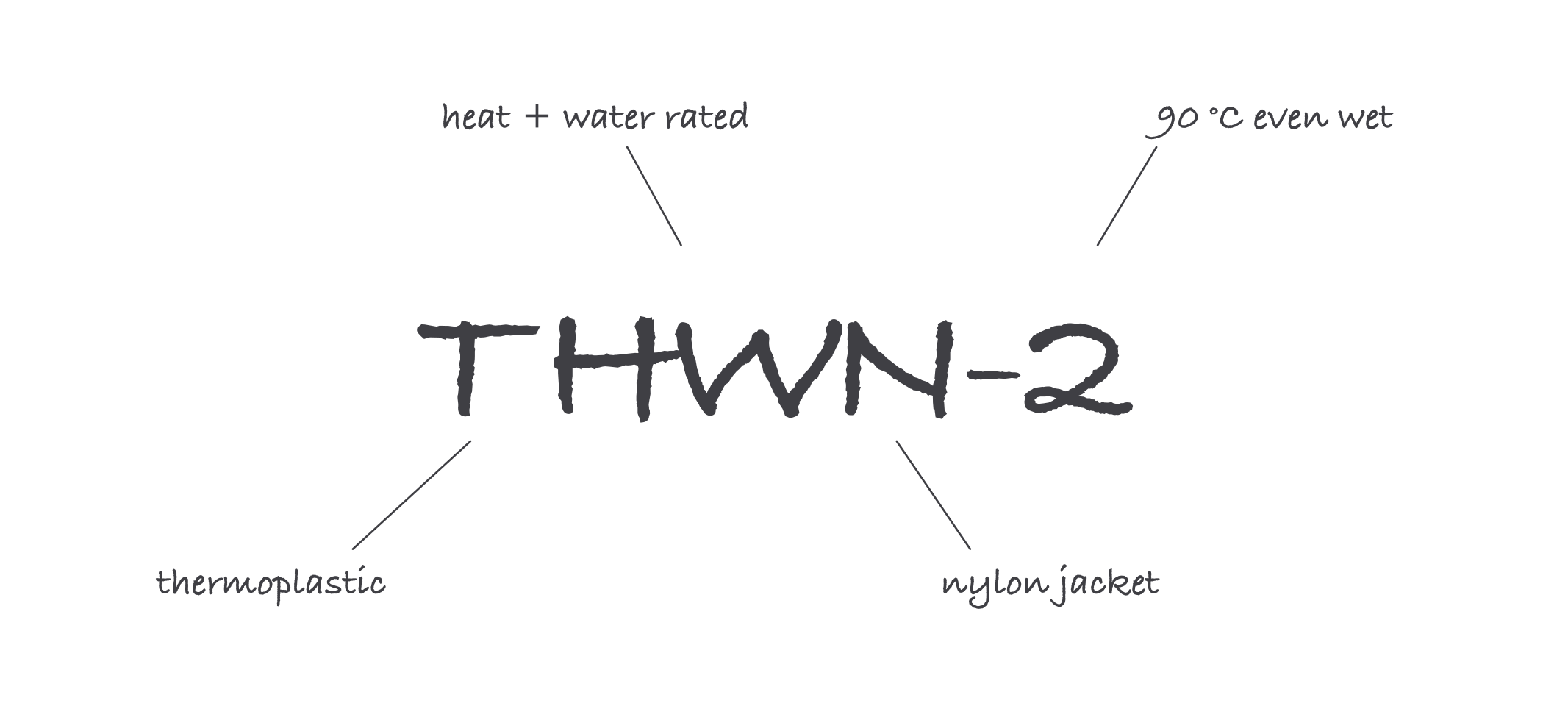
The marking is a sentence: material, temperature, water, jacket, and the -2 that makes 90 °C hold in the wet
Where it bites
- No W, no water. THHN alone cannot enter an outdoor or underground raceway, and dual-rated wire only counts if the printing actually says so. Read the jacket, not the box.
- The inside of outdoor conduit is wet. The classic miss is treating a rain-tight raceway as a dry location. Rain-tight keeps the rain out; condensation still happens inside.
- 90 °C is where derating starts, not where ampacity ends. Standard 75 °C terminations cap the final number. Exam questions bait you into reading the 90 °C column straight across.
- Cord letters are a different language. SO, SJ, and friends on flexible cords follow their own marking system; do not decode them with building-wire grammar.
Verified requirements
| Where | Expires | Renewal | Continuing education |
|---|---|---|---|
| Texas | Yes | 1 year | 4 hours per annual renewal cycle |
Information comes from issuing-authority sources. Confirm current rules, fees and eligibility with the authority before acting.