Learn · Electrical
Terminations and Splices
Part of Journeyman Electrician Exam Prep · step 41 of 73 · next: GFCI Protection
In learning paths: Journeyman Electrician Exam Prep
Assumes you know: Boxes and Enclosures
Electrical systems fail at their connections. A termination is a mechanical joint asked to carry current for decades, and its quality comes down to three controllable things: the right torque, the right conductor material for the device, and a listed connector used the way its listing says.
Why it matters on the job
A loose termination does not fail like a blown fuse; it fails like a slow fire. Resistance rises, the joint heats, heating loosens it further, and the end state is the arcing fault that the AFCI lesson later in this subject exists to catch. Torque values and copper-aluminum rules are also modern exam material: the days when “snug plus a grunt” was an accepted answer are over.
Torque is a specification, not a feel
Every breaker, lug, and device ships with a torque value, printed on the label or in the listing, typically in pound-inches. That number is the joint’s design: enough clamping force to keep resistance low through years of heat cycles, not so much that the screw strips or the conductor flows. The code-typical pattern now requires terminations to be tightened to the marked torque with a calibrated tool: a torque screwdriver for devices, a torque wrench for large lugs.
Both failure directions are real. Undertorque leaves a high-resistance joint that becomes a heater. Overtorque strips threads, cracks lugs, and on fine-stranded or aluminum conductors squeezes the metal until the clamping force relaxes, arriving at the same loose joint from the other side.
Copper and aluminum are different metals with different rules
Terminal listings are marked for conductor material: CU for copper only, AL-CU for either on lugs, and CO/ALR for the special devices listed for aluminum branch-circuit wiring. The rules that follow:
- Never land copper and aluminum under the same screw unless the connector is specifically listed for the combination. Dissimilar metals in contact corrode galvanically, and the joint rots invisibly.
- Aluminum runs larger sizes for the same ampacity, is prepped per the connector maker’s instructions, wire-brushed, and joined with antioxidant compound where the instructions call for it.
- Aluminum creeps: it flows away from clamping pressure over time, which is why its terminations are torque-critical and why re-terminating old aluminum branch circuits uses listed connectors made for the job, not ordinary devices.
Splices: listed connectors, accessible boxes
A splice is a termination between conductors, and two rules bound it. First, the connector must be listed for the conductors in it: twist-on wire connectors sized per their chart of allowed combinations, push-in connectors within their wire counts and types, split-bolts for the large stuff. Second, every splice lives in an accessible box: no splices inside raceways, no junction boxes buried behind drywall. Pigtailing, one solid splice feeding a short lead to each device, concentrates the circuit’s integrity into joints you make once, well, instead of spreading it across every device terminal.
Worked example
Land a 6 AWG copper feeder on a 60 A breaker, then splice a device pigtail:
- Read the breaker label: the lug lists AL-CU and a torque of, say, 45 lb-in for this wire size. The label’s number wins over any habit.
- Strip to the lug’s gauge mark, insert fully, set the torque screwdriver to 45 lb-in, tighten to the click. No re-checking by feel afterward: the click was the specification.
- In the device box: three 12 AWG copper conductors under one twist-on connector. Check the connector’s listed range covers three 12s, twist on until tight, pull-test each conductor.
- If that circuit had been old aluminum: CO/ALR device or a listed transition connector, never the standard receptacle’s CU-only screws.
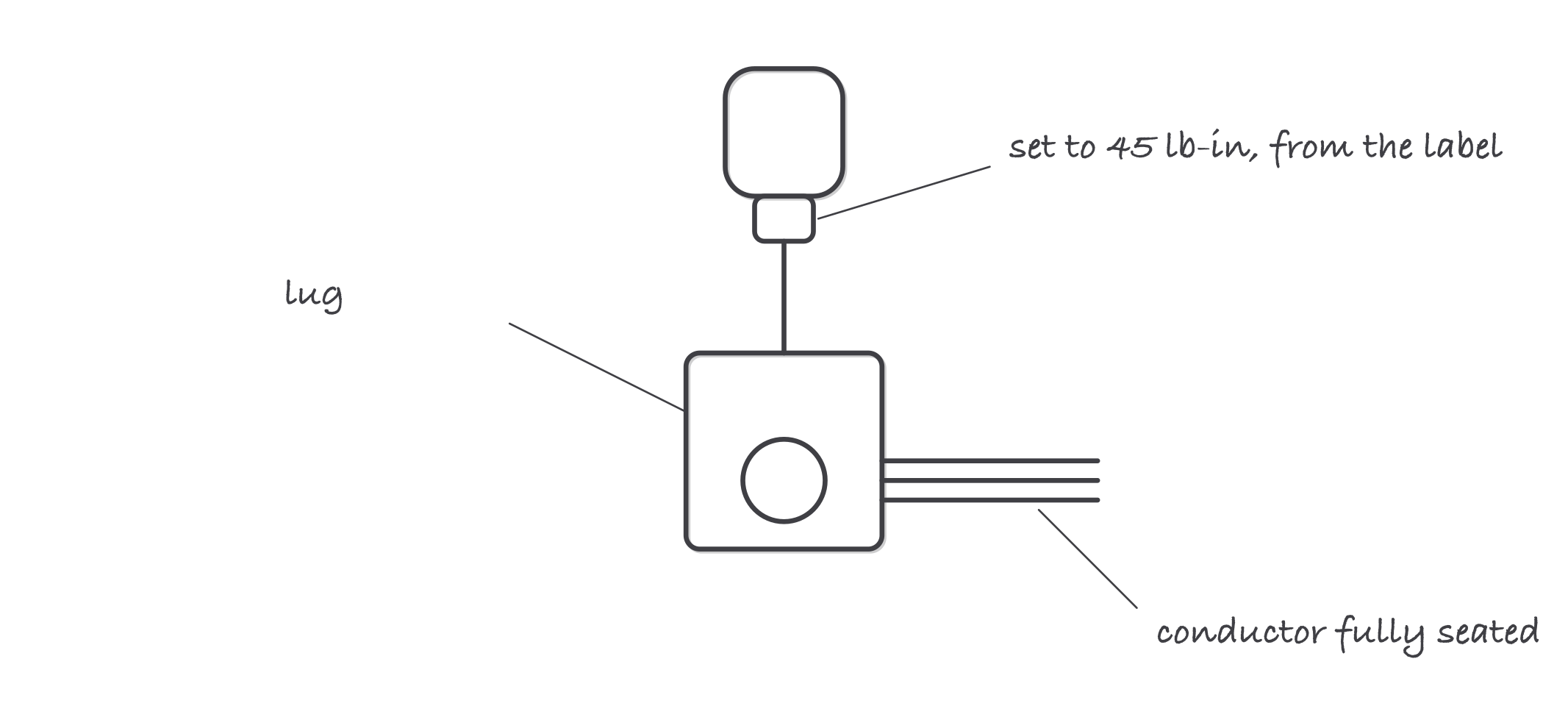
The number on the label is the joint’s design: a calibrated driver hits it, and both directions away from it end in the same loose, hot joint
Where it bites
- The calibrated elbow. Studies of field terminations keep finding most of them out of spec, both directions. The torque tool is now the code-typical requirement, not a luxury.
- One screw, two metals. Copper pigtail and aluminum branch wire under a plain wirenut is the classic aluminum-remediation mistake: the connector must be listed for the combination.
- Wirenut by color memory. The color families overlap between manufacturers; the chart on the box is the listing. Three 12s in a connector rated for two is a failed splice wearing a cap.
- The buried junction box. Every splice stays accessible. Drywalling over a box converts a code violation into a future demolition job.
- Re-tightening torqued lugs. Coming back later and giving everything another quarter turn overtorques every joint that was right. Torque once, to the number, and leave it.
Verified requirements
| Where | Expires | Renewal | Continuing education |
|---|---|---|---|
| Texas | Yes | 1 year | 4 hours per annual renewal cycle |
Information comes from issuing-authority sources. Confirm current rules, fees and eligibility with the authority before acting.