Learn · Electrical
NM Cable
Part of Journeyman Electrician Exam Prep · step 29 of 73 · next: MC and AC Cable
In learning paths: Journeyman Electrician Exam Prep
Assumes you know: Conductor Types and Insulation
NM cable, nonmetallic-sheathed cable, is a factory-made assembly: two or three insulated conductors plus a bare equipment ground, wrapped in a plastic jacket. It is the fastest wiring method there is, and its entire rulebook flows from one fact: the jacket is the only protection the conductors get.
Why it matters on the job
NM, sold under the trade name Romex, wires most of the houses in America. If you work residential, you will install miles of it, and inspectors check the same three things every time: where you ran it, how you secured it, and how you protected it from nails and screws. Exam outlines lean on NM heavily for the same reason: its limits are specific, numeric, and easy to test.
Where NM lives, and where it cannot
NM belongs in the dry, finished spaces of dwellings: inside framed walls, ceilings, and floors of houses and similar buildings. Where it cannot go follows from the soft jacket:
- Not in wet or damp locations. No outdoor runs, no underground use, not embedded in masonry or concrete. Even inside conduit outdoors it is barred, because the inside of that conduit is a wet location.
- Not where exposed to physical damage unless supplemented with protection.
- Not in most commercial and industrial construction. Where the building type or the location rules NM out, its armored cousin MC steps in; that is the next lesson.
The 60 °C rule
Modern NM-B contains 90 °C conductors, but the code holds NM ampacity to the 60 °C column: 15 A for 14 AWG, 20 A for 12 AWG, 30 A for 10 AWG copper. The 90 °C insulation exists for derating headroom in hot attics and bundled runs, exactly like the raceway conductors in the insulation-letters lesson. The finish line is still the 60 °C number.
Securing and protecting the run
The classic securing pattern, and the one your code’s tables state exactly, is: secured within 12 in of every box and at intervals not over 4.5 ft along the run. Staples go flat over the cable, snug, never crushing. Two-conductor cable lies flat under the staple; stacking multiple cables under one staple invites damage and, when bundled tight for more than a couple of feet, triggers derating.
Through framing, NM is protected by geometry: bored holes keep the cable at least 1.25 in from the framing edge, and where that setback cannot be held, a steel nail plate takes the hit instead of the cable. Running through metal studs adds listed bushings so the cut edge cannot saw the jacket.
Worked example
A 12/2 NM home run leaves a device box, runs 14 ft across studs, and lands in the panel. Count the staples:
- One staple within 12 in of the device box.
- One staple within 12 in of the panel connector.
- Those two staples sit about 12 ft apart. Maximum interval is 4.5 ft, so the span needs intermediate staples: 12 ÷ 4.5 = 2.7, round up to 3.
- Total: 2 end staples + 3 intermediate = 5 staples, spaced roughly every 3 ft. More is fine; the table sets the maximum gap, not the rhythm.
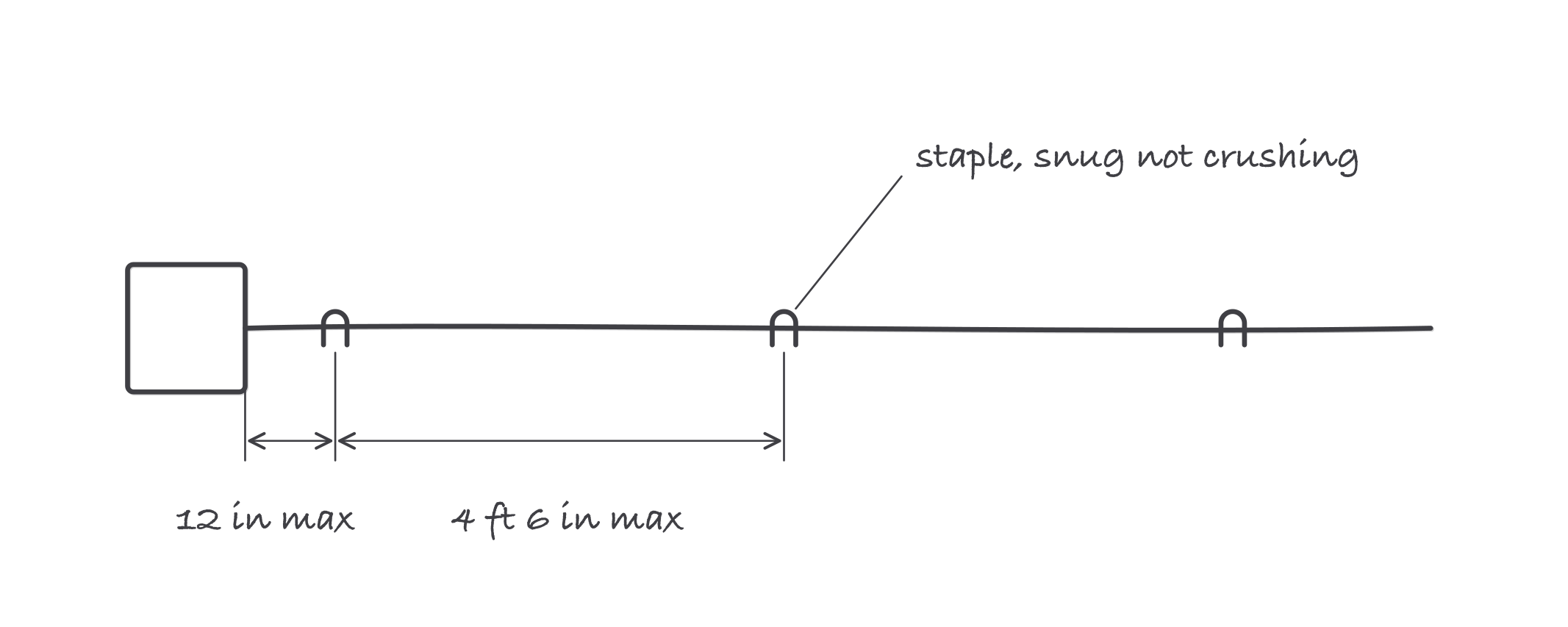
The two numbers inspectors pace off: a staple within 12 in of every box, then never more than 4.5 ft between staples
Where it bites
- The garage and the outside wall are where NM habits fail. Damp basements below grade, exterior runs, and conduit stubs outdoors all demand a different method or a wet-rated conductor. “It is in pipe” does not cure NM outdoors.
- 60 °C, always. The most common NM exam trap prices 12 AWG at its 90 °C ampacity. The insulation is 90 °C; the cable is not.
- The overdriven staple is a slow fire. A staple crushed into the jacket can arc years later, and it is a leading cause of the AFCI trips covered later in this subject. Snug, not buried.
- 1.25 in or a nail plate, no third option. Drywall screws find shallow cable with unerring aim. Measure the setback where the hole is bored close to the stud face.
- Support rules are code-typical patterns. The 12 in and 4.5 ft figures are the classic table values; your adopted code’s tables govern the numbers you certify to.
Verified requirements
| Where | Expires | Renewal | Continuing education |
|---|---|---|---|
| Texas | Yes | 1 year | 4 hours per annual renewal cycle |
Information comes from issuing-authority sources. Confirm current rules, fees and eligibility with the authority before acting.