Learn · HVAC/R
Evaporators
Part of EPA 608: All Four Exams · step 7 of 20 · next: How Superheat Works
Part of HVAC Technician from Zero · step 7 of 49 · next: How Superheat Works
In learning paths: EPA 608: All Four Exams · HVAC Technician from Zero
Assumes you know: How the Refrigeration Cycle Works
The evaporator is where the system actually earns its keep: the cold coil where refrigerant boils, drinking heat out of the indoor air. Everything else exists to keep this coil fed and this boil going. If the job is moving heat, the evaporator is the intake.
Why it matters on the job
Comfort complaints live here. Warm air, weak air, ice on the pipes, water on the floor, all evaporator-side stories, and most of them are airflow stories wearing refrigerant costumes. The technician who checks filters, blower and coil face before reaching for gauges fixes more systems per day than the one who starts by attaching hoses.
The concept
Cold refrigerant mixture enters at the metering device’s outlet, say 40 °F at 118 psig on R-410A, and 75 °F room air blows across the coil. Heat pours downhill from air to refrigerant, and the refrigerant spends that heat boiling, not warming: through most of the coil it stays pinned at 40 °F saturation while liquid steadily becomes vapor. Near the outlet the last droplet boils off, the vapor superheats a few degrees, and the compressor receives what it needs: cool, dry vapor.
The coil does a second job as a side effect: air cooled below its dew point sheds moisture, which is why the coil has a drain pan and why air conditioning dehumidifies. In humid climates that latent work is a large share of the machine’s effort.
Worked example
Feel it from the airflow side: return air enters at 75 °F, supply air leaves at about 55 °F on a typical system, a 20-degree drop across a 40 °F coil. Now choke the airflow with a filthy filter: less warm air crossing means less heat feeding the boil, the coil pulls colder, drops below 32 °F, and condensate freezes on the fins. Ice insulates the coil, airflow falls further, and the spiral ends in a block of ice and a “no cooling” call. The gauges will show low suction pressure, but the cause was a five-dollar filter.
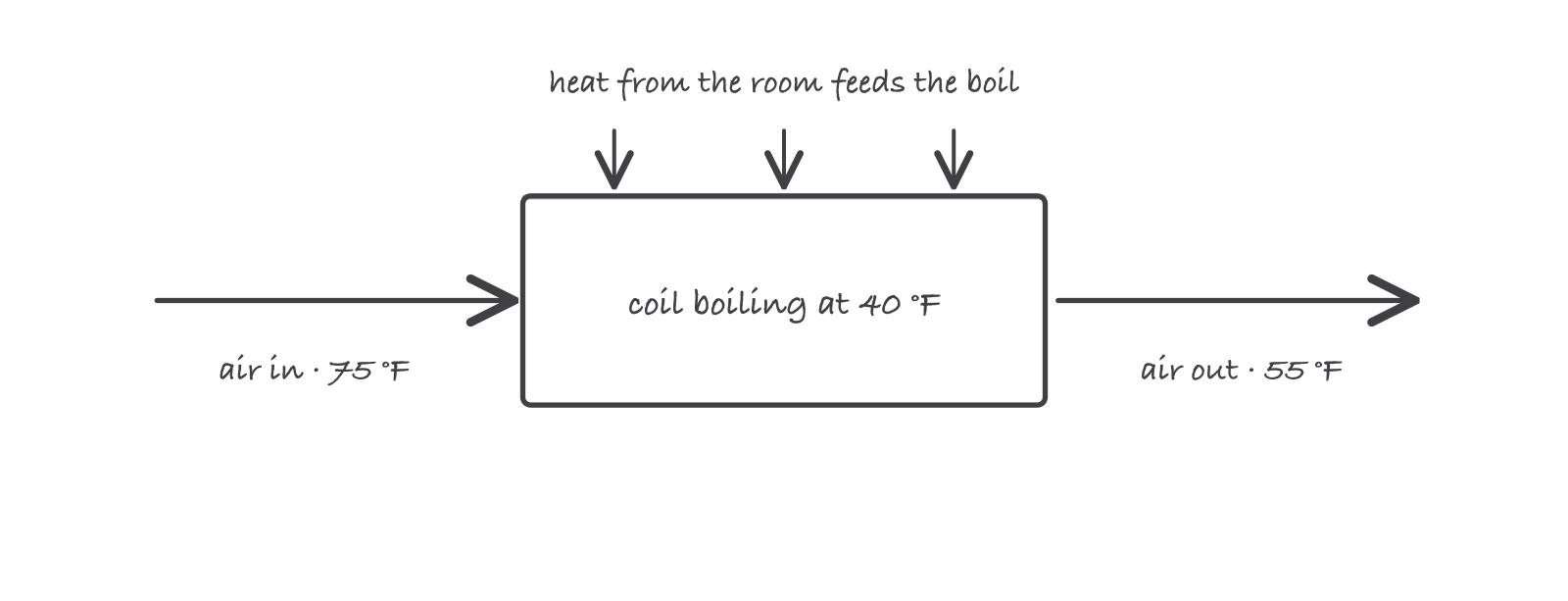
The intake of the heat conveyor: warm air feeds the boil
Where it bites
- Ice means look at airflow first, not refrigerant. Filters, blower, coil face, ducts. Low charge can also do it, but airflow is the common killer.
- A cold coil is not the goal, a fed coil is. Colder-than-normal suction usually means starved airflow or refrigerant, not extra performance.
- Latent vs sensible matters: in humid air the “missing” temperature drop may be doing dehumidification work. Judge coils with both dry-bulb and humidity in mind.
Exam relevance
The evaporator ties together the exam’s favourite threads: PT behaviour in the coil, where superheat is created and measured, the airflow-icing chain, and condensate management.