Learn · HVAC/R
Charging by Superheat and Subcooling
Part of HVAC Technician from Zero · step 39 of 49 · next: Refrigerant Recovery
In learning paths: HVAC Technician from Zero
Assumes you know: How Superheat Works, How Subcooling Works, Evacuation and Vacuum
Charging is setting the amount of refrigerant in a system, and the two field methods that verify it are named for the numbers they target: superheat charging for fixed-orifice systems, subcooling charging for TXV systems. Which method applies is decided by the metering device, and using the wrong one produces a confidently mischarged system.
Why it matters on the job
Charge is the most commonly wrong thing on the machines you will touch, and “add a little gas” is the most common malpractice in the trade. Undercharge starves the evaporator and can overheat the compressor; overcharge floods, raises head pressure, and can slug liquid into the compressor. How Superheat Works and How Subcooling Works gave you the two measurements; this lesson is the procedure that turns them into a correct charge.
Which method, and why
Fixed orifice: charge by superheat. A fixed orifice cannot adjust flow, so evaporator feeding, and therefore superheat, moves directly with charge. You compare measured superheat to a target superheat (from the manufacturer’s charging chart, based on indoor and outdoor conditions). Superheat too high: the coil is starving, add refrigerant. Too low: flooding, recover some.
TXV: charge by subcooling. A TXV holds superheat roughly constant by design, so superheat stops telling you about charge. Subcooling takes over: it reflects the liquid stacked in the condenser. Compare measured subcooling to the nameplate target. Low subcooling: add. High: recover.
Both methods assume a machine worth measuring: correct airflow, clean coils, stable run time. Charge is the last thing you set, never the first thing you blame.
Worked example: a TXV system by subcooling
R-410A condensing unit, TXV indoor coil, nameplate subcooling target 10 °F. After 15 minutes of steady running:
- Liquid line pressure at the service valve: 365 psig, which saturates at 110 °F on the R-410A scale. The condenser is condensing at 110 °F.
- Liquid line temperature, probe strapped and insulated on the pipe at the same point: 100 °F.
- Subcooling = 110 − 100 = 10 °F. On target: the charge is right. Leave it alone.
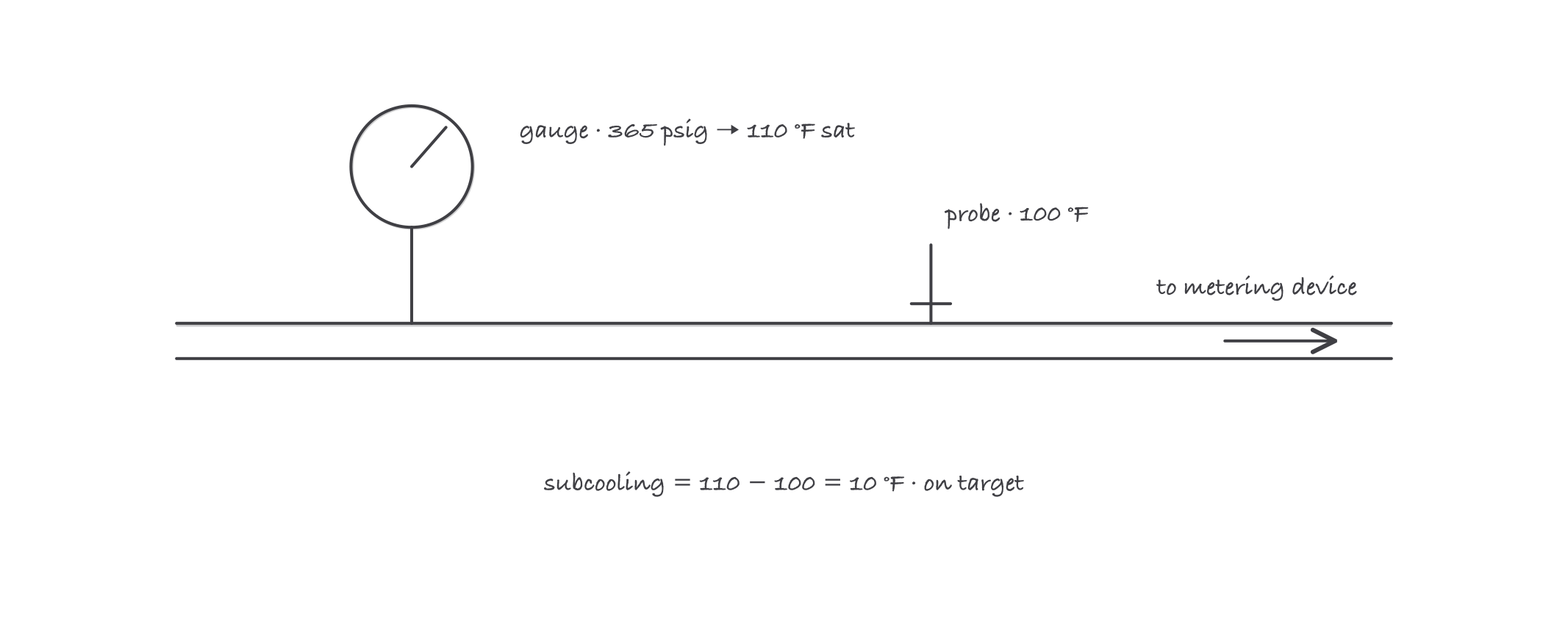
The whole verdict in one subtraction: saturation from the gauge, reality from the probe, subcooling in between
Had the probe read 106 °F, subcooling would be 4 °F, low: refrigerant goes in slowly, vapor to the suction side on a running system, until subcooling walks up to 10. Had it read 92 °F, subcooling would be 18 °F, high: recover refrigerant out. Never vent it; Refrigerant Recovery covers the legal and practical side of removing charge.
For contrast, the fixed-orifice version of this check reads the low side: suction 118 psig, saturation 40 °F, suction line temperature 52 °F, superheat = 52 − 40 = 12 °F, compared against the chart’s target for the day’s conditions rather than a single nameplate number.
Where it bites
- Charging a TXV system to superheat is the classic wrong procedure. The valve fights you: superheat holds while you overcharge, then the system floods. Metering device first, method second, always.
- Weighing beats adjusting whenever a full charge goes in. New installs, recharges after repair, and inverter and mini-split equipment are charged by scale to the nameplate weight plus the line set allowance. Superheat and subcooling then verify. Ductless Mini-Splits explains why gauge-method assumptions fail on inverter machines.
- Airflow problems impersonate charge problems. A starved coil from a dirty filter shows low suction pressure just like an undercharge. Fix and verify airflow before touching charge, or you will charge the system to compensate for a filter, and flood it once someone changes that filter.
- Give the machine time to tell the truth. Every adjustment needs 10 to 15 minutes to stabilize before the next reading. Chasing numbers in real time overshoots in both directions.
- Targets come from the equipment, not from folklore. Nameplate subcooling and the manufacturer’s superheat chart govern. 10 °F is this example’s target, not a universal constant.