Learn · HVAC/R
Compressors
Part of EPA 608: All Four Exams · step 4 of 20 · next: Condensers
Part of HVAC Technician from Zero · step 4 of 49 · next: Condensers
In learning paths: EPA 608: All Four Exams · HVAC Technician from Zero
Assumes you know: How the Refrigeration Cycle Works
The compressor is the pump that makes the whole cycle go: it takes in cool low-pressure vapor and discharges hot high-pressure vapor. Everything else in the system is plumbing and heat exchange; the compressor is the only component that spends real energy, and it is the one you least want to kill.
Why it matters on the job
The compressor is the most expensive part in the box, and most compressor deaths are homicides: liquid refrigerant washing out its oil, slugging its valves, or a starved system running it hot. Superheat exists as a discipline largely to protect this one component. Understand what it needs, cool, dry vapor, in the right amount, and half of good service practice explains itself.
The concept
Compression squeezes the vapor into a smaller volume, which raises its pressure, and, unavoidably, its temperature. That heating is not a side effect to regret; it is the enabling trick. Indoor heat was absorbed at 40 °F. Outdoors it is 95 °F, and heat will not flow from 40 into 95. Compressing the vapor lifts it to a condensing temperature around 110 °F, now hotter than outdoors, so the collected heat can leave. The compressor buys the temperature headroom the condenser spends.
The common types you will meet: reciprocating (pistons, rugged, serviceable, the classic), scroll (two spirals, quiet, efficient, dominant in modern residential), rotary (small units, window units, minisplits), and beyond them screw and centrifugal machines in commercial plant. Different mechanics, identical job.
Worked example
Follow the numbers across a running R-410A compressor: suction side 118 psig with the vapor at about 50 °F after its superheat. Discharge side 365 psig, and the discharge line, if you clamp it, might read 160 °F or more: saturation at 365 psig is about 110 °F, and compression adds its own superheat on top. That hot discharge line is normal; a discharge approaching 225 °F is a system crying for help (poor cooling of the compressor, high compression ratio, starved suction).
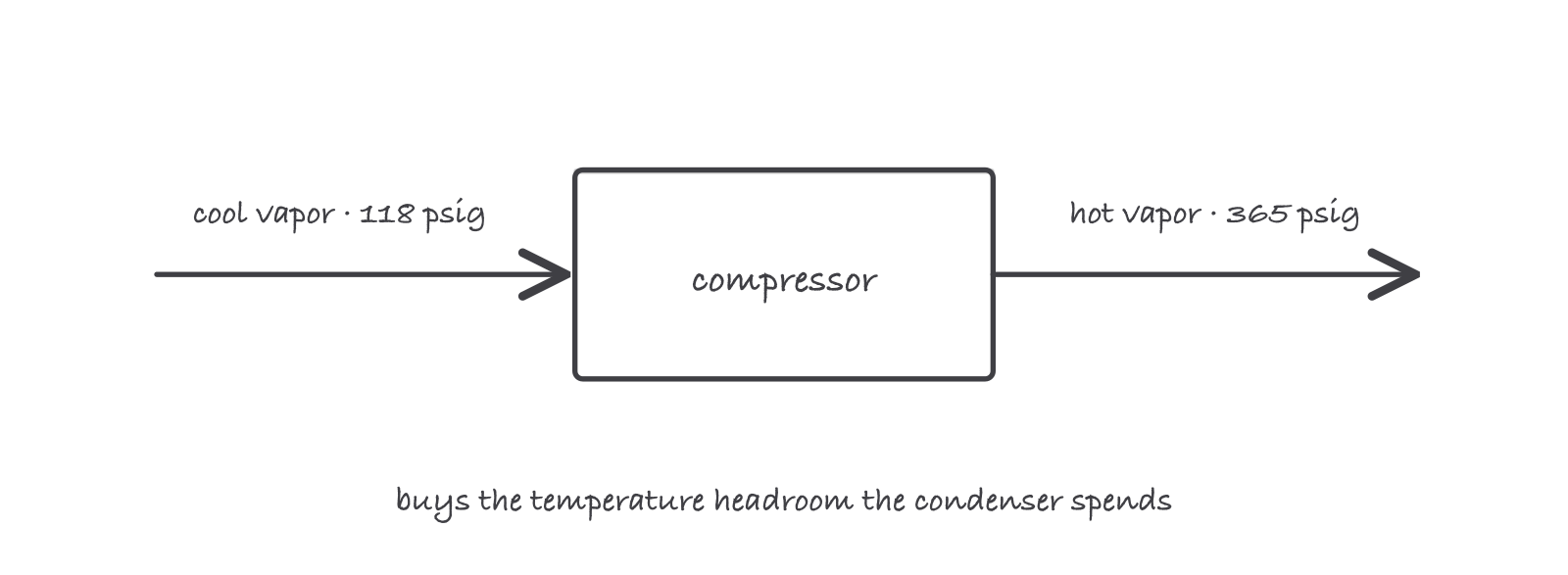
Compression buys the temperature headroom the condenser spends
Where it bites
- Liquid kills. Liquid cannot compress; a slug of it hits the valves like a hammer, and even a mist steadily strips the oil. Low superheat readings are compressor-protection alarms, not curiosities.
- The compressor is also cooled by the refrigerant it pumps. A starved system (high superheat, low flow) can overheat windings even while “cooling fine” on a mild day.
- Diagnose around it before condemning it. Most “failed compressors” are found guilty at autopsy of dying from a system problem that is still there, waiting for the replacement.
Exam relevance
Exams test the compressor’s role (vapor only, raises pressure and temperature), the types, and diagnosis logic: what high or low discharge conditions mean, and why superheat matters to compressor life.