Business · General Contracting
Dispute Resolution
Assumes you know: Delays, Claims and Notice Requirements
Dispute resolution is a ladder, and every rung up costs more money, more time and more of the relationship than the one below it. Negotiation sits at the bottom, then mediation, then arbitration or litigation at the top. The dispute clause in your contract, agreed before anyone was angry, decides which rungs are available and in what order. Read it before you need it. This lesson is business practice, not legal advice: procedure and enforceability vary by state and by contract.
Why it matters on the job
Disputes are a cost center with no markup. Every hour spent fighting is unbillable, every dollar of legal spend comes out of profit, and a reputation for litigating follows you into the next bid list. The contractor’s goal is not to win disputes; it is to resolve them at the lowest possible rung, and the skills that do that, documentation, notice discipline and early direct talk, are project management skills, not courtroom skills.
The rungs, bottom to top
Negotiation. The parties talk, usually principal to principal, and settle. Cost: your time. The overwhelming majority of construction disagreements should die here, and whether they can depends on what you bring: a change order log, daily logs and photographs turn an argument about memory into a conversation about records. Many contracts formalize this rung: a senior-executive meeting within a set period is a common prerequisite before anyone may escalate.
Mediation. A neutral third party works with both sides toward a voluntary settlement. The mediator decides nothing and forces nothing; a good one reality-tests each side’s case in private sessions until a number emerges. Mediation is confidential, comparatively cheap and fast, and settles most disputes that reach it. Many standard construction contracts make mediation a required step before arbitration or litigation.
Arbitration. A private judge, often a construction professional, hears evidence and issues a decision. Binding arbitration is exactly that: the award is final, enforceable in court, and appeal rights are extremely narrow, even for a decision you believe is flatly wrong. Arbitration is usually faster and more private than court, though on complex cases its costs approach litigation: you are paying the arbitrator by the hour.
Litigation. Public court: pleadings, discovery, motions, possibly a jury, and appeals. The most expensive and slowest rung, measured in years, but it comes with full appellate rights and the court’s power to compel evidence and join parties. Whether your disputes default to arbitration or litigation is set by your contract’s dispute clause, so you are choosing a forum every time you sign.
Two practical notes. First, dispute clauses commonly require the work to continue while the dispute is resolved; downing tools over a payment fight can itself be a breach. Second, mechanics lien rights operate on their own statutory track with strict deadlines that do not pause for negotiation; the lien subject covers them, but never let a friendly negotiation run your lien clock out silently.
Worked example: choosing the rung
You hold a documented $48,000 claim for owner-caused rework. Rough economics: negotiation costs a day of your time. Mediation might run each side a few thousand dollars in fees and preparation. Arbitration or litigation of a claim this size can consume $30,000 or more per side in a matter of months, plus a year of distraction. At the top rungs, even a full win nets less than a decent negotiated settlement, which is exactly why documented contractors settle low on the ladder: the records make the outcome predictable, and predictable outcomes settle.
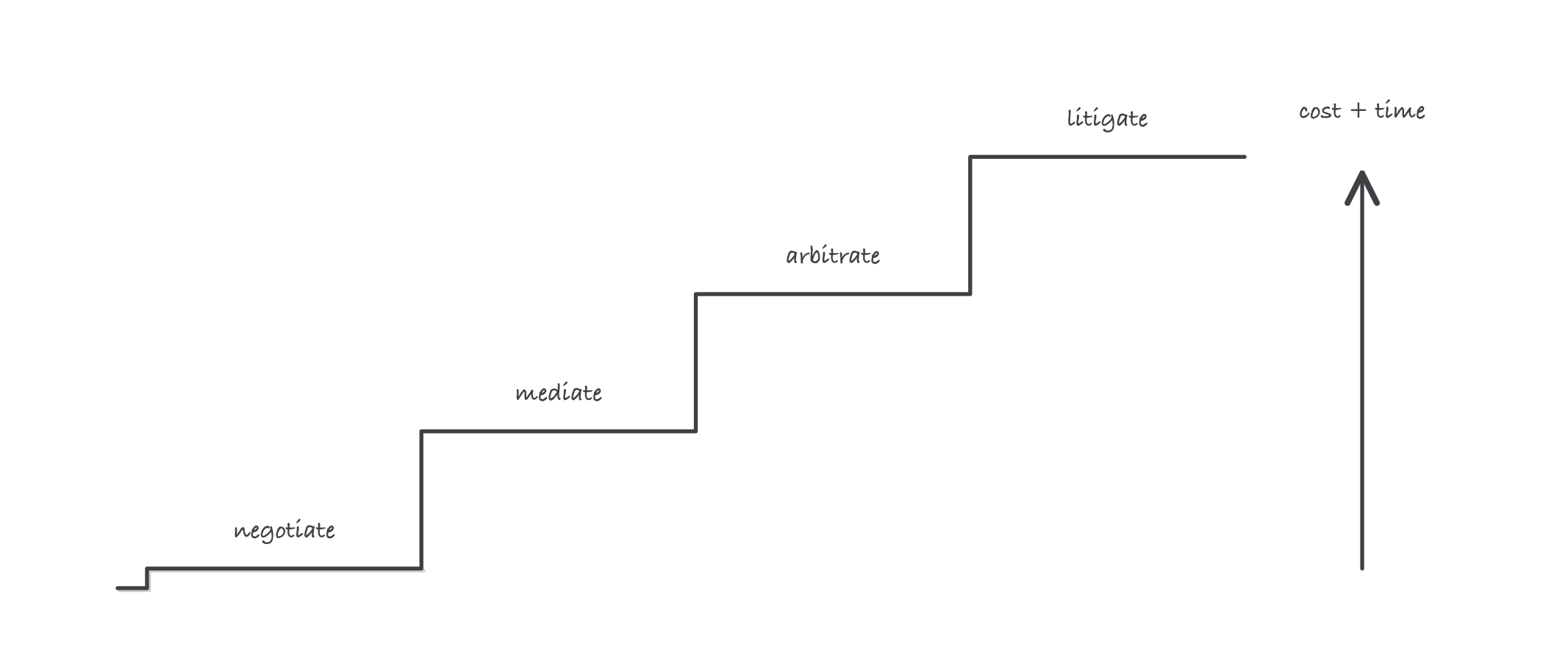
Each rung up decides more finally and costs more: resolve low, escalate only on purpose
Where it bites
- Skipping a required step. If the contract requires mediation first and you file for arbitration, expect to be sent back down the ladder, having paid for the detour.
- Signing binding arbitration without noticing. You waived a jury and most appeal rights on the day you signed, not the day the dispute arose. That can be a fine trade, but make it knowingly.
- Stopping work to force payment. Check the continuation clause and your suspension rights first; the contractor who walks off can convert a winning payment claim into a losing default.
- Escalating on emotion. The question is never “am I right”; it is “what does the next rung cost against what it can recover.” Run the numbers the way you run an estimate.
Exam relevance
Business and law exams test the ladder in order: the difference between mediation and arbitration, what binding means, which methods are private and voluntary, and how contract clauses dictate the sequence. A recurring question pattern gives you a dispute clause and asks the required first step; the answer is read off the clause, not chosen by preference.