Business · General Contracting
Change Orders
Assumes you know: Construction Contract Fundamentals
A change order is a written amendment to the contract: it changes the scope, the price, the time, or all three, and it is signed by the same parties who signed the original agreement. The discipline that keeps contractors solvent fits in one sentence: the change is written, priced and signed before the changed work is performed. Every horror story about unpaid extras is a story about doing those steps in the wrong order.
Why it matters on the job
Changes are where project profit is won or lost. The base contract was bid in competition; changes are priced alone. Handled with discipline, they are fairly priced work. Handled loosely, “go ahead and we’ll sort out the paperwork” becomes a stack of disputed invoices, and disputed invoices at the end of a job settle for cents on the dollar, because by then the leverage is gone: the work is in the wall and the owner has the money.
The sequence: written, priced, signed, then build
- Written. The change is described on paper: what is added, deleted or modified, referencing drawings or specs. A description both sides can read beats a conversation both sides remember differently.
- Priced. Cost of the change, built up the same way you estimate anything: labor, material, equipment, subcontractor quotes, then overhead and profit markup at the rate the contract allows. Include the schedule impact in days, because time is money you can never claim retroactively.
- Signed. By someone with authority to bind the owner. The contract names who that is. A superintendent’s nod, an architect’s email, a tenant’s enthusiasm: none of these is a signature from the named party.
- Then the work. Not before.
The honest exception is the construction change directive or written work directive: most contracts let the owner direct changed work before price agreement, with pricing resolved by a contract formula. That is still a written, signed instrument. It is the contract’s own pressure valve, and it is nothing like proceeding on a verbal.
Worked example: pricing a change
Mid-project, the owner moves a restroom wall, adding plumbing rework and 16 feet of new wall. You price it the day it is raised:
- Labor: 40 hours at $85 per hour = $3,400
- Materials: $3,800
- Subtotal of direct cost: $7,200
- Overhead and profit at the contract’s 15 percent: $7,200 × 0.15 = $1,080
- Change order total: $8,280, plus 2 calendar days added to the completion date
The owner signs Tuesday; demolition starts Wednesday. Compare the alternative timeline: the crew “just handles it” in March, you invoice an unpriced extra in July, and the owner’s memory of what was asked for has shrunk by half.
Time is part of the price
Every change order states its schedule impact, even when it is zero days. A signed change order that is silent on time can be read as your agreement that the change costs no time, and ten silent change orders later you are defending a delay you granted away one signature at a time. Where the accumulation of many small changes disrupts the whole job, flag cumulative impact in writing as it develops, not at closeout.
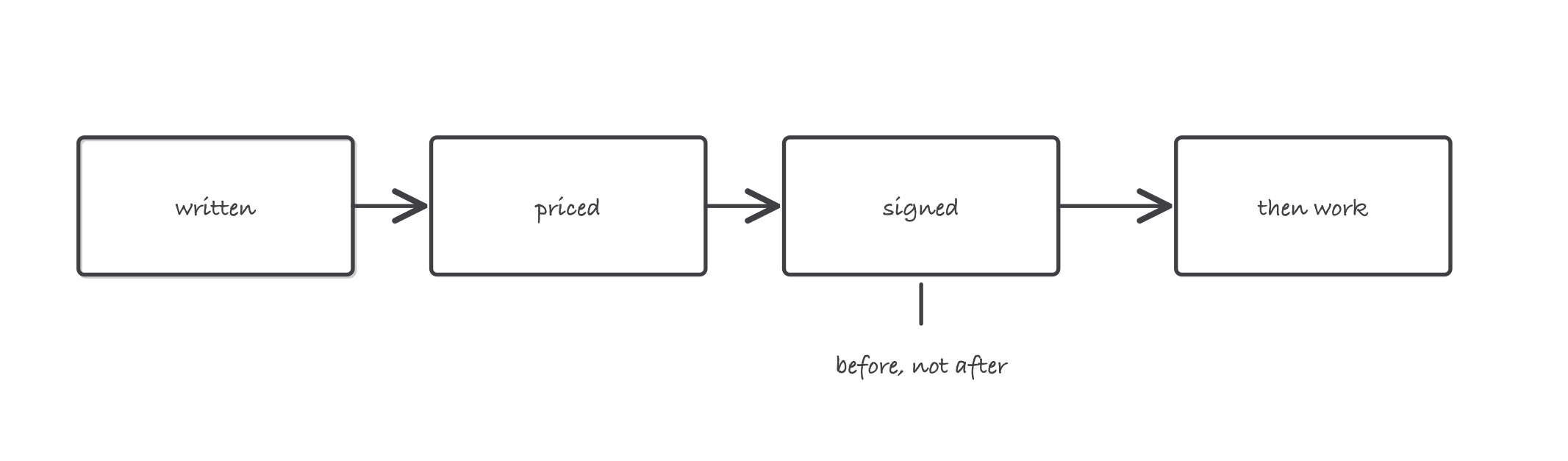
The order is the discipline: paper, price and signatures come before the crew does
Where it bites
- Verbal go-aheads. The person who said “just do it” changes jobs, and their replacement sees only an invoice for work nobody authorized. If you must move before signatures, get a written directive under the contract’s directive clause, and confirm every field conversation by email the same day.
- Signing away time. Zero-days-by-silence is the quietest way to lose a delay claim. Write the days on every CO.
- Pricing changes at bid-rate speed. Changed work is disruptive: it interrupts crews, breaks sequence and arrives with worse productivity than base work. Price the conditions, not just the quantities.
- Letting the log lag. Keep a change order log: number, description, price, days, status. The job where nobody can say what CO-14 covered is the job heading to mediation.
Exam relevance
Business and law exams test change order procedure as a core contract administration topic: what a valid change order contains, who may authorize one, the role of written directives, and the consequences of performing changed work without written authorization. Scenario questions reward one reflex: written, priced and signed before the work, every time.