Learn · Roofing
Roof Inspection
Part of Roofer to Licensed Contractor · step 18 of 28 · next: Storm Damage Assessment
In learning paths: Roofer to Licensed Contractor
Assumes you know: Leak Diagnosis
An inspection is worth something only if it is repeatable. Two people walking the same roof should come back with the same list, and the same person walking it a year later should be able to say what changed. That comes from having a route and a record, not from having a good eye.
Before you step on it
The moment you are on a roof with an unprotected edge at height, the fall protection rules apply to you, and they do not contain an exemption for inspections, for short visits, or for experienced people.
29 CFR 1926.501(b)(1) is explicit: “Each employee on a walking/working surface … with an unprotected side or edge which is 6 feet (1.8 m) or more above a lower level shall be protected from falling by the use of guardrail systems, safety net systems, or personal fall arrest systems.”
This is not a marginal rule that occasionally gets enforced. 1926.501 is the most frequently cited OSHA standard in the country, and the training standard 1926.503 sits at number seven on the same list. A roof inspection is a short, casual reason to climb onto a roof, which is exactly why it is the one people talk themselves out of protecting.
Plan the protection before you plan the route. If it cannot be done safely, the honest inspection is the one done from a ladder at the eave, from the ground with binoculars, or with a drone, and the report says so.
Identify the roof before you assess it
Three facts change everything you should be looking for, and all three are established in the first five minutes.
What covering is it? A shingle roof, a tile roof and a single-ply membrane fail in different places and are repaired by different trades within this trade.
What is the slope? Say it in x-in-12. It decides how you work on the roof, which fall protection paragraph governs, and what the covering should have been in the first place.
How many layers are there? Check at a rake, an eave, or a penetration. A re-cover changes what a repair involves, what the deck condition is likely to be, and what the code will allow next time.
Walk the same route every time
The order matters less than the fact that you always use it. A workable one:
- From the ground, all elevations. Sagging or wavy lines, missing or displaced pieces, gutters and their fasteners, staining on walls below flashings.
- Inside, wherever you can get. The underside of the deck, the framing, the insulation, the ceilings. Stains, daylight, wet insulation and blocked intake ventilation all show here before they show anywhere else.
- On the roof: the field. Overall condition, wear pattern, granule loss, displaced or damaged units, foot traffic damage.
- On the roof: every penetration. Pipes, vents, skylights, mechanical curbs, anything that goes through.
- On the roof: every junction and change of plane. Walls, chimneys, valleys, changes of slope. This is where the leaks are, so this is where the time goes.
- On the roof: the perimeter and the drainage. Edges, drip edge, gutters, drains, scuppers, overflow.
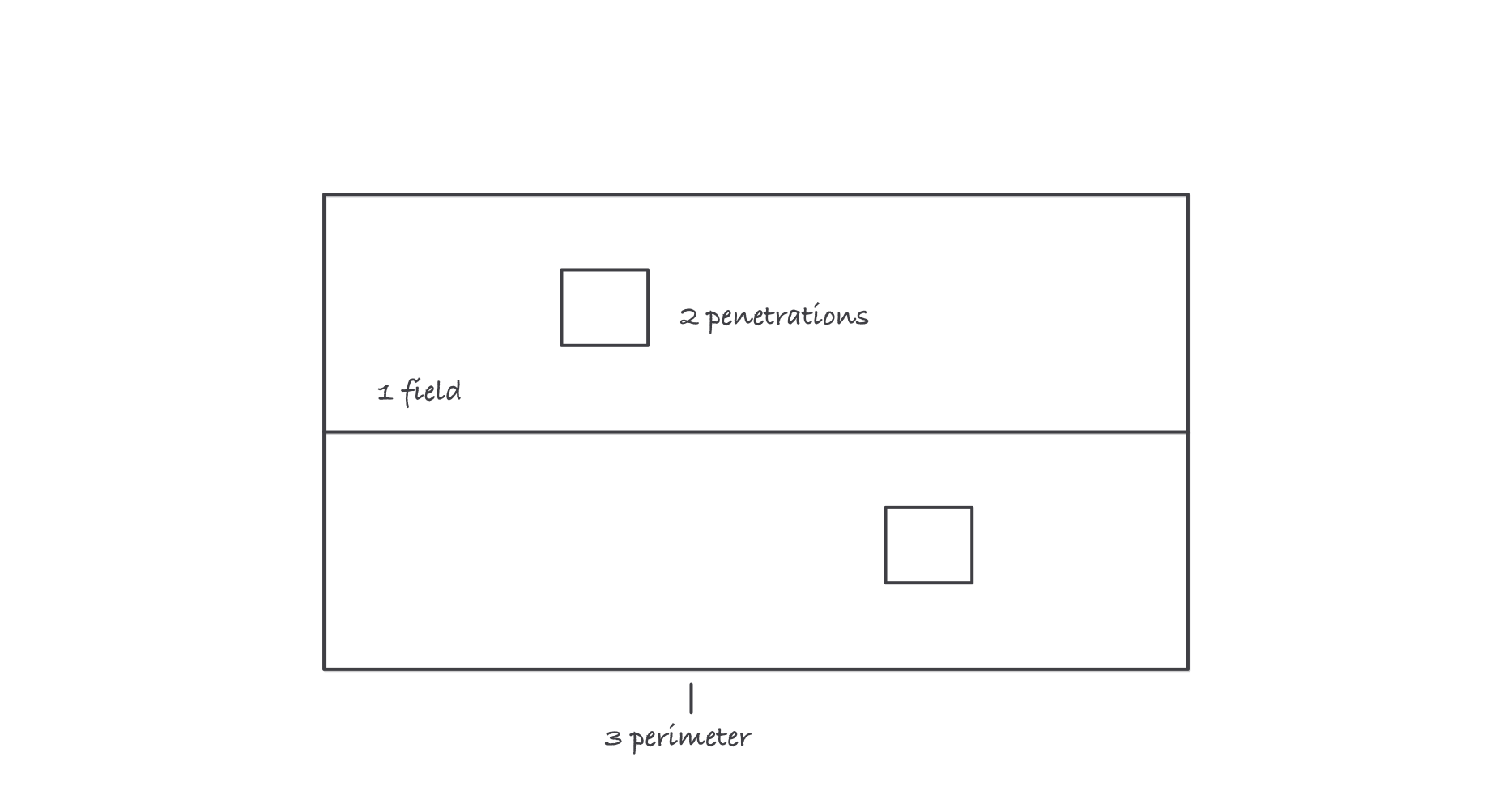
The same route every time, so that two inspections of one roof can be compared
Record as you go, and separate observation from conclusion
Photograph everything you note, with enough in frame to locate it later. A close-up of a cracked boot with no context is a photograph of somebody’s cracked boot.
Then write the report in two parts, and keep them apart.
Observations are what was there. “Six displaced tiles at the north valley.” “Pipe boot at the south slope split at the collar.” “Standing water 15 ft by 8 ft at the northeast corner, 48 hours after rain.”
Conclusions are what you think it means and what you recommend. They belong in their own section, they should follow from the observations above them, and they should be readable by someone who was not there.
The reason to keep them separate is not tidiness. An inspection report gets read later by homeowners, adjusters, buyers, lawyers and the next contractor, and every one of them will weigh your observations differently from your conclusions. Mixing them makes the whole document easier to dismiss.
Where it bites
- A dry roof in dry weather hides its faults. Nothing is leaking on a sunny Tuesday. Look for the evidence of past water rather than for water.
- Do not walk what you should not walk. Tile, slate, metal panel and aged membrane are all damaged by careless feet, and an inspection that causes the next leak is a bad inspection.
- Photographs of the whole roof are not documentation. A photograph that cannot be located on the roof is not evidence of anything.
- “Needs replacing” is a conclusion with money attached. State the observations that lead to it, every time, or it is an opinion the reader is free to discount.
Exam relevance
NRCA’s PROCertification list includes a Service and Maintenance Technician certification and a Roofing Foreman certification, both held by individual workers, and both earned through an online eligibility exam plus a hands-on performance assessment in front of an assessor.
Inspection sits in both. For the service technician it is the front half of every job. For the foreman it is a supervisory competency, which includes the fall protection decision that has to be made before anyone gets on the roof. Expect the material to reach both the systematic route and the standards that govern working at height. Experience minimums, fees and renewal terms come from NRCA.