Learn · Solar
Grid-Tied, Hybrid and Off-Grid Systems
Part of NABCEP PV Associate Prep · step 3 of 21 · next: Inverters: String, Micro, Optimizers
In learning paths: NABCEP PV Associate Prep
Assumes you know: PV System Components
Every PV system is one of three architectures: grid-tied, hybrid, or off-grid. The difference is not the modules or the roof work. It is what the system is connected to, and that one choice sets the equipment list, the code path, and the paperwork before a single rail goes down.
Why it matters on the job
“Do we have a utility connection, and do we have storage” is the first question of every design. Answer it wrong and you have quoted the wrong inverter, missed an interconnection application, or promised backup a system cannot deliver. Lead installers are expected to catch that mismatch at the site visit, not at commissioning.
The three architectures
Grid-tied is the simple majority of US installs. The array and inverter operate in parallel with the utility. Excess production flows to the grid; shortfalls draw from it. There is no storage, and when the grid goes down the inverter must shut off too, so a plain grid-tied system provides no backup power.
Hybrid is grid-tied plus a battery. The system still has an interconnection agreement and still follows utility rules, but a hybrid inverter can island the house: disconnect from the failed grid and keep selected circuits alive from the battery and array.
Off-grid means no utility source at all. The array, battery bank, and inverter carry every load, every day of the year, so autonomy sizing and load discipline dominate the design.
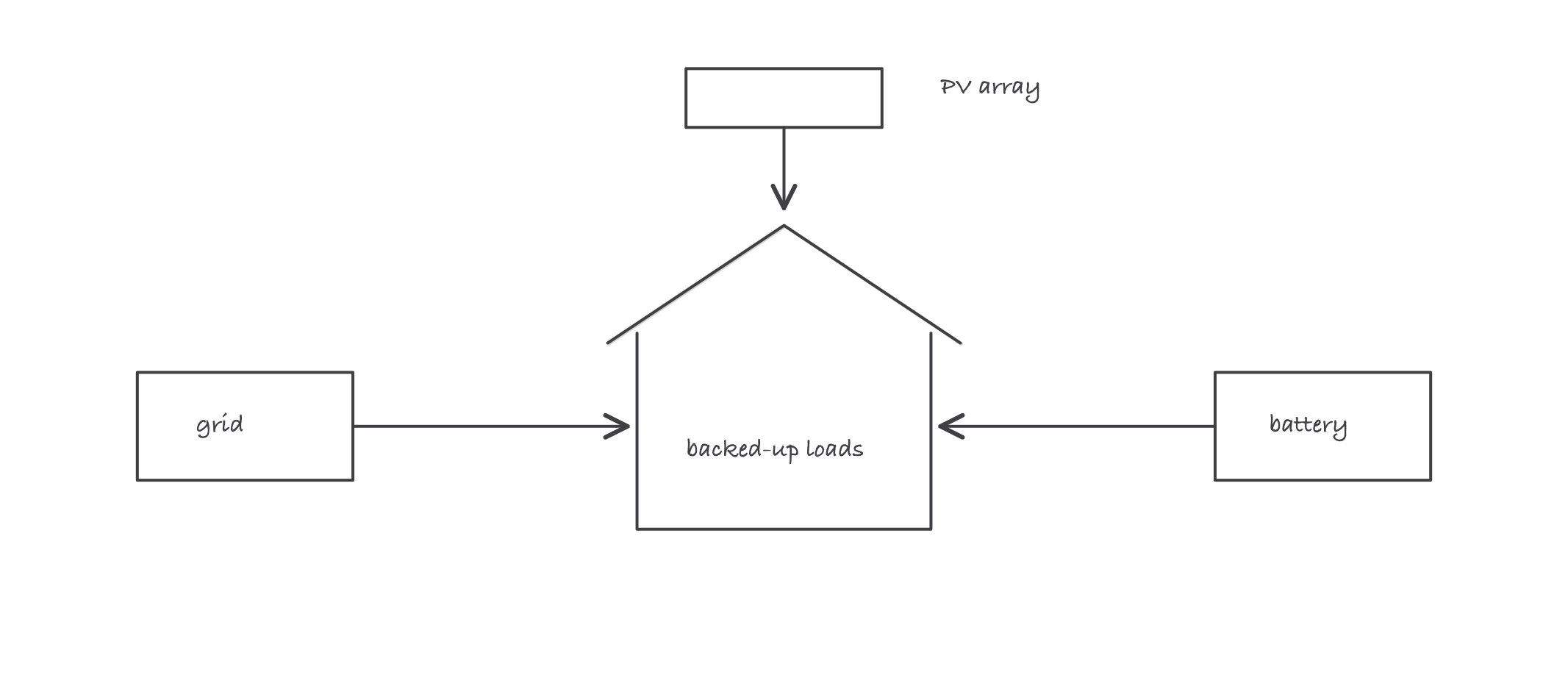
A hybrid system keeps all three sources: pull any one arrow away and you have one of the other two architectures
The connection choice drives the code path
Any system that operates in parallel with the utility, grid-tied or hybrid, falls under the NEC’s rules for interconnected power sources (Article 705 in recent editions) on top of the PV rules of Article 690. It also needs the utility’s own interconnection approval. An off-grid system answers to Article 690 and the AHJ, but there is no utility process because there is no utility.
Worked example
A hybrid customer wants to know what an outage looks like. Their battery has 10 kWh of usable energy and their backed-up circuits average 800 W:
10,000 Wh ÷ 800 W = 12.5 hours of runtime with no sun.
If the outage runs into daylight, the array recharges the battery and stretches that number. If the customer expected the whole house instead of the backed-up circuits, this is the conversation that resets it, and it is better held at the sales table than during a blackout.
Where it bites
- Battery backup is not off-grid. A hybrid system is still an interconnected system with utility rules and an interconnection agreement. Conflating the two misleads customers about both cost and code path.
- Grid-tied systems go dark in an outage. The shutdown is a deliberate safety function, not a defect. Customers who want outage power need storage, and that changes the design class.
- Off-grid has no safety net. There is no utility to cover a cloudy week. Undersized off-grid systems fail in winter, and the callback lands on the installer.