Learn · Solar
Battery Storage Systems
Part of NABCEP PV Associate Prep · step 5 of 21 · next: Site Assessment and Shading
In learning paths: NABCEP PV Associate Prep
Assumes you know: Grid-Tied, Hybrid and Off-Grid Systems
A battery gives a PV system what the array alone cannot: energy when the sun is not shining. Storage turns a grid-tied system into a hybrid that can back up circuits, shift production into evening hours, and, in some rate structures, earn more per kWh. It also adds a second energy quantity, a second code conversation, and a second skill set, which is why storage has its own NABCEP Board Certification.
Why it matters on the job
Storage is where the solar trade is growing fastest in complexity. The crew that can only bolt modules waits for a design; the professional who can size, couple, and commission a battery system owns the whole job. Every mistake in this domain is expensive: batteries are the priciest single component on the truck, and sizing errors show up as a customer sitting in the dark.
Power and energy: the two ratings
Every battery system carries two numbers that are not interchangeable:
- kW (power) is how much the battery can deliver at once. It limits which loads can run.
- kWh (energy) is how much the battery holds. It limits how long they run.
A battery with plenty of kWh but modest kW can run a refrigerator for days and still fail to start a well pump. Both ratings have to match the load list.
Nearly all current residential storage is lithium-ion. Whatever the chemistry, the usable energy is less than the nameplate: manufacturers reserve a margin of charge to protect cycle life, so sizing always starts from the usable figure on the datasheet.
Coupling: where the battery meets the system
DC-coupled batteries share the array’s DC side through a hybrid inverter: one conversion path, high efficiency for solar-charged storage, and one piece of equipment to service. AC-coupled batteries sit on the AC side with their own inverter, which is why they retrofit cleanly onto an existing grid-tied system without touching the original inverter. New construction leans DC-coupled; retrofits lean AC-coupled. Either way the system remains interconnected, with the utility rules that come with that.
Worked example
A customer wants their backed-up circuits, averaging 500 W, to survive a long night. The battery nameplate is 13.5 kWh with 90 percent usable:
13.5 kWh × 0.90 = 12.15 kWh usable
12.15 kWh ÷ 0.5 kW = 24.3 hours with no sun at all.
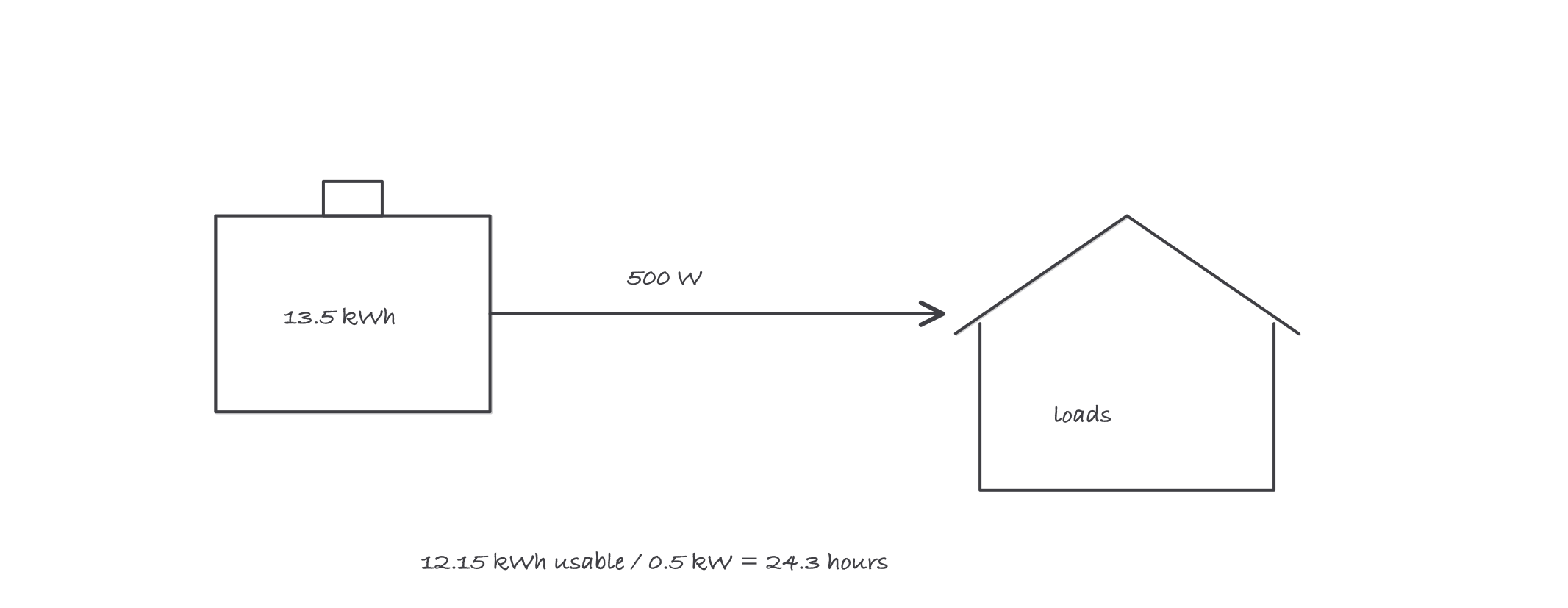
Energy divided by power is runtime: the kWh rating answers “how long”, never “how much at once”
Now check power: if the same customer adds a 4 kW well pump to the backup list, the battery’s kW rating, not its kWh, decides whether the pump starts. Runtime math alone would have missed it.
Where it bites
- kW versus kWh confusion is the number one storage error, in sales calls, on sizing sheets, and on exams. Arrays are rated in kW, batteries hold kWh, and both ratings of the battery matter.
- Nameplate kWh is not usable kWh. Size from the usable figure or the system comes up short on exactly the night it was bought for.
- Battery backup does not mean off-grid. A hybrid system keeps its interconnection agreement and utility rules. The distinction sets customer expectations and the code path.
Exam relevance
NABCEP’s Energy Storage Installation Professional (ESIP) is the Board Certification for this work, held by individuals, not companies, and voluntary alongside whatever license your state requires. Its experience requirements are counted in project credits tiered by kWh (the storage quantity) where PV credentials tier by kW: the credential structure itself tests whether you keep the two units apart. The career-path lessons cover the full requirements.