Learn · Construction Safety
Injury Recordkeeping (300 Logs)
Part of From the Tools to Safety Professional · step 18 of 24 · next: Navigating 29 CFR 1926
In learning paths: From the Tools to Safety Professional
Assumes you know: How OSHA Works: Standards, Citations, Inspections
The OSHA 300 log is a running count of a workplace’s serious work-related injuries and illnesses, and the whole system turns on one word: recordable. Not every bandaged finger goes on the log, and not every logged case means anyone did anything wrong. Learning the recordable-versus-first-aid line is learning what the numbers on a company’s safety record actually mean.
*Learn the Trades is a free study resource. We are not a licensing body, an authorized training provider, or an exam administrator. Reading this page does not award any card, license, or certification. Always verify requirements with the issuing authority linked in the sources.*Why it matters on the job
Injury logs follow contractors around. Prequalification packages ask for them, insurance pricing leans on them, and general contractors screen bids with the rates computed from them. That pressure cuts both ways: it rewards genuinely safe operations, and it tempts bad ones to lean on workers not to report. Knowing exactly what belongs on the log protects you from both undercounting pressure and overcounting confusion.
The three forms
- Form 300, the log: one line per recordable case across the year.
- Form 301, the incident report: the detail behind each line, filled out within days of the case.
- Form 300A, the annual summary: totals from the log, certified by an executive and posted where workers can see it from February through April.
OSHA’s rules exempt some small employers and lower-hazard industries from routine log keeping. Construction is not a lower-hazard industry, and no exemption touches the separate duty to report severe incidents directly to OSHA: fatalities within 8 hours; inpatient hospitalizations, amputations, and eye losses within 24.
The recordable logic
A case goes on the log when three tests all pass:
- Work-related: an event or exposure in the work environment caused or contributed to it. The work environment includes the site and anywhere work is performed.
- New case: not a flare-up of something already logged.
- Meets a severity criterion: death, days away from work, restricted work or job transfer, medical treatment beyond first aid, loss of consciousness, or a significant diagnosis by a licensed professional.
The first two tests are usually easy. The third is where the line lives, because it hinges on the difference between medical treatment and first aid.
First aid is a closed list
OSHA’s rules define first aid as a specific, exclusive list, and the logic is elegant: if the treatment is on the list, the case is first aid regardless of who provides it; if the treatment goes beyond the list, it is medical treatment and the case is recordable. Highlights of the list:
- Cleaning, flushing, or soaking wounds; bandages, gauze, butterfly closures
- Non-prescription medication at non-prescription strength
- Tetanus immunizations
- Hot or cold therapy; massages; drinking fluids for heat stress
- Drilling a nail to relieve pressure; removing splinters by simple means
- Eye patches; removing foreign bodies from the eye with irrigation or a swab
The list also covers temporary immobilization devices used while transporting a victim, splints and slings included. Off-list treatment flips the case: sutures or staples, prescription medication (or over-the-counter medication at prescription strength), and physical therapy all count as medical treatment, so the list itself is always the reference. The provider does not matter; a doctor applying a butterfly closure is still first aid, and a foreman handing out prescription-strength ibuprofen is still medical treatment.
Worked example: two cuts, one log entry
Two workers cut their forearms on the same sheet-metal edge, an hour apart.
- Worker A: the cut is cleaned and closed with a butterfly closure at the site trailer. Cleaning and butterfly closures are both on the first aid list. Work-related, new case, but no criterion met: not recordable.
- Worker B: the cut is deeper and takes four sutures at the clinic. Sutures are medical treatment beyond first aid: recordable, one line on the 300 log, a 301 filled out, and the case counts toward the year’s 300A summary.
- Neither case is a citation, a fine, or an admission of fault. The log recorded severity, nothing else. The sharp edge, meanwhile, is the actual safety problem, and fixing it is what keeps worker C off the log entirely.
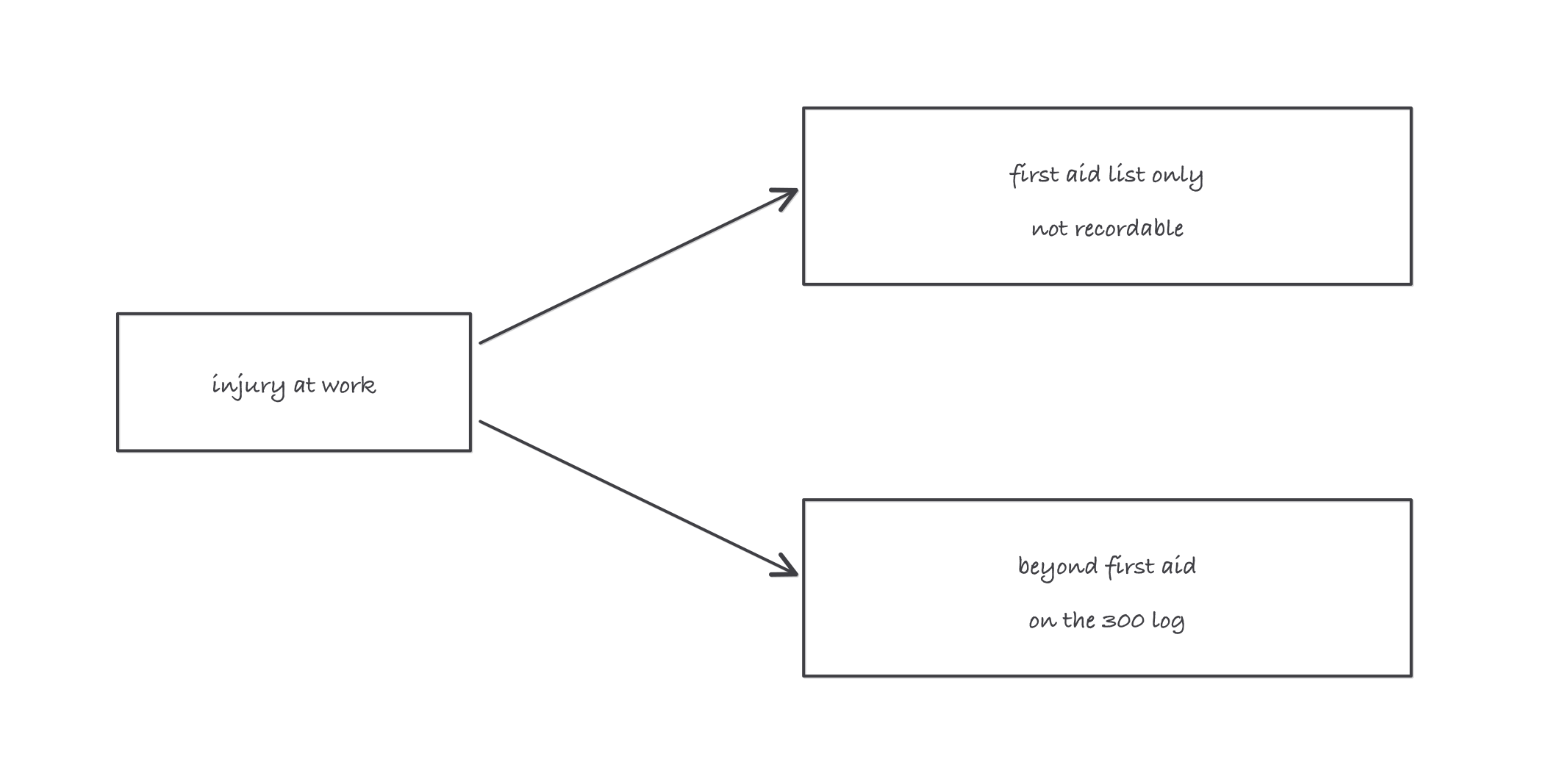
The fork that decides the log: treatment on the first aid list, or beyond it
Where it bites
- Recordable does not mean at fault. The log measures outcomes, not violations. Treating every entry as an accusation is how companies start pressuring workers not to report.
- The first aid list is exclusive. If the treatment is not on the list, it is medical treatment. Arguing that stitches are basically a bandage does not move the line.
- Prescription strength is the tell. The same drug can be first aid at shelf strength and medical treatment at prescription strength.
- Severe-incident reporting has no exemptions. Log exemptions for small employers never cancel the 8 and 24 hour direct reports.
- Days away count calendar days. Weekends and rain days count, and the counting rules cap totals rather than running forever.
Verified requirements
| Where | Expires | Renewal | Continuing education |
|---|---|---|---|
| United States (federal) | Confirm with issuer | Confirm with issuer | Confirm with issuer |
| United States (federal) | Confirm with issuer | 5 years | Confirm with issuer |
Information comes from issuing-authority sources. Confirm current rules, fees and eligibility with the authority before acting.