Learn · Construction Safety
How OSHA Works: Standards, Citations, Inspections
Part of From the Tools to Safety Professional · step 15 of 24 · next: The Competent Person Requirement
In learning paths: From the Tools to Safety Professional
OSHA, the Occupational Safety and Health Administration, is a federal agency with three jobs: write minimum workplace safety rules, inspect worksites against them, and back the rules with citations and penalties when they are broken. Everything else you hear about OSHA, cards, posters, trainers, consultants, hangs off those three functions, and understanding the machinery makes the rest of this subject click into place.
*Learn the Trades is a free study resource. We are not a licensing body, an authorized training provider, or an exam administrator. Reading this page does not award any card, license, or certification. Always verify requirements with the issuing authority linked in the sources.*Why it matters on the job
OSHA’s rules are the floor under every safety decision on site, the reason guardrails appear at edges and trench boxes appear in excavations. Knowing how the agency actually works tells you what an inspector can and cannot do, why your employer reacts the way they do to a complaint, and what your own rights are when something on site is genuinely dangerous.
Standards: the rules themselves
OSHA’s rules live in the Code of Federal Regulations. Construction work runs under its own part, Part 1926, while general industry runs under Part 1910; which part applies depends on the work being performed, not the company’s name. The standards set minimums: trigger heights, required protections, training obligations, inspection duties.
About half the states run their own OSHA-approved state plans. A state plan must be at least as effective as federal OSHA and can be stricter, which is why the rules on a California or Washington site can exceed what this page describes. The federal standards are the floor everywhere.
Inspections: how OSHA shows up
OSHA does not schedule visits with most employers, and it inspects only a small fraction of worksites in any year. Inspections come in a priority order: imminent danger first, then fatalities and serious incidents (which employers must report directly), then worker complaints and referrals, then programmed inspections targeting high-hazard industries, construction prominently among them.
The visit itself has a shape: the compliance officer presents credentials, holds an opening conference, walks the site taking photos and measurements, may interview workers privately, and closes with a conference on what was found. Two details matter to you. First, workers have the right to file a complaint and to speak to an inspector, and retaliation for doing so is itself a violation. Second, plain view rules: an inspector on site for a complaint about one hazard can act on any violation visible along the way.
Citations: what happens after
Violations found become citations, classified by gravity: other-than-serious, serious, repeat, and willful, each carrying escalating penalty ranges that OSHA’s rules set and periodically adjust. A citation names the standard violated, proposes a penalty, and sets an abatement date by which the hazard must be fixed.
The employer then has three paths: fix and pay, request an informal conference to negotiate, or formally contest within a short fixed window measured in working days. Contested cases go to an independent review commission, not to OSHA itself. Citations must be posted at or near the violation site, which is why you sometimes see them stapled to a jobsite wall.
Worked example: one complaint, start to finish
A worker on a roofing job calls in a complaint: crews working a 20 ft eave with no fall protection.
- OSHA prioritizes it as a serious fall hazard and sends a compliance officer within days rather than months.
- Opening conference with the site superintendent, then a walkaround. The officer photographs two workers at the unprotected eave, and, in plain view, an extension ladder missing its feet.
- Closing conference flags both issues. Weeks later the employer receives a serious citation for the fall protection violation with a proposed penalty and a 10 day abatement date, plus an other-than-serious citation for the ladder.
- The employer holds an informal conference, shows the ladder was tagged out that afternoon, and negotiates the penalty down while accepting the fall protection citation. Guardrails go up; the abatement is verified with photos.
No court, no shutdown, no drama: the ordinary enforcement loop doing what it was built to do.
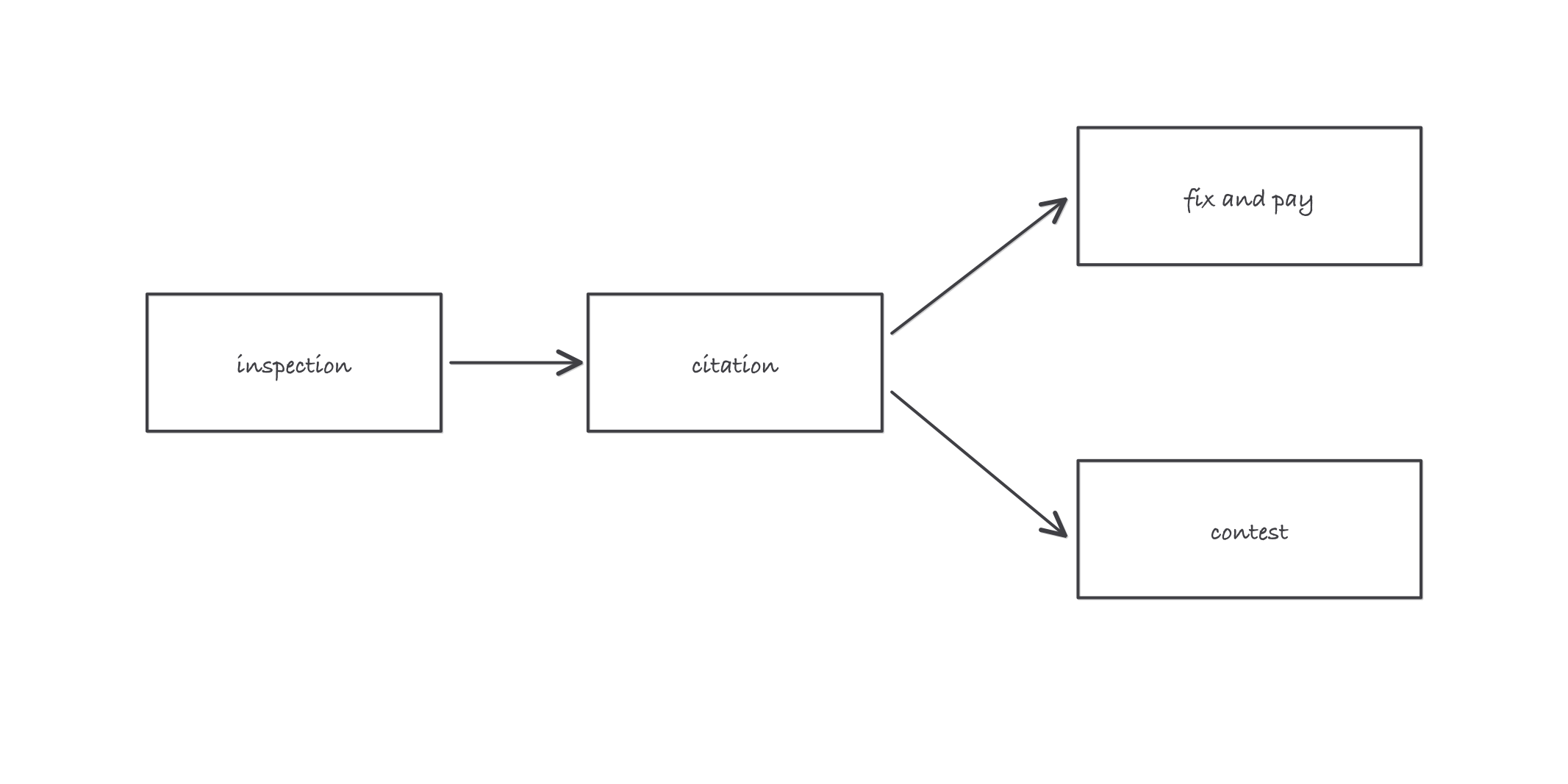
The enforcement loop: inspection produces citations, and every citation ends in abatement or contest
Where it bites
- OSHA does not certify anything. No OSHA-approved products, contractors, or training mills. Outreach cards are awareness training, not certification, and the agency itself says so.
- A quiet site is not a compliant site. Low inspection odds tempt employers to treat standards as optional; the incident that triggers a mandatory report ends that bet badly.
- Plain view has no blinders. Inviting an inspector to look at one corrected hazard walks them past every uncorrected one.
- State plans change the details. Trigger numbers, reporting rules, and penalties can all be stricter than federal. Verify which system governs your site.
- Complaints are protected; silence is not. Retaliation for raising a hazard is a violation with its own enforcement track, and the clock for filing a retaliation complaint is short.
Verified requirements
| Where | Expires | Renewal | Continuing education |
|---|---|---|---|
| United States (federal) | Confirm with issuer | Confirm with issuer | Confirm with issuer |
| United States (federal) | Confirm with issuer | 5 years | Confirm with issuer |
Information comes from issuing-authority sources. Confirm current rules, fees and eligibility with the authority before acting.