Learn · Construction Safety
PPE Selection
Part of From the Tools to Safety Professional · step 14 of 24 · next: How OSHA Works: Standards, Citations, Inspections
In learning paths: From the Tools to Safety Professional
Personal protective equipment is the last line of defense, and the word to hold onto is last. PPE does not remove a hazard, contain it, or move it away from people. It stands a thin layer of material between the hazard and your body and hopes the layer holds. Selecting PPE well starts with understanding why it comes at the bottom of the list.
*Learn the Trades is a free study resource. We are not a licensing body, an authorized training provider, or an exam administrator. Reading this page does not award any card, license, or certification. Always verify requirements with the issuing authority linked in the sources.*Why it matters on the job
PPE fails at exactly the moment of exposure, with zero margin. A guardrail that is slightly loose still mostly works. A respirator with a slightly bad seal does not mostly work; contaminated air follows the leak. PPE also protects only the person wearing it, only while they wear it, only if it is the right type, the right fit, and in good condition. That is a long chain of conditions to bet a body on, which is why the better controls come first.
The hierarchy of controls
Every hazard decision runs down the same ladder, from most effective to least.
- Elimination: remove the hazard entirely. Prefabricate at ground level; design the task out.
- Substitution: swap in something less hazardous. A water-based product instead of a solvent-based one.
- Engineering controls: put something physical between the hazard and people. Ventilation, guards, wet-cutting attachments, barriers.
- Administrative controls: change how people work. Rotation, scheduling, training, signage, exclusion zones.
- PPE: put something on the person. Hard hat, glasses, gloves, boots, hearing protection, respirator.
The top of the ladder works without anyone remembering anything. The bottom works only when a specific person does a specific thing correctly every single time. Reach for PPE after the levels above have taken the hazard as far down as the job allows, and use PPE to cover what remains.
Matching PPE to the hazard that remains
Selection is a two-step act: name the residual hazard precisely, then match equipment to that hazard, not to the general vibe of the site.
- Head: falling and swinging objects, and electrical contact overhead. Class matters near live parts.
- Eyes and face: impact, dust, chemical splash, and light radiation each call for different protection. Grinding goggles are not welding shades.
- Hands: the glove is a chemistry and mechanics question. Cut-rated gloves do nothing against solvents; nitrile does nothing against a blade.
- Feet: impact and compression protection, plus puncture resistance where nails live.
- Hearing: chosen by noise level and duration, not comfort.
- Respiratory: last and most demanding. Respirators require selection by contaminant and concentration, fit, and a proper employer program. A dust mask grabbed off a shelf is a decision someone else’s lungs pay for.
Fit is selection. PPE that hurts, fogs, or slips gets modified or left in the truck, and unworn equipment protects no one.
Worked example: silica dust from a concrete saw
You need to cut a 20 ft run of concrete slab. Walk the ladder before touching the respirator bin.
- Eliminate: can the pour be scheduled with a blockout so there is nothing to cut? If yes, the hazard never exists.
- Substitution: no practical swap for the slab itself.
- Engineering: wet-cutting saw suppresses dust at the blade, or a shroud with vacuum extraction captures it. This is where the exposure collapses.
- Administrative: cut when adjacent trades are clear; limit one worker’s cutting time.
- PPE: with wet cutting running, the respirator that remains appropriate is far lighter duty than what dry cutting would demand.
Same task, two plans: dry-cut with a heavy respirator as the only control, or wet-cut with a light one as backup. The second plan protects the cutter, the laborer sweeping nearby, and everyone downwind. The first protects one set of lungs, if the seal holds.
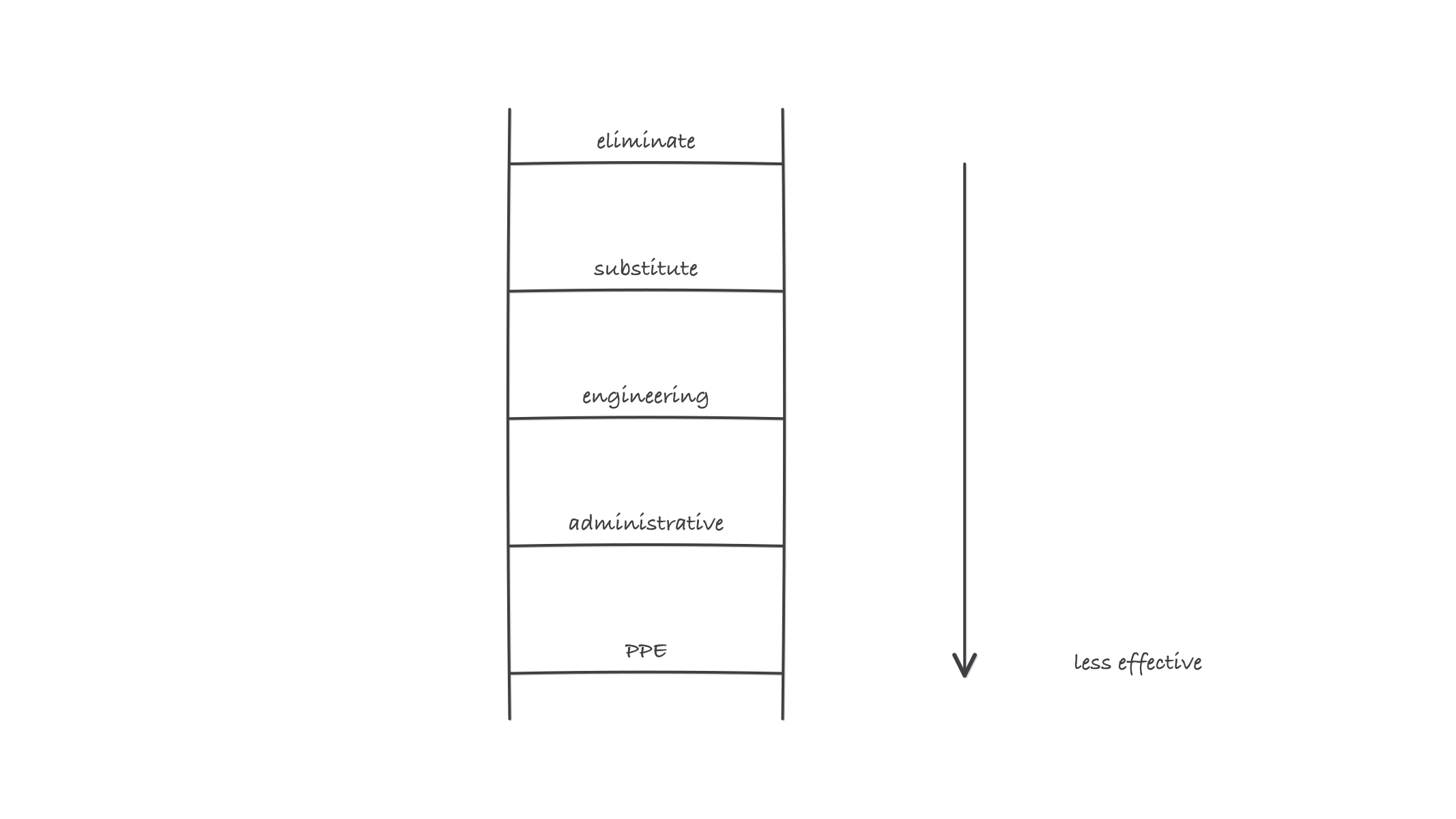
The hierarchy of controls: effectiveness falls as you descend, and PPE is the bottom rung
Where it bites
- PPE-first thinking. Handing out respirators is faster than renting a wet saw, and it quietly moves all the risk onto the worker. The hierarchy exists to stop exactly this trade.
- Right category, wrong spec. Safety glasses against a chemical splash, cut gloves in a solvent dip, earplugs sized for a quieter job. The label matters more than the aisle it came from.
- Respirators are a program, not a purchase. Fit testing, medical evaluation, and training come through your employer’s program; a respirator without them is a costume.
- Damaged PPE is expired PPE. A cracked hard hat shell or a cut-glove with one sliced strand has already spent its protection.
- Comfort is compliance. If two compliant options exist, pick the one people will actually wear for ten hours.
Verified requirements
| Where | Expires | Renewal | Continuing education |
|---|---|---|---|
| United States (federal) | Confirm with issuer | Confirm with issuer | Confirm with issuer |
| United States (federal) | Confirm with issuer | Confirm with issuer | Confirm with issuer |
Information comes from issuing-authority sources. Confirm current rules, fees and eligibility with the authority before acting.