Learn · Boilermaking
The NBIC and the R Certificate of Authorization
Part of Boilermaker and the Code · step 16 of 22 · next: Repair vs Alteration Under the NBIC
In learning paths: Boilermaker and the Code
Assumes you know: The ASME Certification Mark and Its Designators
The ASME code builds equipment; the National Board Inspection Code keeps it running. The moment a boiler or vessel is installed and put into service, the rules that govern it hand over from the construction code to the NBIC, and every repair made for the rest of that equipment’s life happens under a different document than the one it was built to.
*Learn the Trades is a free study resource. We are not a licensing body, an authorized training provider, or an exam administrator. Reading this page does not award any card, license, or certification. Always verify requirements with the issuing authority linked in the sources.*Why it matters on the job
A great deal of boilermaking work is repair and outage work on equipment that already exists. That means most boilermaking work is NBIC work. If you can name which document governs the job in front of you, you can predict who has to accept it, what records it generates, and why the shop cares so much about a form you never see.
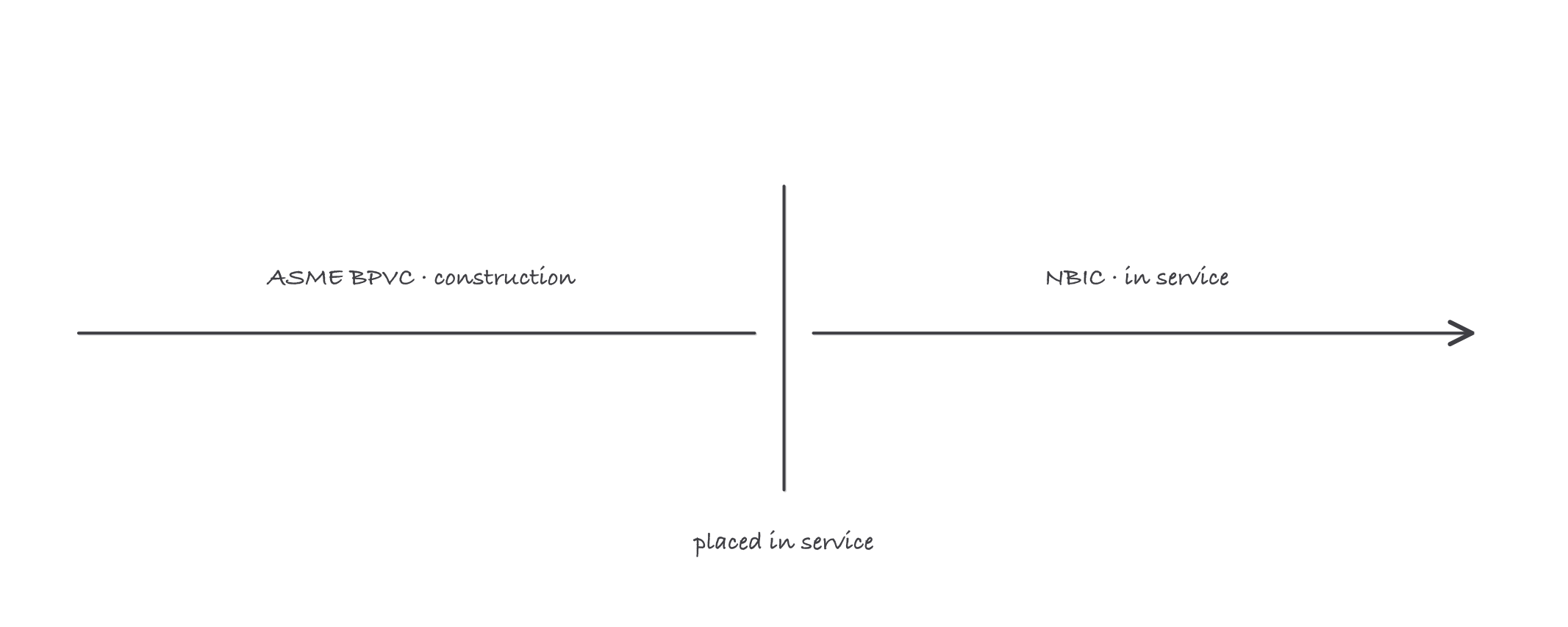
One piece of equipment, two governing documents, and a handover at the moment it goes into service
What the NBIC is
The National Board Inspection Code was first published in 1946 and has been adopted into law across most jurisdictions in the United States and Canada. It is issued in odd-year editions, which is worth knowing because “the NBIC” always means a specific edition your jurisdiction has adopted rather than a timeless text.
It is organized in four parts:
- Part 1, Installation
- Part 2, Inspection
- Part 3, Repairs and Alterations
- Part 4, Pressure Relief Devices
Part 3 is the one boilermakers live in. It is also, like the ASME sections, a purchased document, so its definitions and requirements are quoted from the code itself and from nowhere else.
The R Certificate of Authorization
Repair and alteration of pressure-retaining items is done by organizations holding an R Certificate of Authorization, issued by the National Board. The R symbol stamp is the mark such an organization applies to the work it has done; the certificate is the authority behind it.
The pattern will look familiar from the ASME side, because it is the same pattern. The certificate belongs to a company. The stamp is applied to equipment. Neither one is a personal credential and neither one can be.
What a shop does to hold one
Read that list as a description of a company, because that is what it describes. A quality system, an inspection agreement, a fee and a renewal cycle are things an organization has. There is no line item on it that an individual welder could satisfy, which is why there is no individual route to an R certificate and never has been.
What this changes on the tools
Working under an R certificate changes what happens around your welding rather than the welding itself:
- The repair is planned and documented before it starts, under the shop’s quality system.
- An Authorized Inspector from the agency named in the inspection agreement accepts stages of the work.
- The completed repair is recorded, and the R symbol stamp and the associated documentation are applied under the shop’s authority.
- Your welding is qualified under the employer’s Section IX documentation, which is a separate thread running alongside all of this.
Nothing in that sequence is optional, and none of it is yours to decide.
Where it bites
- “I have my R stamp” is wrong in exactly the way “I have my S stamp” is wrong. Both name organizational certificates. Say “we do R work” or “our shop holds an R certificate.”
- The construction code does not come back. A repaired boiler is not re-certified to Section I. It is repaired under the NBIC by an organization certified to do so.
- Editions matter. The NBIC is republished in odd years and adopted jurisdiction by jurisdiction, so “the NBIC says” is only a complete sentence once you know which edition your jurisdiction has adopted.
- The AIA relationship is a precondition, not an afterthought. A shop without an inspection agreement in place cannot hold the certificate, which is why the inspector is never a surprise visitor on a code repair.
Verified requirements
| Where | Expires | Renewal | Continuing education |
|---|---|---|---|
| United States (federal) | Yes | 3 years | Confirm with issuer |
Information comes from issuing-authority sources. Confirm current rules, fees and eligibility with the authority before acting.