Business · Boilermaking
Becoming a Commissioned Inspector
Part of Boilermaker and the Code · step 22 of 22
In learning paths: Boilermaker and the Code
Assumes you know: Who Signs Off Your Work
A National Board commission is the second career waiting at the end of the boilermaker trade, and it comes with a catch that almost nobody mentions until someone tries: you cannot hold the commission unless an inspection organization or a jurisdiction employs you as an inspector. The employment is a precondition, not a reward for passing something.
*Learn the Trades is a free study resource. We are not a licensing body, an authorized training provider, or an exam administrator. Reading this page does not award any card, license, or certification. Always verify requirements with the issuing authority linked in the sources.*Why it matters on the job
This is the move that gets a career off the tools without leaving the trade. It trades travel and outage season for a role built on judgment and paperwork, and it keeps everything you learned about pressure equipment in play. It is also the move people plan for badly, because they picture it as a qualification you go and collect and then take to market. That picture has the order backwards.
The employment requirement comes first
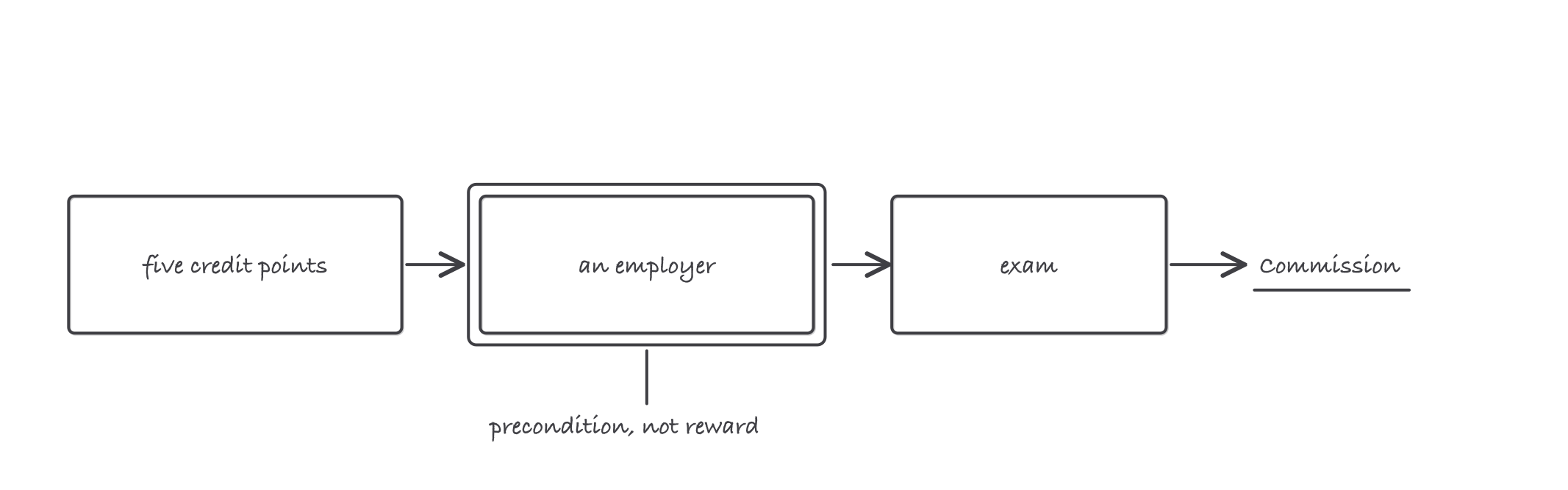
The middle box is the one people leave out of the plan, and it is not optional
Practically, that means the job search comes before the credential rather than after it. You look for a position with an Authorized Inspection Agency, a jurisdiction, or an owner-user organization, and the commission process runs from inside that employment.
Two routes, two scopes
The commission comes in two forms, and they are scopes rather than ranks:
- Authorized Inspector (AI) covers ASME Code new construction: the fabrication side, inspecting the work of ASME Certificate Holders.
- Inservice Inspector (IS) covers installation and in-service equipment: the NBIC side, inspecting equipment that is already installed and operating.
Which one fits you follows from which employer you end up with and what work they do. A boilermaker whose career has been outage and repair work has been standing next to in-service inspection for years, and that is an argument worth making in an interview.
Getting qualified
Commissions can also carry endorsements that extend their scope, including R, N, I, B, NSI, NS, C and NSC. Endorsements are how an inspector’s authority is matched to particular categories of work, and which ones matter to you is a function of where you end up working.
“Inspector” is at least three different jobs
Before you plan a move, be sure which job you are planning toward. An AI commission is new construction. An IS commission is in-service work. An AWS Certified Welding Inspector is a different credential from a different body answering different questions, and holding one has no bearing on holding either commission. Three roles, one word, and job ads use the word loosely.
Where it bites
- The plan is employment first, always. Time spent studying before you have a route into an inspection organization is time spent on the wrong problem.
- A commission is not portable the way a trade card is. It exists in the context of the employment that supports it, so a change of employer is a change of context rather than a simple transfer.
- Your trade experience is the asset, and it needs translating. Years inside drums and headers is exactly the background the work rewards, but on an application it has to be documented against the credit point requirements rather than described.
- Three failures inside a year has a real consequence. Sitting the exam underprepared to see what it is like is an expensive way to find out.
- The rules are published, so read them at the source. NB-263 and the National Board’s own pages govern this, and no career page, this one included, replaces reading the requirement as written.
Verified requirements
| Where | Expires | Renewal | Continuing education |
|---|---|---|---|
| United States (federal) | Yes | Confirm with issuer | Confirm with issuer |
| United States (federal) | Yes | Confirm with issuer | Confirm with issuer |
Information comes from issuing-authority sources. Confirm current rules, fees and eligibility with the authority before acting.