Learn · Masonry and Concrete
Block Walls and Reinforcement
Part of Concrete Work to ACI Certification · step 10 of 22 · next: Bond Patterns
In learning paths: Concrete Work to ACI Certification
Assumes you know: Laying Brick to the Line
A reinforced block wall is a three-material system: CMU laid in mortar, steel rebar standing in the hollow cells, and grout poured around the steel to tie all of it into one structural unit. Each material follows its own rules, and the grout’s rule is the opposite of the mortar’s.
Why it matters on the job
Block is the structural workhorse: foundations, retaining walls, warehouse shells, elevator shafts. Most of it is engineered, which means the rebar size, spacing and grouting are on the drawings and an inspector may check them before you are allowed to grout. A mason who understands why the cells, steel and grout work together builds walls that pass inspection the first time.
Laying block
Block laying runs on the same line discipline as brick, with three differences:
- Face-shell bedding. After the first course (laid in a full mortar bed on the footing), mortar goes on the face shells only, not across the webs. The cells stay clean for grout.
- Weight and rhythm. A standard block replaces about six modular bricks; you lay fewer units, each a two-hand lift, and coursing runs 8 in per course.
- Cell alignment. In running bond the cells line up vertically every half block. Keep them aligned: a shifted block chokes the cell that rebar and grout must pass through.
The steel
Vertical rebar starts as dowels cast into the footing, placed to land in the cells, at the spacing the drawings call out. Wall steel laps the dowels and continues up, held centered in the cell by wire positioners. Horizontal steel comes two ways: ladder or truss joint reinforcement bedded in the mortar joints, and bond beams (special blocks with knocked-out webs forming a horizontal channel for rebar and grout, typically at the top of the wall and at floor lines).
The grout
Grout is a soupy concrete mix with small aggregate, batched to a slump of about 8 to 11 in. That wetness is intentional: grout has to flow down a narrow cell, wrap the bar and fill every void, and the dry block absorbs its excess water immediately after placement. Consolidate each pour (puddling with a rod on small pours, a vibrator on larger ones) so no voids survive against the steel.
Grouting proceeds in lifts. Low-lift grouting fills the wall in stages a few feet at a time as it rises, commonly up to about 5 ft per lift. High-lift grouting builds the full wall height first, then grouts in one operation through cleanout openings at the base of each grouted cell, which let you confirm the cells are clear and the steel is placed before the pour, and let the inspector confirm it too.
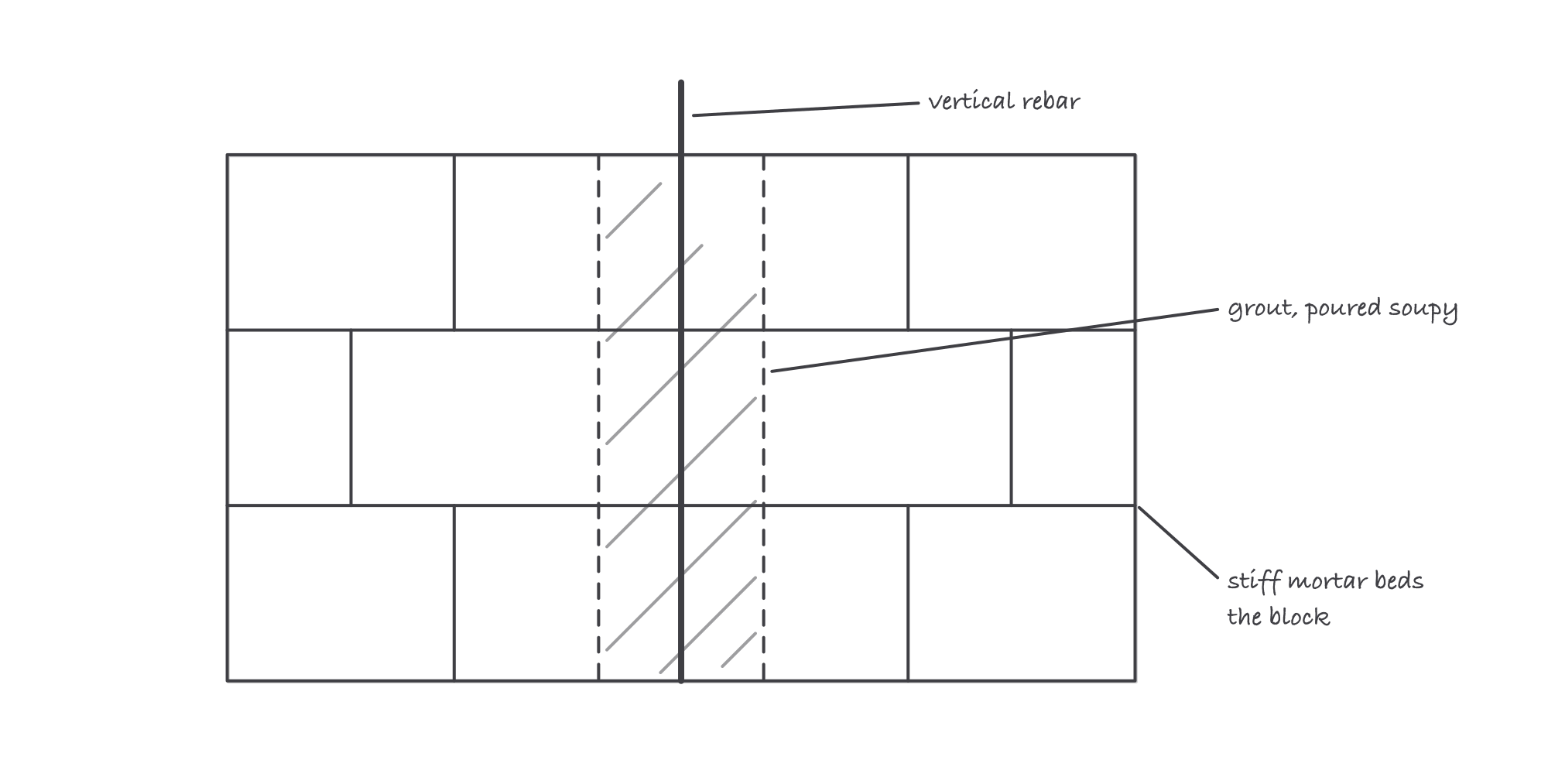
One structural unit: stiff mortar beds the block, soupy grout locks the rebar into the aligned cells
Worked example: bars and grout cells
A 24 ft garden wall calls for vertical #4 bars at 48 in on center, first bar at each end.
- Wall length: 24 ft = 288 in.
- Spaces between bars: 288 / 48 = 6.
- Bars: 6 + 1 = 7 bars, so 7 cell columns must stay clean, aligned and grouted.
Before laying, mark the 7 cell locations on the footing and confirm the dowels land inside cells, not on webs. A dowel half a cell off gets discovered at course three, when the fix is ugly.
Where it bites
- Transferring the mortar rule to grout. “Too wet is weak” is true for concrete and mortar mixed to a target ratio; grout is designed soupy because the block will drink the surplus water. Stiff grout is the defect: it hangs up in the cell and leaves voids around the bar.
- Blocked cells. Mortar droppings and misaligned blocks dam the cell. Keep grout cells clean as you lay; with high-lift grouting, use the cleanouts.
- Grouting past the inspection. Engineered walls commonly require the steel to be inspected before grout hides it. Grout poured early can mean tear-out, not paperwork.