Learn · Fire Protection
Standpipes and Fire Pumps
Part of Sprinkler Fitter to NICET · step 5 of 21 · next: NFPA 13 Basics
In learning paths: Sprinkler Fitter to NICET
Assumes you know: Sprinkler System Types: Wet, Dry, Preaction, Deluge
A standpipe is a vertical water main for firefighting hose; a fire pump is the machine that makes water pressure when the supply cannot reach the top on its own. NFPA 14 governs the standpipes, NFPA 20 governs the pumps, and between them they answer one physical problem: water is heavy, and tall buildings are tall.
Why it matters on the job
Sprinkler fitters build and maintain both systems, and they share shafts, valves and sometimes piping with the sprinkler system you already know. Confusing a standpipe with a sprinkler riser, or treating a fire pump like ordinary mechanical equipment, produces expensive rework and failed acceptance tests. Standpipe and pump work is also core Level II scope in NICET’s water-based inspection track, so inspectors live here too.
The physics that forces the issue
Static pressure falls 0.433 psi for every foot you climb. That single number explains both systems.
Worked example. A high-rise standpipe rises 350 ft from the pump room to the roof outlet. Elevation loss alone: 350 × 0.433 = 151.6 psi. Before a single gpm flows, before any friction, the supply must carry an extra 151.6 psi merely to show up at the roof, and firefighters still need working pressure at the hose valve on top of that. No city main delivers that. A fire pump does.
Standpipes: classes and service
A standpipe system is risers plus hose connections, classed by who the hose is for, per NFPA 14:
- Class I: 2½ in hose connections for fire department use. The firefighters bring their own hose; the building brings the water. This is the workhorse in most large buildings.
- Class II: 1½ in hose stations, hose included, intended for trained occupants.
- Class III: both services on one system.
Know the neighbor-term trap: the sprinkler riser feeds sprinkler heads; the standpipe feeds hose valves. They can share a shaft and even share supply piping in combined systems, but they are different systems under different standards, and the fire department connection (FDC) outside the building lets an engine pump into them from the street.
Fire pumps: the NFPA 20 machine
A fire pump takes suction from the water supply and adds pressure. The installation is a system, not a lone pump:
- Driver: electric motor or diesel engine, each with its own reliability rules (a diesel brings fuel, batteries and cooling into scope).
- Controller: the dedicated control panel that starts the pump automatically on pressure drop and is deliberately reluctant to stop it.
- Jockey pump: a small pump that maintains normal system pressure so minor leakage does not start the main pump. If the main pump is starting routinely, something is wrong.
A pump’s nameplate performance is read at three points along its curve: churn (no flow), rated flow at rated pressure, and an overload point beyond rated flow. Acceptance and periodic flow tests trace that curve in the field, which is where fitters meet hose monsters and test headers.
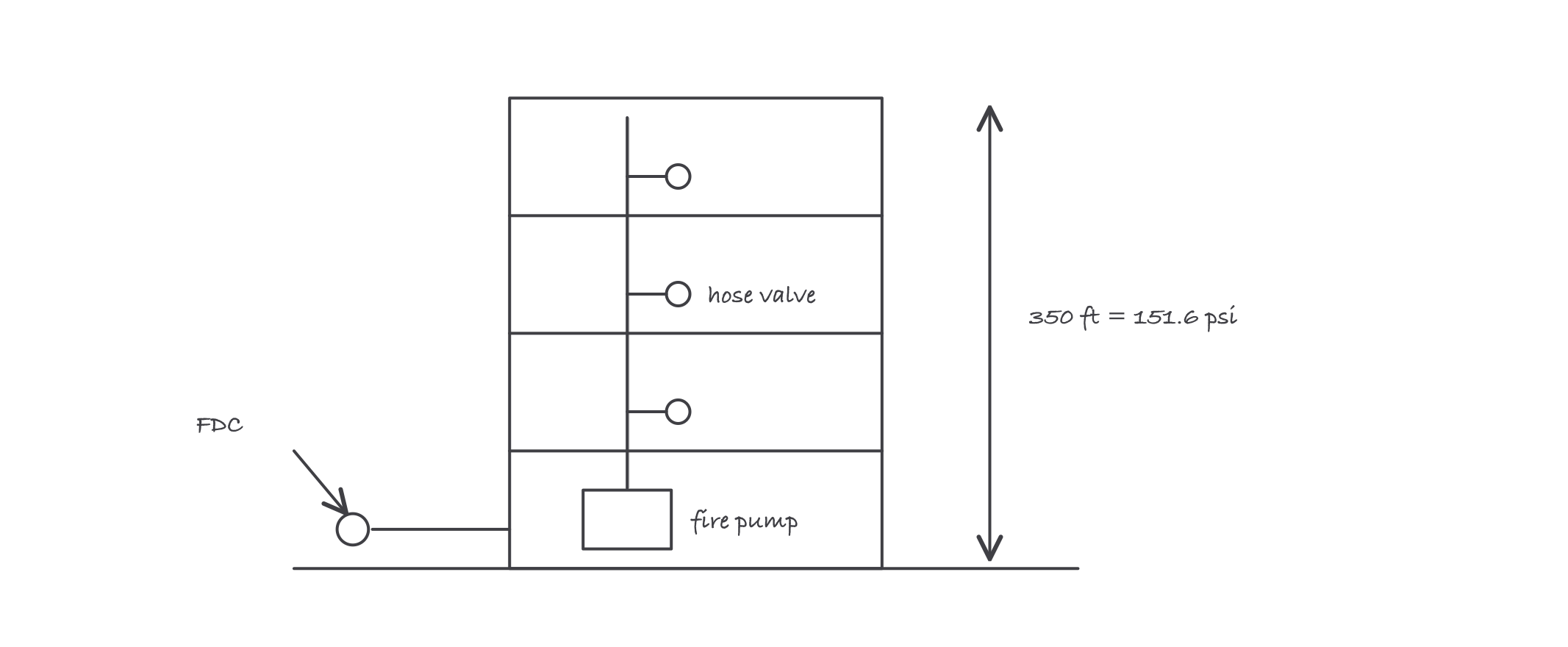
One system per problem: the standpipe moves water up, the pump pays the 0.433 psi toll for every foot
Where it bites
- Standpipe is not sprinkler riser. Same shaft, different customers. Cite and test each against its own standard: NFPA 14 for the standpipe, NFPA 13 for the sprinkler system it may combine with.
- Elevation loss is not negotiable. Friction can be reduced with bigger pipe; 0.433 psi per foot cannot. Pressure problems in tall buildings are solved by pumps and zones, never by pipe size alone.
- The controller, not the pump, runs the show. Automatic start on pressure drop means an open hydrant or a big leak starts the fire pump. Isolating a pump for work without following impairment procedures leaves the building unprotected and the pump ready to surprise you.
- Pressure at the bottom is the mirror of loss to the top. The same column that eats 151.6 psi going up presses 151.6 psi on the lowest fittings when full. High-rise systems get pressure-rated components and pressure-reducing valves for exactly this reason.