Learn · Fire Protection
Sprinkler Fitter Jobsite Safety
Part of Sprinkler Fitter to NICET · step 7 of 21 · next: Underground Fire Mains
In learning paths: Sprinkler Fitter to NICET
Sprinkler fitters get hurt in two places: in the air and in the ground. Most installation hours happen overhead, hanging pipe from a scissor lift, and the system you hang begins at a buried main laid from an open trench. OSHA writes separate rules for each, and both sets contain numbers you need cold before your first day on either task.
Why it matters on the job
A fall from pipe-hanging height and a trench collapse are both routinely fatal, and both happen fastest to the newest person on the crew. Soil is far heavier than it looks: a collapse buries a worker in seconds, and rescue almost never beats the clock. The protections that prevent both are specific, physical, and checkable, which means you can verify them yourself before you step onto the platform or into the cut.
Working from a scissor lift
OSHA regulates scissor lifts as scaffolds under 29 CFR 1926.451, not as aerial lifts. The fall protection that rule expects is the guardrail system around the platform: rails in place, gate or chain closed, and you working from the platform floor inside them. Where guardrails are missing or removed, personal fall arrest takes their place.
Two positioning hazards do the rest of the damage. Raising the platform under fixed overhead steel or ductwork creates a crushing hazard, and working near energized lines creates an electrocution hazard. Plan the lift’s position before you elevate: look up first.
Stability is the third leg: a firm, level surface, and movement only as the manufacturer allows. A scissor lift is a work platform, not a ride.
Working near open trenches
The trenching rules attach to depth, so depth is the first thing you check.
- At 4 ft deep, workers in the trench need a means of egress, a ladder or ramp, within 25 ft of lateral travel from any point.
- At 5 ft deep, cave-in protection is required: sloped walls, shoring, or a trench box.
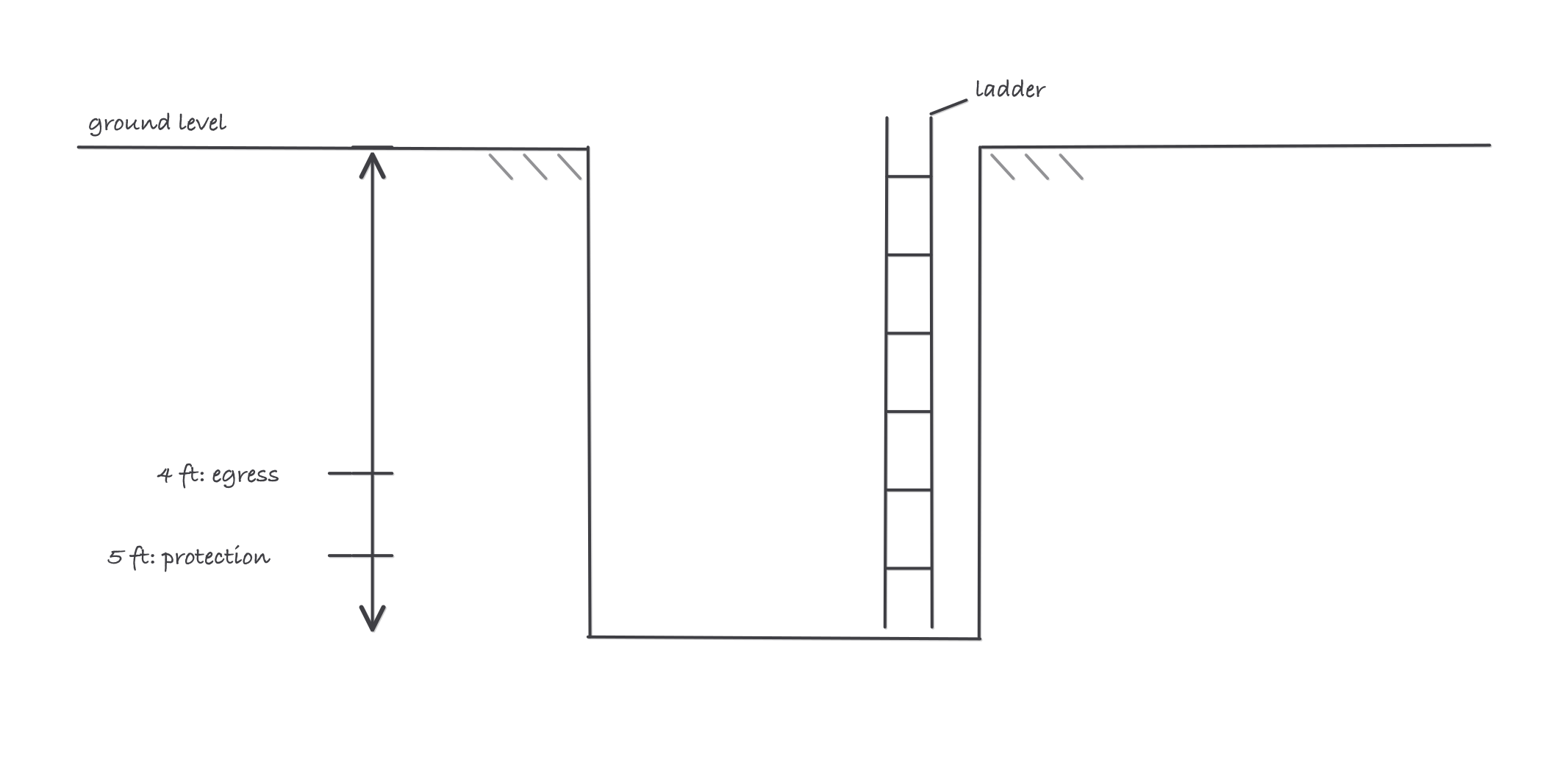
Two depths to memorize: egress at 4 ft, cave-in protection at 5 ft
Around those two numbers sit the habits that keep the numbers honest: a competent person inspects the excavation before workers enter, and spoil piles and equipment stay back from the edge so their weight does not load the trench wall.
Worked example: one site, both rules
Morning: the underground crew has an 80 ft trench for the fire main, 3 ft 6 in deep at the shallow end and 6 ft at the tie-in. The deep end is past 5 ft, so it gets a trench box before anyone enters. The trench passes 4 ft for most of its run, so egress applies: one ladder covers 50 ft of trench (25 ft of travel in each direction), and 80 ft therefore needs 2 ladders. Set them at the 15 ft and 65 ft marks: the worst point, at 40 ft, is exactly 25 ft from each ladder.
Afternoon: you are hanging branch lines from a scissor lift. Guardrails up, chain closed, both feet on the platform, lift set on cured slab. Before elevating, you trace the path up: clear of the bar joists, clear of the temporary lighting feeders.
Where it bites
- “The trench is only open for an hour.” Collapses do not wait for the schedule. Protection goes in before the first entry, every entry.
- Guardrails only protect you inside them. Standing on the midrail or leaning out past the top rail defeats the entire system the scaffold rule is built on.
- Depth changes along the run. A trench that starts at 3 ft can pass 5 ft at the tie-in. The rules apply point by point, so check the deep end, not the average.
- The spoil pile is part of the trench. Soil and machines parked at the lip load the wall they are about to collapse.