Qualifications · Fire Protection
NICET Inspection and Testing Certification (Levels I-III)
Part of Sprinkler Fitter to NICET · step 19 of 21 · next: NICET Special Hazards Certification (Levels I-IV)
In learning paths: Sprinkler Fitter to NICET
Assumes you know: NFPA 25: Inspection, Testing and Maintenance
NICET’s Inspection and Testing of Water-Based Systems certification (ITWBS) is the credential for the people who run the NFPA 25 tests you have been learning: three levels, from supervised assistant to independent inspector who supervises others. It is the inspection-track counterpart to NICET’s four-level Layout certification, and many employers and jurisdictions treat it as the baseline proof that an inspector knows the standard.
*Learn the Trades is a free study resource. We are not a licensing body, an authorized training provider, or an exam administrator. Reading this page does not award any card, license, or certification. Always verify requirements with the issuing authority linked in the sources.*Why it matters on the job
ITM is a career lane of its own inside fire protection: steady, year-round, and built on judgment rather than pipe wrestling. The certification is how that judgment gets documented. Each level maps to a real change in what your employer can send you to do alone, and the ladder is designed to be climbed while you work.
The three levels
- Level I is the entry point: you assist with inspections and tests under direct supervision. It documents that you know what the tests are and how to behave around a live system.
- Level II is the working inspector’s level: you inspect and test wet and dry sprinkler systems, standpipes, and fire pumps under limited supervision. For many inspectors this is the level their daily work actually requires.
- Level III certifies independence: you work without supervision and supervise other inspectors. A personal recommendation is required at this level, alongside the exam.
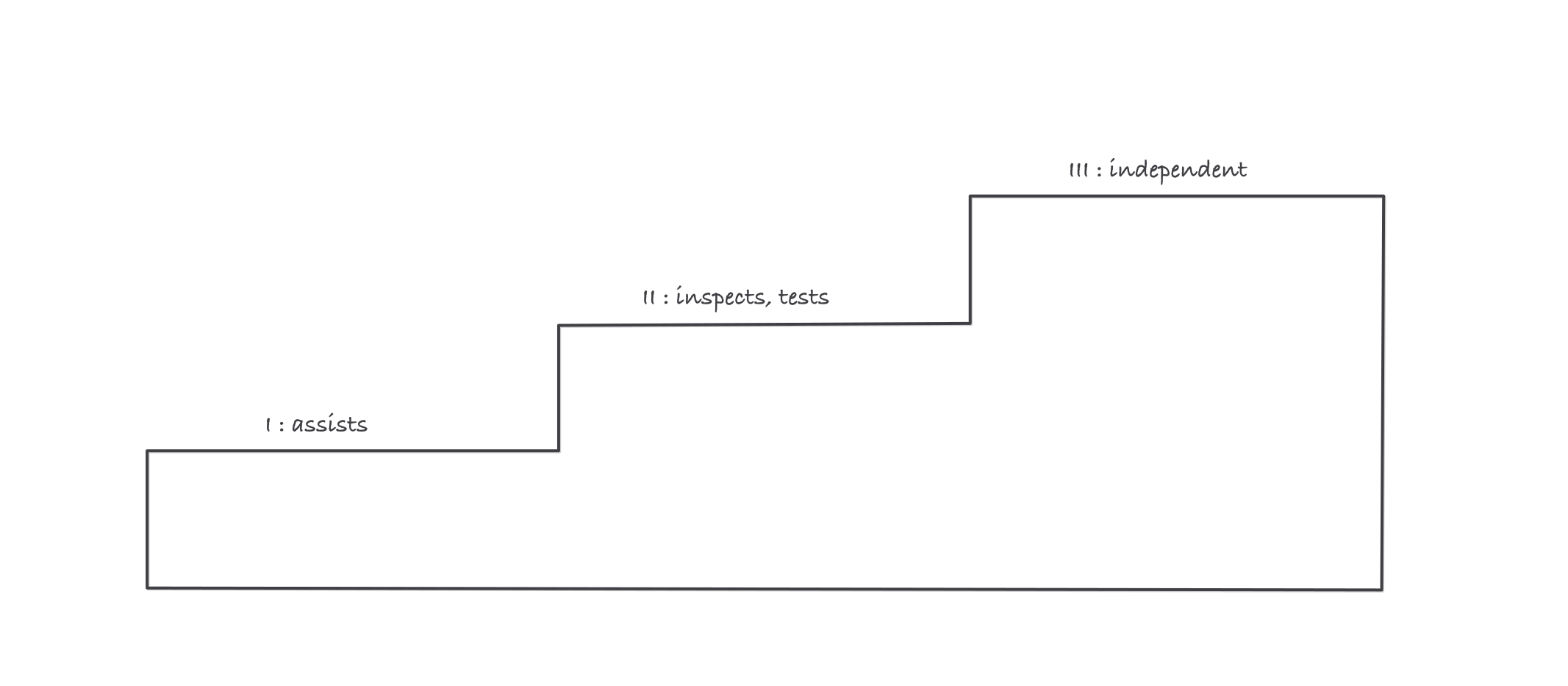
Three levels, one ladder: from supervised assistant to supervising inspector
What certification takes
Every level combines an exam with documented experience: NICET requires a work history and performance measures at all levels, which means your employer verifies you have actually performed the tasks the level covers, not only answered questions about them. Start documenting early: the work history is the part candidates scramble to reconstruct.
The exams were updated across 2025: Levels I and II in June 2025, Level III in December 2025. If you are using older study materials or advice from someone certified years ago, check it against NICET’s current program pages; the Level II scope now explicitly names wet and dry systems, standpipes, and fire pumps.
Certification expires. The cycle is three years, with continuing professional development (CPD) required in each certification period to recertify.
Worked example: a realistic climb
An inspector’s helper joins an ITM crew and sits Level I early, while everything is still supervised anyway. Over the next stretch of full-time inspection work she accumulates the documented task experience for Level II, has her employer sign the performance measures, and passes the Level II exam: she can now run routine wet, dry, standpipe, and pump work under limited supervision. Level III comes later, with more history, a personal recommendation, and the December-2025-version exam, when the company wants her running the route and the newer techs. Three levels, each unlocked by the same pattern: exam plus verified work.
Where it bites
- ITM versus Layout. Two separate water-based tracks. Layout (four levels) is design and detailing, including hydraulics; ITM (three levels) is the NFPA 25 track. Employers post jobs asking for one or the other by name.
- The exam is not the bottleneck; the paperwork is. Work history and performance measures need a verifying employer and real dates. Keep your own task log from day one.
- Certification does not expire quietly. Three-year cycles with CPD mean the credential is maintained, not won once. Budget for it.
- A certification is not a license. If your state or city licenses inspectors, you need that license too; the licensing lesson covers how those systems reference NICET.
Exam relevance
The exams test the ITM body of knowledge this subject teaches: NFPA 25 activities and what each proves, test procedures like the main drain and waterflow tests, and interpretation of results. Study from the current NICET content outlines for the 2025 exam versions rather than older prep material.
Verified requirements
| Where | Expires | Renewal | Continuing education |
|---|---|---|---|
| United States (federal) | Yes | 3 years | CPD required each 3-year certification period |
Information comes from issuing-authority sources. Confirm current rules, fees and eligibility with the authority before acting.