Qualifications · Fire Protection
Texas Fire Sprinkler Licensing (SCR and RME)
Part of Sprinkler Fitter to NICET · step 21 of 21
In learning paths: Sprinkler Fitter to NICET
Assumes you know: Fire Protection Licensing by State
Texas licenses fire sprinkler work in two layers: the company holds a Sprinkler Certificate of Registration (SCR), and a designated person at that company holds a Responsible Managing Employee (RME) license. Both come from the State Fire Marshal’s Office (SFMO), which operates inside the Texas Department of Insurance. Neither layer works alone: a licensed RME with no registered firm has nothing to hang the work on, and a registered firm with no RME has no one legally responsible for it.
*Learn the Trades is a free study resource. We are not a licensing body, an authorized training provider, or an exam administrator. Reading this page does not award any card, license, or certification. Always verify requirements with the issuing authority linked in the sources.*Why it matters on the job
If you plan to inspect, plan, or run sprinkler work in Texas, the RME license is your personal ceiling, and which RME you hold decides what your firm may take on through you. If you plan to own the company, you need both layers standing at once. The SFMO publishes the registration, license and testing requirements, and the underlying rules sit in the Texas Administrative Code (Title 28, the insurance title, which is another clue about who runs this system).
The firm layer: SCR
The Sprinkler Certificate of Registration attaches to the business. It is what makes the company itself a lawful sprinkler contractor in Texas, and it must be paired with at least one RME who takes responsibility for the firm’s work.
The individual layer: three RME licenses
- RME-G (general) is the full license: planning, installing, and servicing fire protection sprinkler systems. NICET certification levels appear in the state’s requirements for RME-G applicants, a live example of licensing rules referencing NICET.
- RME-I (inspection) covers inspection, testing and maintenance only. An RME-I holder does not plan or install; this is the licensing mirror of NICET’s Layout versus Inspection-and-Testing split.
- RME-D (dwelling) covers systems for one- and two-family dwellings.
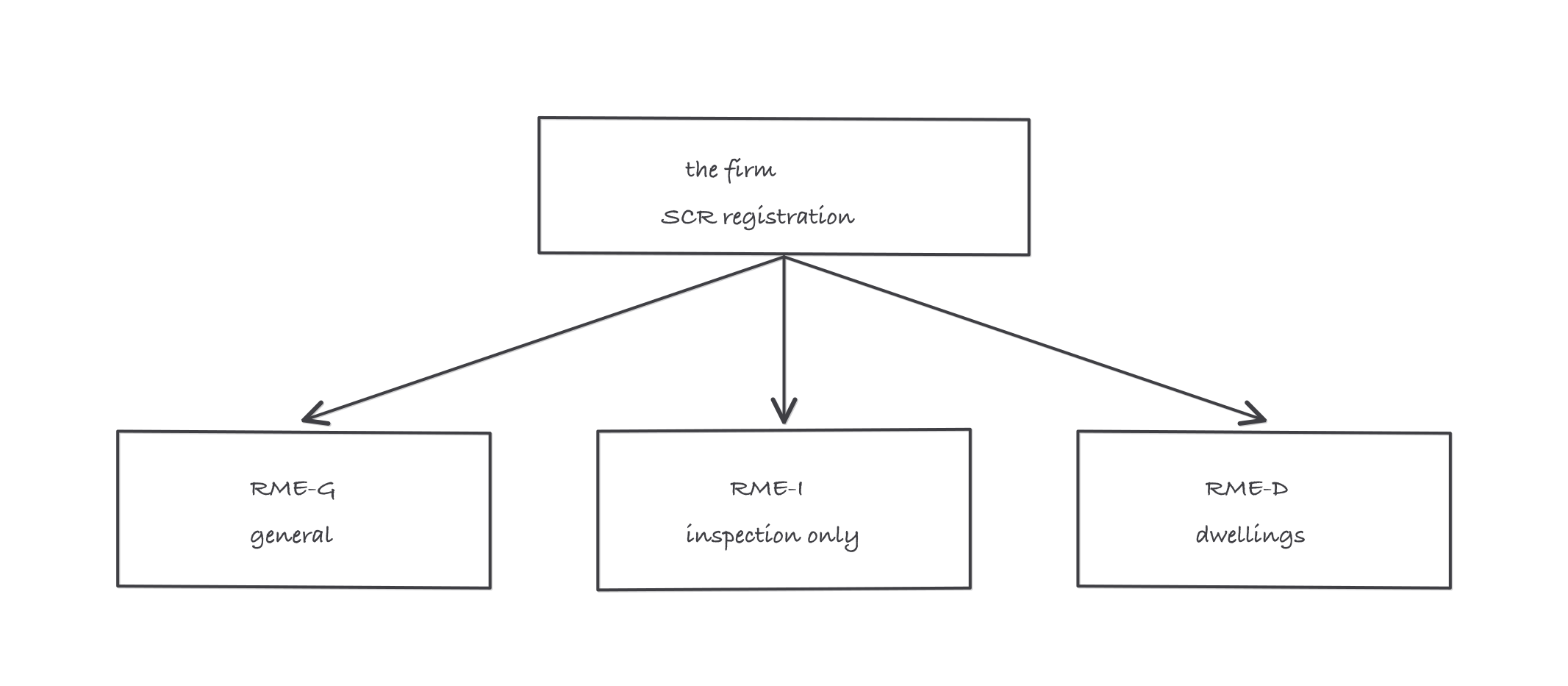
The Texas structure: the firm registers, one person answers, and the RME class sets the scope
Worked example: an ITM career in Texas
A NICET-certified inspector wants to run inspection routes for a Texas contractor. The scope she needs is inspection, testing and maintenance, so the RME-I is the matching license: it authorizes exactly that and nothing more. Her employer’s SCR must be current, she applies to the SFMO under the RME-I requirements and passes its test, and she becomes the responsible managing employee for the firm’s ITM work. If she later wants to sign off on installation work, that is not an upgrade form: it is the RME-G, with its own requirements, including the NICET references in the state’s rules.
Where it bites
- Wrong agency, wasted week. Sprinkler licensing is SFMO/TDI territory. The agency that licenses most other Texas trades does not handle it.
- The RME must actually manage. “Responsible Managing Employee” is a legal role at the firm, not a certificate rented to the highest bidder. The license and the employment go together.
- RME-I is a boundary, not a starter kit. Inspection-only means inspection only; planning and installation under an RME-I is unlicensed work.
- Two layers means two renewals. Firm registration and individual license each stay current on their own schedule, and the SFMO’s pages are the authority on both.