Qualifications · Fire Protection
NICET Water-Based Certification (Levels I-IV, 3-year recert)
Part of Sprinkler Fitter to NICET · step 16 of 21 · next: Fire Protection Licensing by State
In learning paths: Sprinkler Fitter to NICET
NICET runs two separate certification tracks for water-based fire protection, and they answer different career questions. Water-Based Systems Layout is the design and detailing track, four levels deep. Inspection and Testing of Water-Based Systems is the NFPA 25 track, three levels deep. “NICET certified” with no track and level named tells an employer almost nothing; this page is about picking the track your actual job needs.
*Learn the Trades is a free study resource. We are not a licensing body, an authorized training provider, or an exam administrator. Reading this page does not award any card, license, or certification. Always verify requirements with the issuing authority linked in the sources.*Why it matters on the job
NICET certification is the sprinkler industry’s shared yardstick for technician competence. Job postings specify it by track and level, employers bill differently for certified staff, and a number of state licensing rules reference NICET levels in their own requirements (Texas’s RME licensing is a well-known example). Choosing the wrong track costs you exam fees and, worse, a year of studying material your job never touches.
The Layout track: four levels
Water-Based Systems Layout certifies the people who design and detail sprinkler systems: producing drawings, selecting pipe sizes, and proving systems hydraulically.
- Levels I and II cover the working vocabulary and detailing skills of a layout technician in training.
- Level III is the step that changes careers: it comprises two exams, including a dedicated Hydraulics exam of 60 questions in 240 minutes. This is the level many employers and several state rules treat as the benchmark for a senior layout technician.
- Level IV adds, among its requirements, a major project: evidence of running significant design work, not only passing exams.
The Inspection and Testing track: three levels
Inspection and Testing of Water-Based Systems (ITWBS) certifies the people who keep existing systems working under NFPA 25. It has three levels, not four, and its scope is the ITM world: by Level II the program’s own scope statement names wet and dry sprinkler systems, standpipes and fire pumps. NICET refreshed this program’s exams recently: updated Level I and II exams arrived in June 2025 and the Level III exam followed in December 2025, so make sure any study material you buy targets the current versions.
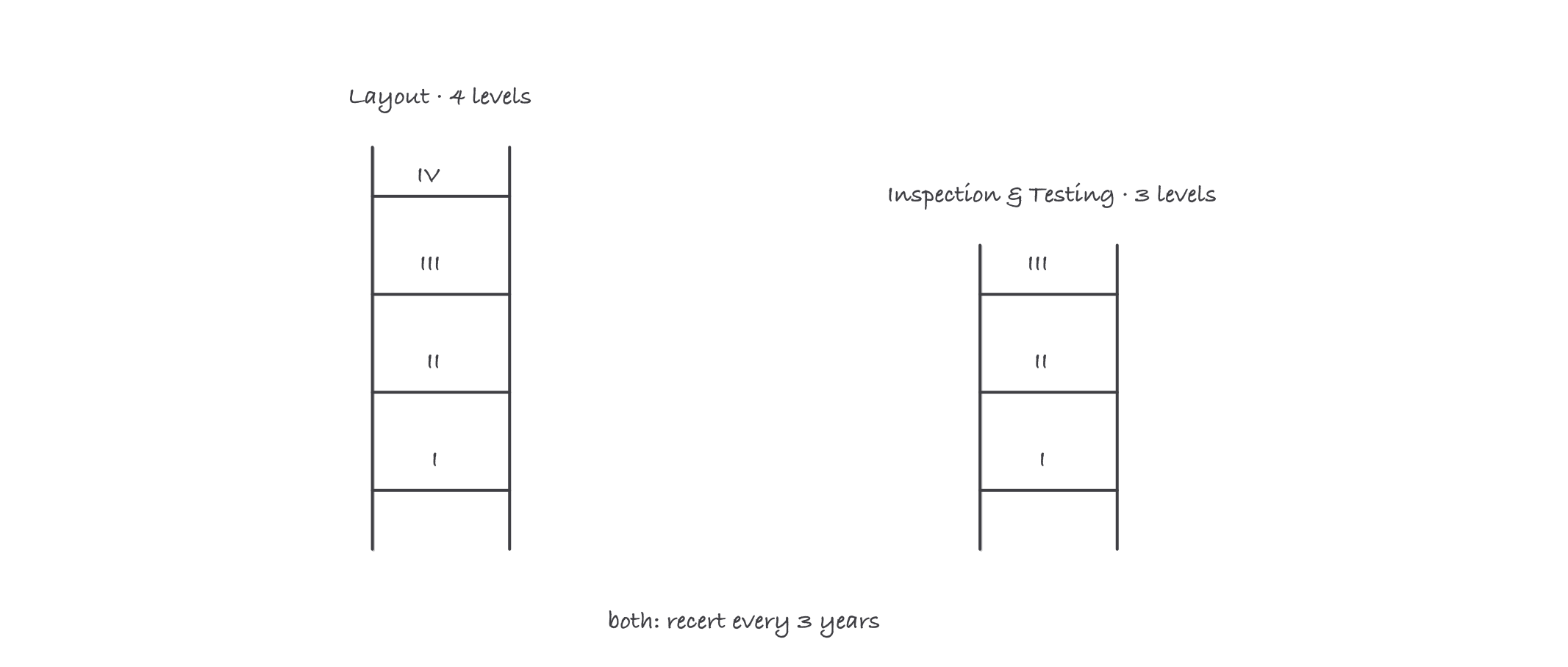
Two tracks, two sizes: Layout climbs four levels to design leadership, Inspection and Testing climbs three to ITM leadership
Worked example: three fitters pick a track
- A detailer in a design office, drawing systems and running calcs all day: Layout, aiming at Level III, because the Hydraulics exam is her daily work formalized.
- A service technician doing quarterly inspections, main drain tests and dry valve rebuilds: ITWBS, where NFPA 25 frequencies, test methods and documentation are the exam content.
- A foreman who installs from others’ drawings and wants advancement: neither track maps perfectly, but the choice follows the next job (layout office versus service division), not the current one. The tracks certify roles, not seniority.
Note what none of the three get: permission to work. Where a license is required, it comes from the state or city, and their rules say whether and how NICET levels count toward it.
Where it bites
- Certification is not a license. The commonest error in the whole trade’s career talk. NICET certifies competence; jurisdictions license work. Some jurisdictions lean on NICET levels in their requirements, which is exactly why the two get blurred, and exactly why the distinction matters on applications.
- The tracks are not interchangeable. A Layout Level III is not qualified paper for an inspection role, nor the reverse. The ITM/Layout split mirrors role splits in state rules too (Texas, for instance, licenses inspection-only responsibility separately from full design responsibility).
- Levels expire without maintenance. Recertification runs on a three-year cycle with continuing professional development. A lapsed certification on a resume is worse than none.
- Exam versions move. The ITWBS exams were rewritten across 2025; older prep material targets retired outlines. Check NICET’s program pages for current exam content before spending on courses.
Exam relevance
This page IS the exam map. The lessons behind each track live in this knowledge base: the Layout track leans on the hydraulic calculations and NFPA 13 navigation lessons, and the ITWBS track leans on the NFPA 25, frequencies and impairment lessons. Study the track you picked here, then verify current exam outlines and application requirements on NICET’s own program pages before you book anything.
Verified requirements
| Where | Expires | Renewal | Continuing education |
|---|---|---|---|
| United States (federal) | Yes | 3 years | CPD required each 3-year certification period |
| United States (federal) | Yes | 3 years | CPD required each 3-year certification period |
Information comes from issuing-authority sources. Confirm current rules, fees and eligibility with the authority before acting.