Learn · Low Voltage and Telecom
Fire Alarm Inspection, Testing and Maintenance
Part of Fire Alarm Technician, NICET Track · step 6 of 11 · next: Power-Limited Circuits and Cable Ratings
In learning paths: Fire Alarm Technician, NICET Track
Assumes you know: NFPA 72 Basics
Inspection, testing and maintenance, ITM, is the half of fire alarm work that never ends: the recurring verification that an installed system still does what it did on acceptance day. NFPA 72 dedicates a chapter to it, buildings are contractually and legally bound to it, and a large share of fire alarm employment is ITM work rather than new installation.
*Learn the Trades is a free study resource. We are not a licensing body, an authorized training provider, or an exam administrator. Reading this page does not award any card, license, or certification. Always verify requirements with the issuing authority linked in the sources.*Why it matters on the job
A fire alarm system that passed acceptance testing five years ago proves nothing about today: detectors foul, batteries age, buildings get remodeled around devices. ITM is the mechanism that catches this, and it is steady, contract-based, recurring revenue for the companies that do it. For a technician, ITM is where you see more system types, more faults and more code questions per month than installation work will show you in a year.
The three words mean three different activities
- Inspection is visual: the device is present, undamaged, unobstructed, and unchanged since last time. A ceiling detector with a storage rack built under it fails inspection without anyone touching a meter.
- Testing is functional: operate the device or circuit and confirm the system responds as designed: initiating devices trip, notification appliances sound, signals reach where they must.
- Maintenance is corrective and preventive work: repair, cleaning and replacement that keeps the system operable.
The distinction matters because NFPA 72 assigns each activity its own requirements and frequencies. Reporting “tested” when a device was only looked at is the kind of documentation error that surfaces in post-fire investigations.
How the code drives the work
In NFPA 72, the ITM chapter (Chapter 14 in current editions) sets out what must be inspected and tested, at what frequency, and how results are recorded. The frequencies are laid out by component in the chapter’s tables, on cycles ranging from weekly to annually depending on the component and the system’s supervision. The practical method for any ITM contract is the same: pull the component list for the building, look up each component’s required visual inspection and test frequency in the chapter’s tables, and build the schedule from what the tables say, not from habit or from last year’s paperwork.
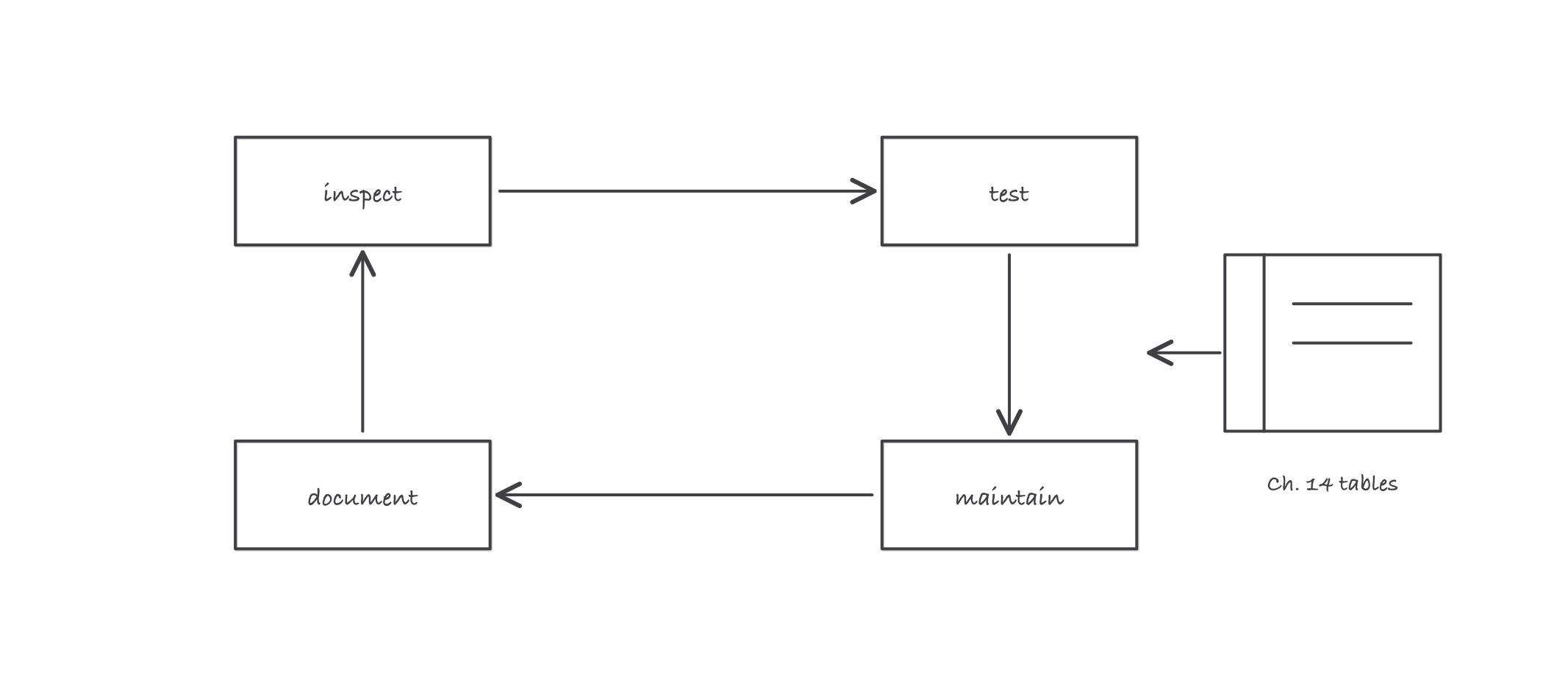
ITM is a documented loop, and the code’s tables, not habit, set how often each pass happens
Documentation is the deliverable
Every inspection and test produces records: what was inspected or tested, when, by whom, the results, and what failed with what follow-up. The records are what the AHJ, the insurer and the building owner actually see; in a dispute, the paperwork is the work. Good ITM crews treat the record set as the product and the site visit as how it gets made.
A concrete walk-through: an ITM visit to a small office building under an annual test contract starts from the system record drawings and the prior year’s report. The tech verifies the panel condition, then works the device list: each initiating device operated and confirmed at the panel, notification appliances run, batteries checked, every device ticked against the list with its result. Two smoke detectors fail sensitivity and are cleaned and retested; one fails again and is replaced under the maintenance side of the contract. The closing report lists every device, every result and both corrective actions. That report is what the owner files and the AHJ asks for.
Who performs ITM
Where it bites
- Inspection is not testing. Recording a visual check as a functional test is a real and consequential documentation failure, not a wording quibble.
- Frequencies are per component, not per building. One building carries multiple overlapping cycles; the schedule comes from the tables, component by component.
- Impairments need management. When testing takes systems or zones out of service, occupants and monitoring must be accounted for; leaving a system impaired after the visit is the nightmare scenario. Coordinate with monitoring before and after every test session.
Exam relevance
ITM is a core NICET Fire Alarm content area, and its exam questions reward exactly the distinctions this lesson draws: which activity is which, where frequencies come from, and what the documentation must show. Knowing your way to the ITM chapter’s tables under time pressure is worth more than memorizing any single frequency.