Learn · Elevator
Preventive Maintenance Programs
Part of Elevator Constructor, Start to Finish · step 11 of 20 · next: Troubleshooting Method
In learning paths: Elevator Constructor, Start to Finish
Assumes you know: Elevator Types: Traction and Hydraulic
Preventive maintenance in this trade is a written, unit-by-unit program, not a habit of oiling things when you pass them. ASME A17.1 expects elevator maintenance to follow a documented maintenance control program: what gets examined, cleaned, lubricated, and adjusted on each unit, on what schedule, with records to prove it happened.
Why it matters on the job
Most elevator work is maintenance work. Route mechanics carry a list of units, and each visit is a structured pass over equipment whose failures are expensive (shutdowns, entrapments) or dangerous (door and safety-system defects). The documentation is not office overhead: when an inspector, an insurer, or a lawyer asks what was done to a unit, the maintenance records are the answer.
The program, unit by unit
Intervals are set per unit based on equipment type, age, usage, and environment, which is why the code requires a program rather than one universal checklist: a hospital’s busy traction group and a two-stop hydro in a quiet office do not need the same attention on the same calendar. The program names the tasks, the intervals, and the acceptance criteria; the mechanic’s visit executes and records them.
A typical visit sweeps four zones:
- Machine space: machine and brake condition, oil levels and leaks, controller condition, housekeeping.
- Car top: door operator, gate switch, leveling devices, rope condition and lubrication state, hoistway sightlines as the car moves under inspection operation.
- Car and landings: door operation and reopening devices at each floor, ride quality, leveling accuracy, fixtures.
- Pit: buffers, governor tension sheave, travel cables, stop switch and lighting, cleanliness and water.
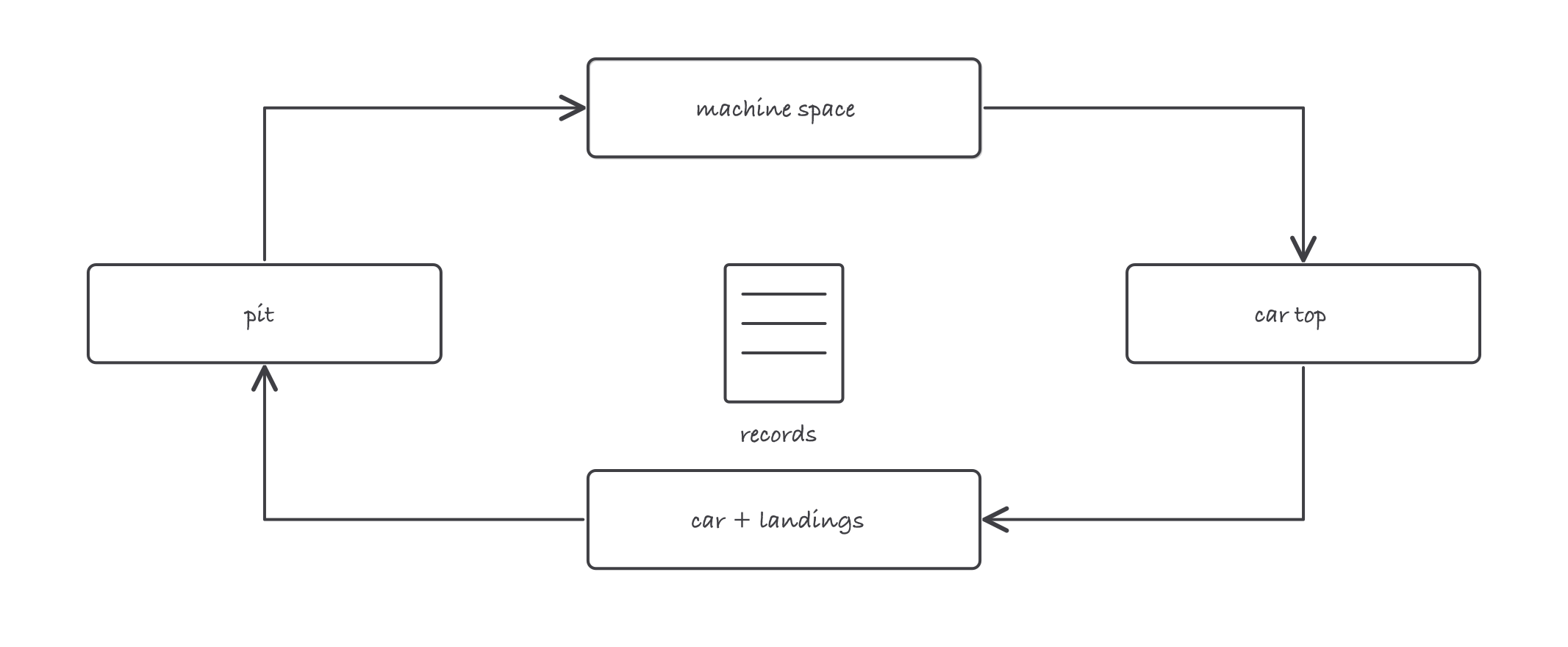
One visit, four zones, one record: the loop a route mechanic walks on every unit
Worked example: reading a route
A mechanic carries a 40-unit route mixing hydros and traction units. The program puts most units on a monthly examination, with certain tasks (rope inspection on traction units, say) at longer intervals, and it defines what “done” means for each task. In a 4-week working month of 20 route days, 40 units means averaging 2 program visits a day alongside callbacks. That is the real shape of the job: the program turns limited hours into the highest-value checks per unit, and the records show which units are consuming callback time and need deeper work scheduled.
Where it bites
- An undocumented check did not happen. In audits, inspections, and litigation, the record is the work. Write it every visit, on every unit, however routine.
- Callbacks are data for the program. A unit generating repeat door callbacks needs its program adjusted (more frequent door work, or a repair escalated), not heroic repeat visits. Feed the pattern back.
- Cleaning is diagnostic time. Wiping down a machine and sweeping a pit is when leaks, rouge, worn parts, and water problems get noticed. Mechanics who skip housekeeping skip their own early-warning system.
- The program follows the unit, not the mechanic. Pick up a new route and read each unit’s program and history before trusting the rhythm you used elsewhere.