Qualifications · Elevator
The CET Certification
Part of Elevator Constructor, Start to Finish · step 17 of 20 · next: Elevator Mechanic Licensing by State
In learning paths: Elevator Constructor, Start to Finish
The CET (Certified Elevator Technician) is the elevator industry’s main certification route outside the union apprenticeship: a two-level program run by NAEC (the National Association of Elevator Contractors) through its Certification Board, built as roughly a 4-year track of coursework completed while you work under an employer sponsor.
*Learn the Trades is a free study resource. We are not a licensing body, an authorized training provider, or an exam administrator. Reading this page does not award any card, license, or certification. Always verify requirements with the issuing authority linked in the sources.*Why it matters on the job
The IUEC/NEIEP apprenticeship (previous lesson) is the trade’s biggest doorway, but it is not the only one. Independent, non-union elevator companies need a structured way to train and credential technicians, and CET is the industry’s answer: a program aligned with Department of Labor apprenticeship guidelines that gives a technician at an independent shop a recognized, portable credential.
The two levels
- Level 1 is 11 units of coursework and exams. Completing it earns the AET (Associate Elevator Technician) certificate, a real credential in its own right marking the halfway point.
- Level 2 is 8 more units. Completing it earns the full CET certification.
- The whole track runs about 4 years alongside full-time work, deliberately parallel in shape to a registered apprenticeship.
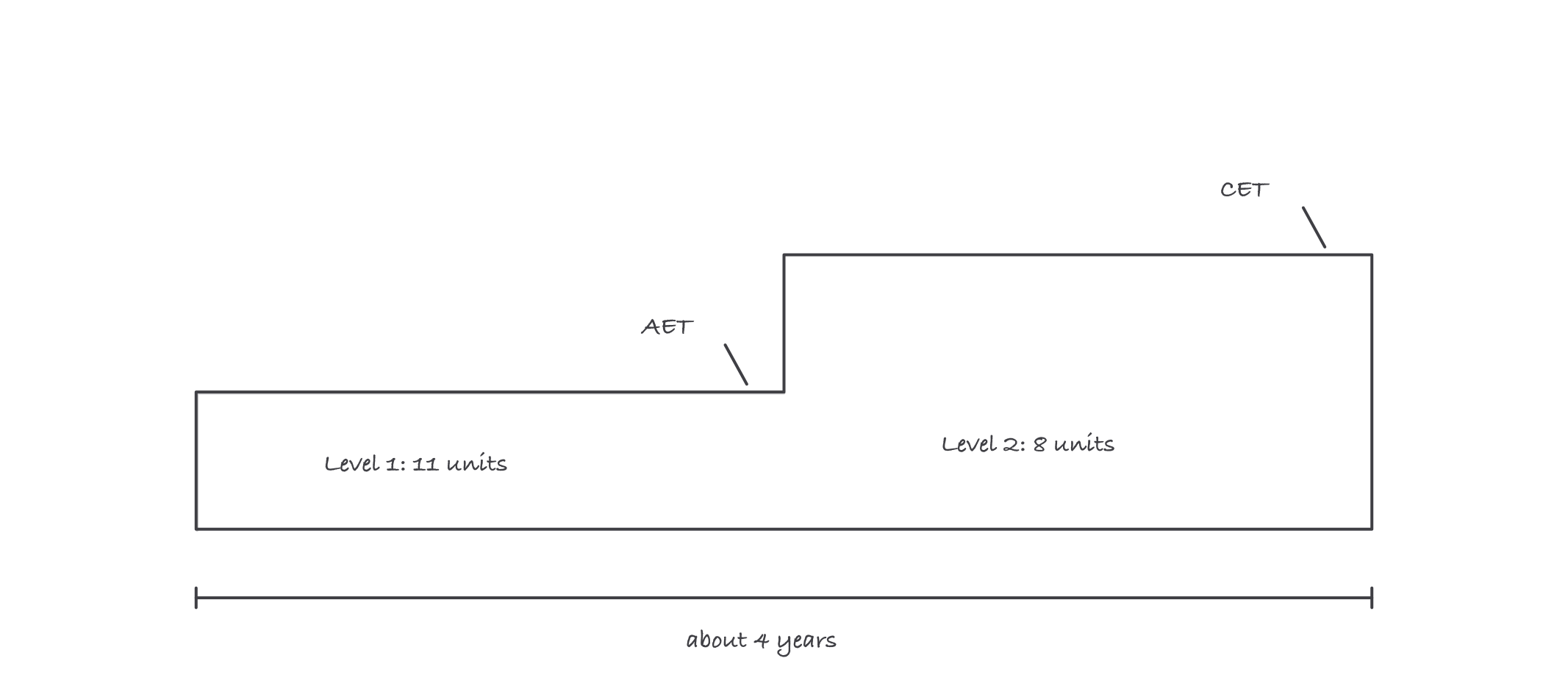
Eleven units up to AET, eight more to CET: about 4 years of study alongside the day job
The employer sponsor requirement
You cannot take CET as a solo student. Candidates enroll through an employer, and the field experience is supervised under the employer’s certified supervisor (NAEC’s CET-S credential exists for exactly this role). This is the program’s apprenticeship DNA: the coursework certifies knowledge, and the sponsored employment supplies the supervised hours that make the knowledge real.
CET, AET, CAT, CET-S: keep the letters straight
Four credentials one letter apart, all NAEC: CET is the full technician certification; AET is the certificate for completing Level 1; CAT is the separate Certified Accessibility and Private Residence Lift Technician track for platform lifts and related equipment (the accessibility lesson covers that equipment); CET-S is the certified supervisor an employer provides for CET candidates. Mixing them up in an application or an interview is a bad look; mixing them up in print is worse.
Where it bites
- CET is not a shortcut around licensing. Where a state licenses mechanics, the state license remains its own application, its own requirements, and its own card. Verify with the state board, always.
- No sponsor, no program. If you are not employed in the industry, the CET track is not yet available to you; recruitment into a shop comes first. Treat job hunting as step zero.
- Union and non-union tracks rarely mix. NEIEP semesters and CET units are parallel systems, not transferable halves. Pick the door you are actually walking through and check credit questions with the issuing bodies, not with forum posts.
Verified requirements
| Where | Expires | Renewal | Continuing education |
|---|---|---|---|
| United States (federal) | Yes | 1 year (certification cycle ends December 31) | 10 contact hours annually, 1-3 of which must focus on safety |
Information comes from issuing-authority sources. Confirm current rules, fees and eligibility with the authority before acting.