Qualifications · Linework
Why Lineworkers Need a CDL
Part of Groundman to Journeyman Lineworker · step 22 of 23 · next: Getting Selected: Line Apprenticeship Entry Requirements
In learning paths: Groundman to Journeyman Lineworker
A commercial driver’s license is the credential that gets you to the pole. Line trucks are heavy commercial vehicles, and a line truck pulling a pole trailer is a combination vehicle, which puts crews in Class A territory. That is why the CDL functions as a de facto entry gate for the trade: some apprenticeships (the California-Nevada JATC among them) require a valid unrestricted commercial driver’s license at the application stage, before you have touched a tool.
*Learn the Trades is a free study resource. We are not a licensing body, an authorized training provider, or an exam administrator. Reading this page does not award any card, license, or certification. Always verify requirements with the issuing authority linked in the sources.*Why it matters on the job
Crews move themselves and their equipment. A hand who cannot legally drive the digger derrick, the bucket truck or the truck-and-trailer combination is a scheduling problem every day, and BLS says it plainly for this occupation: workers who drive heavy vehicles usually need a state-issued commercial driver’s license. Getting the CDL before you apply is one of the few concrete things a would-be apprentice can do to move their application.
How the CDL works
Federal standards, state issuance. The Federal Motor Carrier Safety Administration (FMCSA) sets the national standards (license classes, testing, medical and disqualification rules); your state driver licensing agency issues the license and administers the tests. There is no federal CDL card, only state CDLs issued to federal standards.
The classes. Class A covers combination vehicles: a power unit and trailer where the combination weight rating crosses the commercial threshold with a heavy trailer. Class B covers single heavy vehicles (a large truck on its own chassis). The distinction is the trailer: many line trucks alone are Class B vehicles, and the same truck pulling a loaded pole trailer becomes a Class A combination. Programs ask for Class A because it covers the combinations crews actually tow.
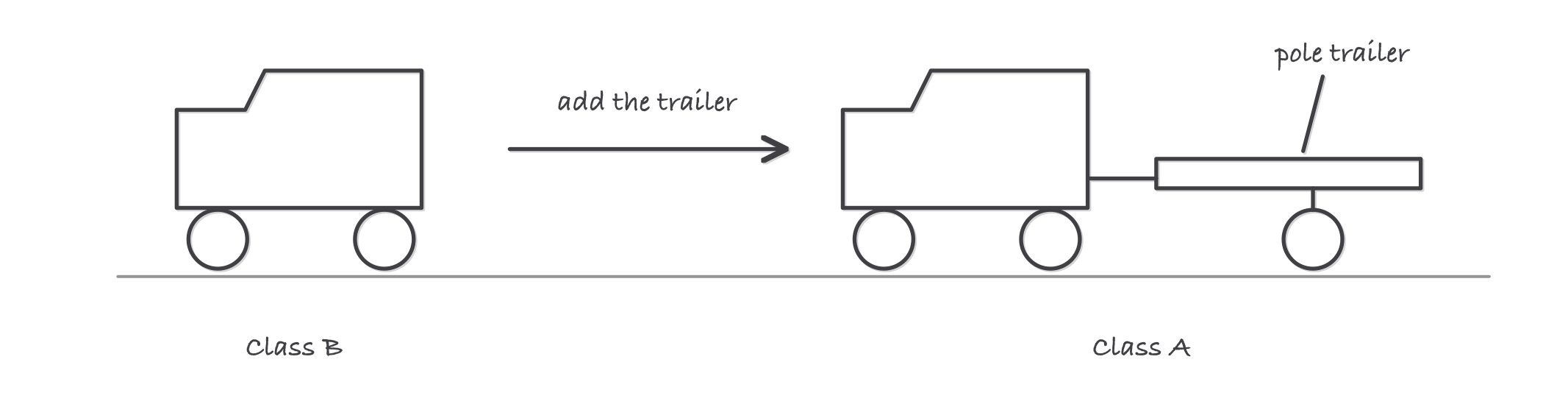
The trailer is the tipping point: a heavy truck alone is Class B; add the pole trailer and the combination is Class A
A concrete exemplar
An applicant preparing for an outside line apprenticeship on the Class A route: enroll with an ELDT provider on the Training Provider Registry, complete the theory and behind-the-wheel curriculum, pass the state knowledge tests for a commercial learner’s permit, then pass the state skills test in a Class A vehicle. With the unrestricted Class A in hand, the JATC application checkbox is satisfied, and the applicant is also more useful to any contractor hiring groundmen in the meantime.
Where it bites
- Restrictions can undo the point. An automatic-transmission restriction or air-brake restriction can make a license “not unrestricted” for programs that demand one, and crews run equipment those restrictions exclude. Test in a vehicle that leaves your license clean.
- The CDL carries its own compliance life. Medical certification, drug and alcohol program rules and disqualification standards follow the license. A DUI in your personal vehicle can end a line career through the CDL it takes down.
- “Get it during the apprenticeship” is program-specific. Some programs admit without a CDL and require it early in the program; others (like the California-Nevada JATC) want it at the door. Read the specific program’s requirements rather than assuming the forgiving version.
Exam relevance
The CDL is earned through your state’s knowledge tests and a skills test to FMCSA standards, with ELDT as the mandatory on-ramp for first-time Class A and B applicants. Study your state’s CDL manual (it is the exam’s source document), and treat endorsement tests (air brakes knowledge, combination vehicles) as part of the target, since restrictions are determined by what you test in.
Verified requirements
| Where | Expires | Renewal | Continuing education |
|---|---|---|---|
| United States (federal) | Yes | state-set | Confirm with issuer |
Information comes from issuing-authority sources. Confirm current rules, fees and eligibility with the authority before acting.