Learn · Diesel Mechanics
Truck Shop Safety: Rim Wheels and Stored Energy
Part of ASE T-Series Prep · step 13 of 20 · next: ASE T-Series: The Advancement Currency
In learning paths: ASE T-Series Prep
A parked truck with the engine off is still loaded with energy. A fully inflated truck tire pushes 40,000 lb or more against the rim flange. Brake chambers hold compressed springs strong enough to apply the parking brakes. Air tanks, hydraulic circuits and batteries all store energy that does not care whether the key is out. Shop safety is the discipline of finding that energy and controlling it before your hands go in.
Why it matters on the job
Rim wheel separations and stored-energy releases are the injuries that end careers on day one and year thirty alike. Both hazards have federal standards written specifically because people kept getting killed by them: OSHA 1910.177 for rim wheels, OSHA 1910.147 for hazardous energy. Knowing what the standards require is expected of you from your first week in a bay.
Rim wheels: 1910.177
The standard covers servicing of multi-piece and single-piece rim wheels on trucks, tractors, trailers, buses and off-road machines. It does not cover automobile tires or the LT-designated light-truck tires; the reason is the energy involved. When a truck rim wheel lets go, separating parts can be propelled at up to 130 mph.
The core rules:
- A restraining device is required for inflation: a cage, rack or portable barrier that contains flying parts.
- Stay out of the trajectory. The danger zone is the path parts travel if the assembly separates; position yourself and everyone else outside it, cage or no cage.
- Training is mandatory, and the employer must provide it before you service rim wheels.
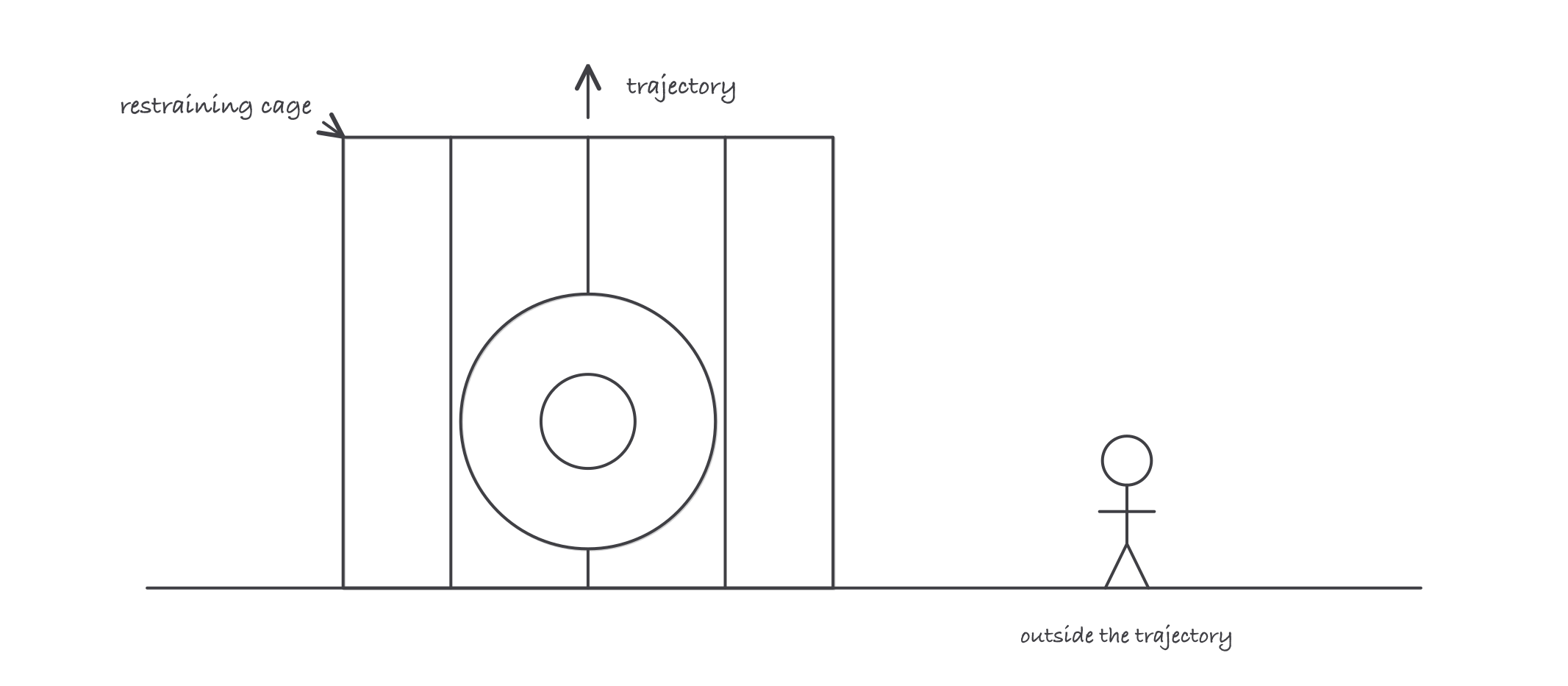
The cage contains what the flange cannot hold: 40,000 lb of push, parts at up to 130 mph
A worked sense of the numbers
Put 40,000 lb in shop terms: at roughly 4,000 lb per pickup truck, the force against the flange equals about 40,000 / 4,000 = 10 pickups leaning on that joint. And 130 mph is double a 65 mph highway limit, reached across the width of a bay. Neither number leaves room for “it has always held before.”
Stored energy: lockout/tagout in the truck shop
OSHA 1910.147 applies wherever servicing could injure someone through unexpected energization or release of stored energy, and a truck shop qualifies constantly. The energy list on one vehicle:
- Air: tanks and lines hold pressure after shutdown
- Spring: brake chamber power springs, held back only by air or a cage bolt
- Hydraulic: raised cabs, lift gates, dump bodies held up by pressure
- Electrical: batteries feed circuits whether or not the key is on
The pattern is always the same: identify every energy source, isolate it, release or restrain what is stored, and verify zero energy before you work. Employers must train the authorized employees who perform that control.
Where it bites
- “Lockout is for factories” is false. 1910.147 turns on stored energy during servicing, not on the building you stand in.
- Spring brakes apply when air is lost. Air pressure holds the parking springs off; dumping the air sets the brake. That same caged spring will maim you if the chamber is disassembled carelessly.
- The exclusion cuts the other way too. Your pickup’s tires are outside 1910.177, but the moment you service truck, bus or off-road rim wheels, every rule above applies.
- The trajectory has no memory. A tire that held pressure through demounting can still separate during inflation; the cage earns its floor space on the rare assembly that lets go.