Qualifications · General Contracting
Contractor License Requirements by State
Part of Contractor License, Start to Finish · step 4 of 21 · next: The NASCLA Exam: One Test, Many States
In learning paths: Contractor License, Start to Finish
Assumes you know: How Contractor Licensing Actually Works
Fifty states, fifty contractor licensing systems. This page gives you the map, which kind of state you are in, what that means for the package you must assemble, and how to verify your rules from the issuing board rather than folklore.
*Learn the Trades is a free study resource. We are not a licensing body, an authorized training provider, or an exam administrator. Reading this page does not award any card, license, or certification. Always verify requirements with the issuing authority linked in the sources.*The spectrum
State contractor licensing runs from strict to minimal:
- Strict statewide licensing, exams (trade + business and law), experience proof, financial checks, and real enforcement. Much of the South and West runs this way, and general building work without a license is illegal above low thresholds.
- License-for-larger-work states, licensing kicks in above a monetary threshold, with smaller jobs exempt or registration-only.
- Registration states, the state records contractors and requires insurance but tests little or nothing; consumer protection rides on registration and bonding.
- Local-control states, the state largely delegates; cities and counties license, and requirements change at municipal borders.
Specialty trades complicate the picture: a state may barely license general contractors while licensing electrical and plumbing contractors strictly; the trades’ own licensing pages cover those ladders.
What varies most, concretely
- Exams: which are required (trade, business and law, both) and who runs them.
- Experience: from none to four-plus documented years, and who may vouch for it.
- Money: bond amounts, insurance minimums, financial statements, license fees, and monetary limits per classification.
- Renewal: cycles and continuing education, from nothing to required hours.
How to verify your state
Find the state contractor licensing board (NASCLA’s membership is a reliable directory of them), read your classification’s checklist page, and take numbers only from the board’s current publications. On this site, verified facts cite the issuing board and the check date; the rest is the map, not your rules.
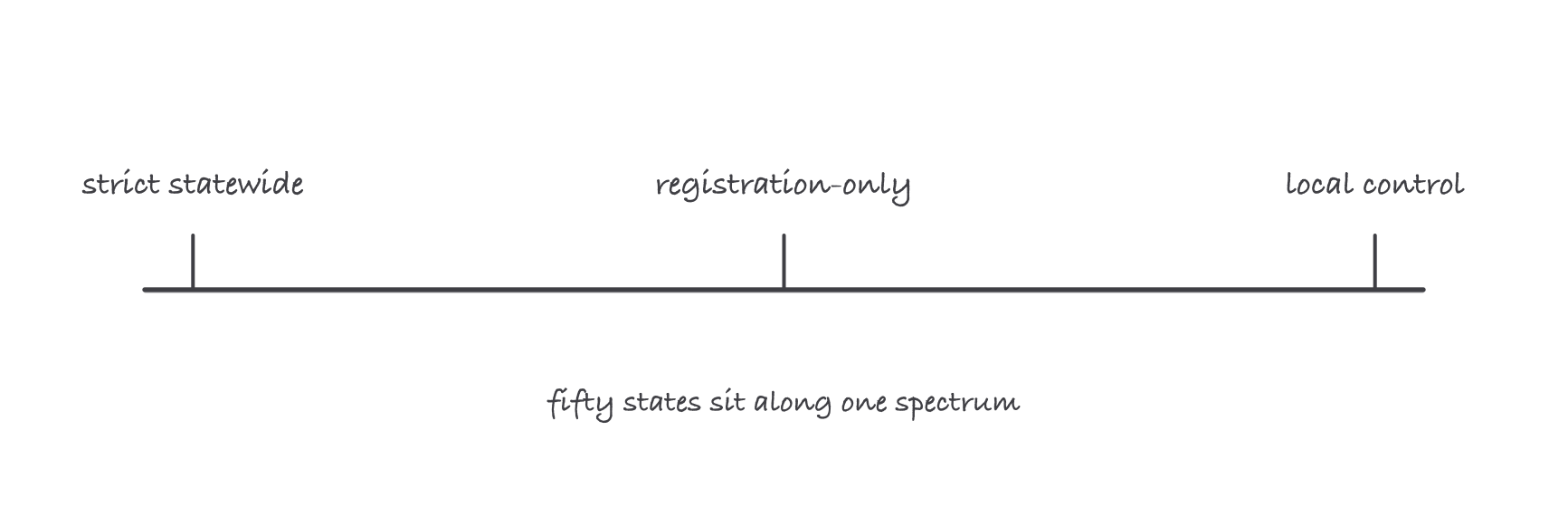
Find where your state sits before assembling anything
Where it bites
- The threshold question, “do I even need a license for this job?”, has a precise, dollar-figure answer in every state; guessing it is how handymen become defendants.
- Municipal layers in local-control states mean the state answer is not the whole answer.
Sources
- NASCLA (state board directory and program structure)
Verified requirements
| Where | Expires | Renewal | Continuing education |
|---|---|---|---|
| California | Yes | 2 years (CSLB: 'Active licenses expire every two years.' Inactive licences expire every four years.) | Confirm with issuer |
| United States (federal) | No | Confirm with issuer | Confirm with issuer |
| Florida | Confirm with issuer | Confirm with issuer | Confirm with issuer |
| Arizona | Confirm with issuer | Confirm with issuer | Confirm with issuer |
Information comes from issuing-authority sources. Confirm current rules, fees and eligibility with the authority before acting.