Qualifications · General Contracting
License Classifications and Monetary Limits
Part of Contractor License, Start to Finish · step 3 of 21 · next: Contractor License Requirements by State
In learning paths: Contractor License, Start to Finish
Assumes you know: How Contractor Licensing Actually Works
Contractor licenses come in classifications, labeled scopes that define what work a license may take, and often monetary limits that cap how big each job may be. Choosing classifications is a business-strategy decision disguised as a form field.
*Learn the Trades is a free study resource. We are not a licensing body, an authorized training provider, or an exam administrator. Reading this page does not award any card, license, or certification. Always verify requirements with the issuing authority linked in the sources.*How classification systems work
Most boards license along two axes:
- Scope: a general building classification for whole structures; residential versus commercial splits in many states; and specialty classifications (roofing, concrete, framing, electrical, mechanical) for defined trades. General classifications typically may subcontract specialties but not self-perform them without the specialty license, and the exact rule is state law.
- Money: tiered limits per job or per year in a number of states, a smaller-tier licensee may not contract above their limit, and boards audit contract values.
Upgrading, adding classifications or raising limits, usually means more experience proof, sometimes more exams, and often higher bonding.
Choosing yours
- License for the work you sell, not the work you can do. Every classification carries fees, bonds and renewal load; unused ones are pure cost.
- Mind the self-perform line. If your crews actually do the roofing on your remodels, check whether your general classification covers self-performing it, in many states it does not.
- Plan the upgrade path. If commercial work is the goal, structure your experience documentation toward the commercial classification’s requirements from the start.
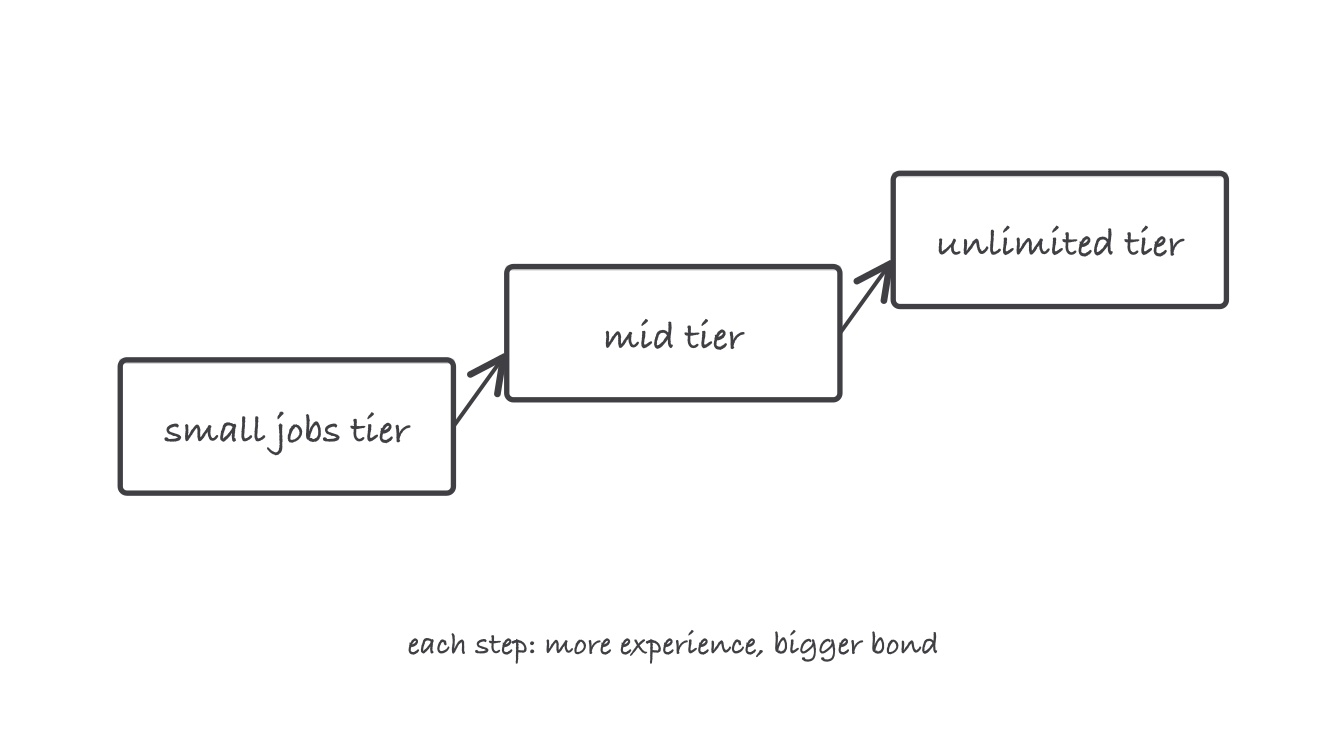
Monetary tiers cap the job size a class may contract
Where it bites
- Contracting one dollar over a monetary limit is unlicensed contracting for that job, with the same penalties, including, in some states, the customer’s lawful right not to pay.
- Scope creep on change orders can walk a project outside your classification mid-job; the change order is a licensing event, not just a pricing one.
Sources
- NASCLA, state board program materials (classification and limit structures across member boards)
Verified requirements
| Where | Expires | Renewal | Continuing education |
|---|---|---|---|
| California | Yes | 2 years (CSLB: 'Active licenses expire every two years.' Inactive licences expire every four years.) | Confirm with issuer |
| Florida | Confirm with issuer | Confirm with issuer | Confirm with issuer |
| Arizona | Confirm with issuer | Confirm with issuer | Confirm with issuer |
Information comes from issuing-authority sources. Confirm current rules, fees and eligibility with the authority before acting.