Qualifications · Elevator
Becoming a QEI Inspector
Part of Elevator Constructor, Start to Finish · step 19 of 20 · next: Passing the Elevator Industry Aptitude Test
In learning paths: Elevator Constructor, Start to Finish
Assumes you know: ASME A17.1 Basics
QEI (Qualified Elevator Inspector) is the designation that lets a career move from turning wrenches to witnessing tests and signing inspection reports. Getting it right starts with an ownership fact the industry itself fumbles: ASME QEI-1 is the standard that defines how inspectors qualify, and separate ANAB-accredited certification bodies (NAESA International and NAEC among them) run the exams and issue the certification.
*Learn the Trades is a free study resource. We are not a licensing body, an authorized training provider, or an exam administrator. Reading this page does not award any card, license, or certification. Always verify requirements with the issuing authority linked in the sources.*Why it matters on the job
Inspection is the trade’s second career: jurisdictions and insurers need inspectors who hold QEI certification to perform and witness the periodic inspections and tests that keep units legal (the inspections lesson covers that regime from the mechanic’s side). For an experienced mechanic, QEI opens work that is easier on the body, steady in demand, and central to public safety.
The structure: one standard, several certifiers
ASME writes QEI-1, the Standard for the Qualification of Elevator Inspectors. It defines what an inspector candidate must know and the experience they must document. ASME does not examine or certify anyone: “ASME-certified inspector” is a phrase that marks its speaker as confused.
Certification bodies administer QEI-1. Accredited by ANAB, they verify eligibility, run the exams, issue certification, and manage continuing education. The two you will meet are NAESA International and NAEC, and their exams are not the same:
- NAESA: a 160-question exam with an 8-hour window.
- NAEC: a 130-question exam, also in an 8-hour window.
Never say “the QEI exam” without naming the body; the formats differ, and so do the candidate handbooks you would study from.
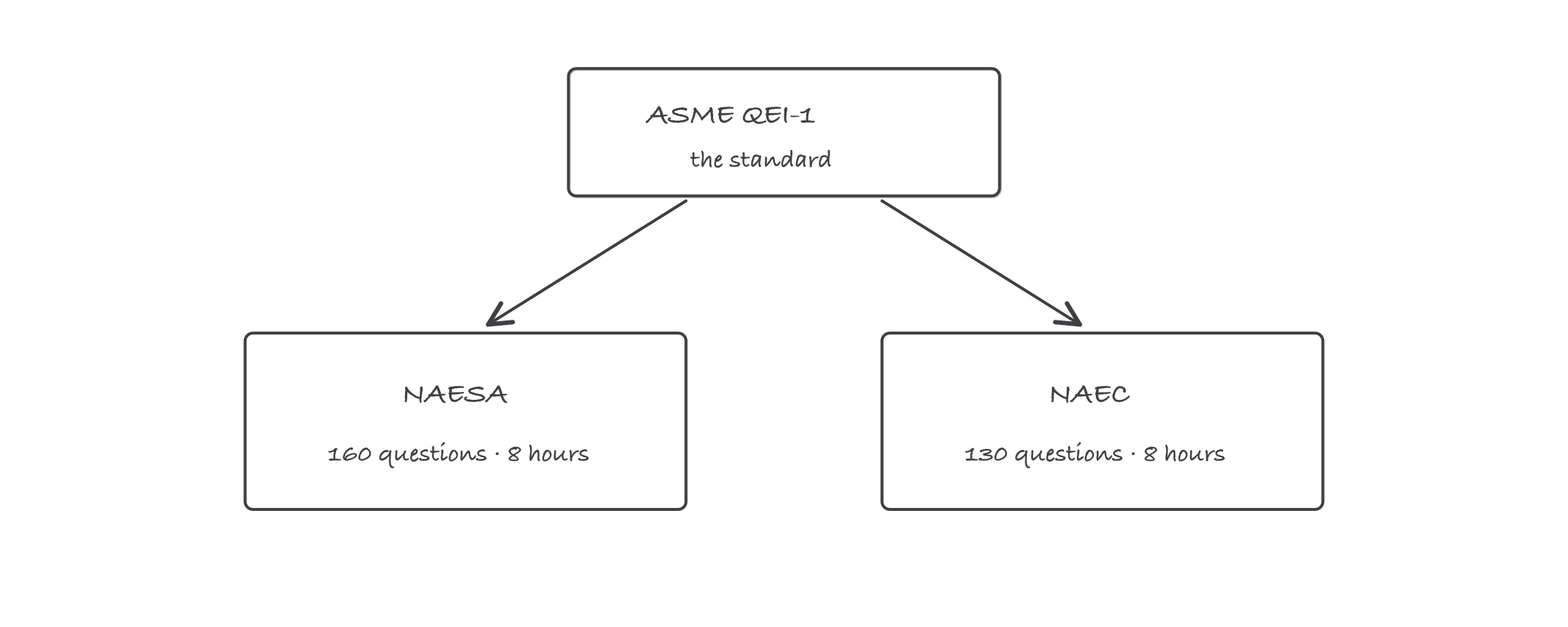
One standard, multiple certifiers: ASME defines the qualification, NAESA and NAEC examine for it
A realistic path from mechanic to inspector
- Build the experience QEI-1 asks for: years in the industry with responsibility for the equipment, documented. Your maintenance and testing records become your eligibility evidence.
- Choose a certification body, then study its handbook and exam outline (heavy on A17.1 navigation, the inspection guidance documents, and the test regime).
- Sit the exam, and on passing, maintain the certification with continuing education.
- Check your state separately: many jurisdictions license inspectors as well (New York’s licensing act in the previous lesson includes an inspector license), with QEI certification as a component of the state’s requirements, not a substitute for them.
Where it bites
- QEI is a designation under a standard, not one body’s product. Conflating NAESA’s exam with NAEC’s, or crediting ASME with certifying people, are the two classic errors. You now make neither.
- Inspection independence has rules. Jurisdictions constrain inspectors from inspecting their own employer’s work. Going independent is a business decision, not only an exam.
- The exam rewards code navigators, not memorizers. Eight hours and a code book: candidates who practiced finding requirements beat candidates who tried to memorize them.
Verified requirements
| Where | Expires | Renewal | Continuing education |
|---|---|---|---|
| United States (federal) | Yes | 1 year (NAEC-issued QEI expires September 30; NAESA expiration shown on certification card) | 1.0 CEU (10 hours) of approved continuing education per renewal |
Information comes from issuing-authority sources. Confirm current rules, fees and eligibility with the authority before acting.