Qualifications · Roofing
Manufacturer Certification Programs
Part of Roofer to Licensed Contractor · step 23 of 28 · next: Becoming a Roofing Contractor
In learning paths: Roofer to Licensed Contractor
A manufacturer’s approved-installer status is a commercial program run by a product manufacturer, held by a company, and tied to that manufacturer’s products and warranty terms. That sentence contains everything that distinguishes it from the other things roofing calls “certified,” and every word in it does work.
*Learn the Trades is a free study resource. We are not a licensing body, an authorized training provider, or an exam administrator. Reading this page does not award any card, license, or certification. Always verify requirements with the issuing authority linked in the sources.*Why it matters on the job
A homeowner comparing two bids sees “certified installer” on both and assumes it means the same thing twice. A contractor deciding where to spend money sees a program fee and wants to know what it buys. A roofer choosing an employer wants to know whether anything he earns there travels with him.
Those are three different questions, and answering any of them starts with knowing which kind of “certified” is on the truck.
Three structural differences
Who holds it. A manufacturer program enrolls a company. NRCA PROCertification is held by an individual worker. A firm that loses its certified installers has lost the people; a firm that leaves a manufacturer program has lost a business relationship. Those failures look different and are managed differently.
What it is scoped to. A manufacturer program is bounded by that manufacturer’s products. Nothing about status with one manufacturer says anything about a crew’s competence on another manufacturer’s system, and nothing carries across.
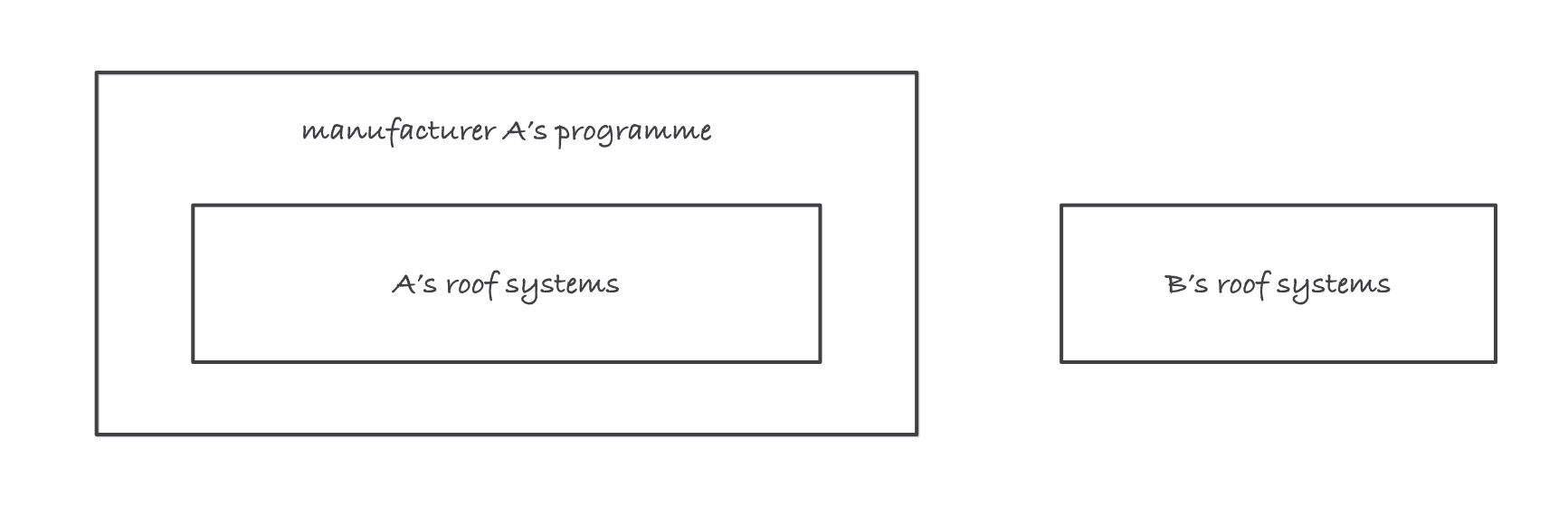
Approved-installer status is bounded by the product line it was granted for, and the boundary is the whole point of the program
Who sets the requirements. A manufacturer sets its own program’s entry requirements, training, fees, obligations and grounds for removal, and can change them. There is no external body to appeal to, because the program is the manufacturer’s commercial arrangement with its installers.
What this site cannot tell you, and why
Here is the honest boundary of this page.
This knowledge base cites Tier-1 sources only: regulators, statutes, code bodies, exam bodies and government statistics. Manufacturer program rules and warranty terms are published by manufacturers in their own commercial documents, which are not Tier-1 sources, and no regulator, trade association or consumer-protection body publishes a general statement of how approved-installer status relates to enhanced warranty coverage.
So this page states no warranty terms, no general rule about what approved-installer status unlocks, and no comparison of one program against another. Not because the information does not exist, but because the only authoritative source for a given program is that program’s own current documentation, and a summary written here would go stale silently and be believed anyway.
What to ask instead
Four questions get a straight answer out of any program claim, and none of them require you to trust a summary.
- Which manufacturer, and which program tier? Programs commonly have levels. “Certified” without a named manufacturer and a named tier is not yet a claim.
- Is the status current? Manufacturer programs have entry requirements, ongoing obligations and removal grounds. Ask the manufacturer, not the contractor.
- What document sets the terms? Get the actual warranty or program document for the actual product and read what it covers, what it excludes, what registration or inspection it requires, and what happens if the installer leaves the program later.
- Who holds what? The manufacturer status belongs to the company. Ask separately whether any individual on the crew holds a system credential of their own, and whether the company holds the state license the work requires.
Exam relevance
Manufacturer programs set their own requirements and publish them themselves, so there is no external syllabus to study toward. The credential on this page with a published exam structure is NRCA PROCertification, covered in its own lesson: an online eligibility exam plus a hands-on performance assessment in a named system type, with a documented experience minimum and a three-year renewal cycle.
If your goal is a credential that examines you personally and stays with you, that is the one to read next.
Where it bites
- Company status is not worker skill. A firm can hold approved-installer status and send a crew that has never installed that system. The program is an arrangement with the business, and the business decides who goes on the truck.
- Manufacturer status is not a license. In a state that licenses roofing contractors, no manufacturer program substitutes for the state license, and enrolling in one does not make an unlicensed contractor lawful.
- “Lifetime warranty” describes a document, not a promise you have read. A material warranty covers the product. A workmanship warranty covers the installation, and is written by the contractor. They are two documents from two parties, and confusing them is a routine misunderstanding in a roofing sale.
- Programs change. Terms, tiers and obligations are the manufacturer’s to revise. Anything you learned about a program three years ago needs re-checking before you repeat it to a customer.
Verified requirements
| Where | Expires | Renewal | Continuing education |
|---|---|---|---|
| United States (federal) | Yes | 3 years | Training completed within each 3-year renewal cycle, plus documented system-specific work experience |
Information comes from issuing-authority sources. Confirm current rules, fees and eligibility with the authority before acting.