Qualifications · Low Voltage and Telecom
BICSI Installer and Technician: INST1 to TECH
Assumes you know: BICSI Certifications: Installer to RCDD
The hands-on end of the BICSI ladder runs INST1 to INSTC and INSTF to TECH: an entry certificate, two medium-specific installer credentials, and a senior field credential with a genuine practical exam. This lesson covers what each rung requires and how the TECH exam actually runs.
*Learn the Trades is a free study resource. We are not a licensing body, an authorized training provider, or an exam administrator. Reading this page does not award any card, license, or certification. Always verify requirements with the issuing authority linked in the sources.*Why it matters on the job
These are the credentials that structure a cabling installer’s first five years. Crews get staffed and bids get written around them, and the TECH practical is one of the few exams in low-voltage work that tests whether your hands can do what your answers claim.
Installer 1: the entry certificate
INST1 has no experience prerequisite: it is built for people entering the trade. It is also, in BICSI’s own description, a non-renewable certificate. You earn it once, use it to get onto crews, and build past it; there is no INST1 renewal cycle to maintain. Do not list it as a current certification years into your career; the credential that follows it is the signal that you kept moving.
Installer 2: copper and fiber
The Installer 2 tier splits by medium: INSTC for copper, INSTF for optical fiber. INSTC expects six months of structured cabling experience, or completion of the Installer 1 program path as the route in. The split matters when you plan your ladder: a tech who terminates and tests both media holds two credentials here, not one, and job postings for fiber-heavy work ask for the F specifically.
TECH: the two-part exam
The Technician credential is examined in two parts:
- A hands-on practical: 14 tasks, 20 minutes per task. Real terminations, real testing, real workmanship, performed under time pressure and scored.
- A written exam: 100 questions in 2 hours, drawn from BICSI’s Information Technology Systems Installation Methods Manual (ITSIMM).
Run the numbers on exam day. The practical is 14 × 20 = 280 minutes of assessed bench work, about 4 hours 40 minutes. Add the 120-minute written and the full assessment is 280 + 120 = 400 minutes, roughly 6 hours 40 minutes. Pace and stamina are part of what is being tested: a termination you can do perfectly once in an unhurried shop has to hold up as task 12 of 14.
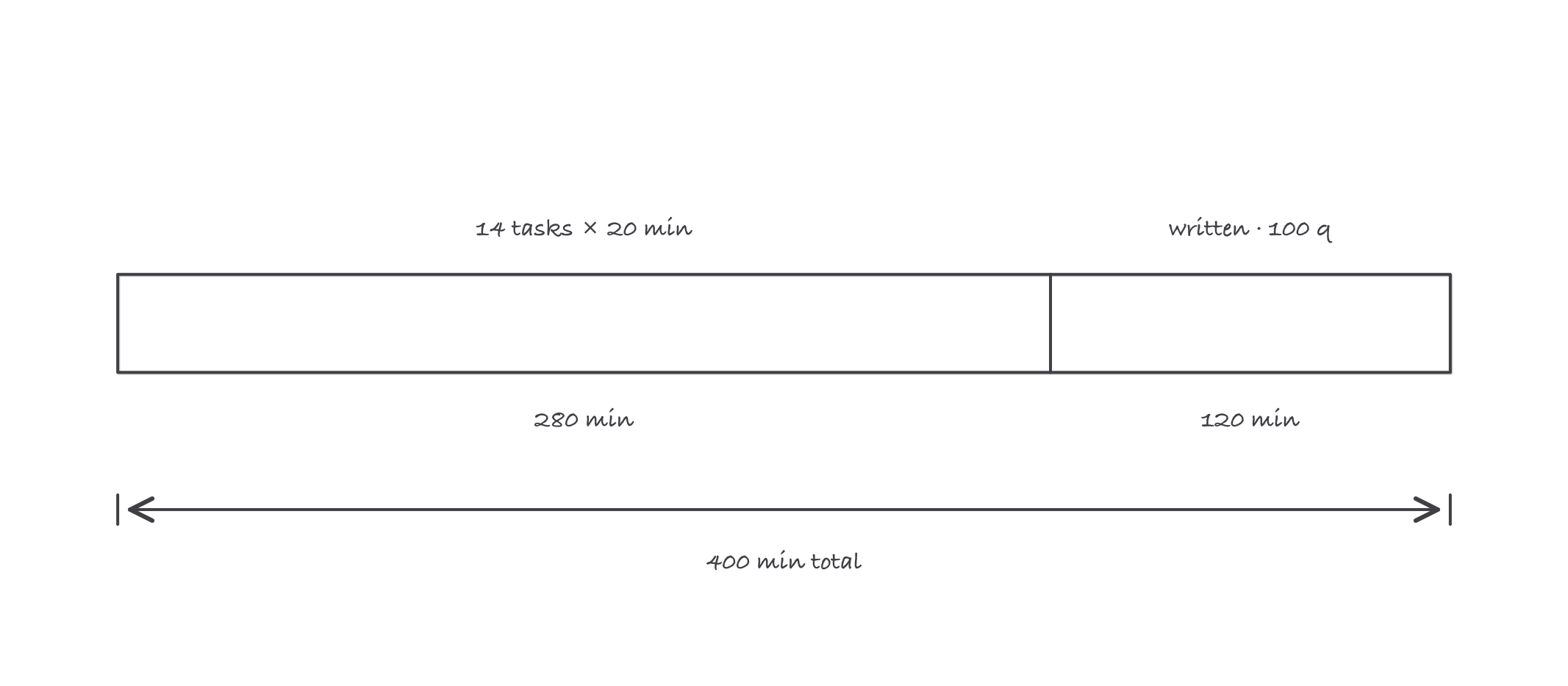
The TECH assessment: two thirds of it happens at the bench, not the answer sheet
Renewal
INSTC, INSTF and TECH recertify on BICSI’s three-year cycle by earning continuing education credits. INST1, as above, is the exception: nothing to renew. Track your CECs from the year you certify; three years arrives faster than it sounds when the credits come from courses and conferences you have to plan around work.
Where it bites
- The practical fails people the written would pass. Workmanship habits (dressing, labeling, consistent terminations at speed) are built on the job over months, not crammed. Treat every production termination as practice under observation.
- Copper and fiber are separate credentials. Assuming INSTC covers fiber work reads as inexperience to anyone hiring.
- ITSIMM is the syllabus for the written. The exam is drawn from it; studying general networking material instead is the standard way to be surprised.
Exam relevance
Everything in this trade’s structured cabling lessons (copper and fiber termination, testing and certification, pathways) feeds these exams. The cable certification and testing lesson pairs directly with the TECH practical’s testing tasks.