Qualifications · Low Voltage and Telecom
The RCDD: Eligibility, Exam and Renewal
Assumes you know: BICSI Certifications: Installer to RCDD
The RCDD, Registered Communications Distribution Designer, is BICSI’s design credential: the certification behind the person who lays out a building’s communications distribution system rather than the person who installs it. It is the credential that RFPs and specifications name when they want a qualified designer’s involvement on the drawings.
*Learn the Trades is a free study resource. We are not a licensing body, an authorized training provider, or an exam administrator. Reading this page does not award any card, license, or certification. Always verify requirements with the issuing authority linked in the sources.*Why it matters on the job
The RCDD changes what you sell. Installers sell labor; an RCDD sells design judgment, and sits upstream of every install decision: topology, pathway sizing, spaces, media selection. For firms, having one on staff unlocks bids that require the credential. For individuals, it is the recognized bridge from the field into design and engineering roles.
Eligibility: three paths in
The current credential handbook (v15) defines three routes to exam eligibility:
- Two years of ICT design experience plus a current BICSI credential: TECH, RTPM, DCDC or OSP.
- Two years of ICT design experience plus two years of ICT higher education.
- Five years of ICT experience.
The pattern behind the three paths: BICSI wants either demonstrated design work backed by a credential or education, or enough total industry time that design exposure is assumed. Field techs typically arrive via path 1 (TECH plus design years) or path 3 (five years).
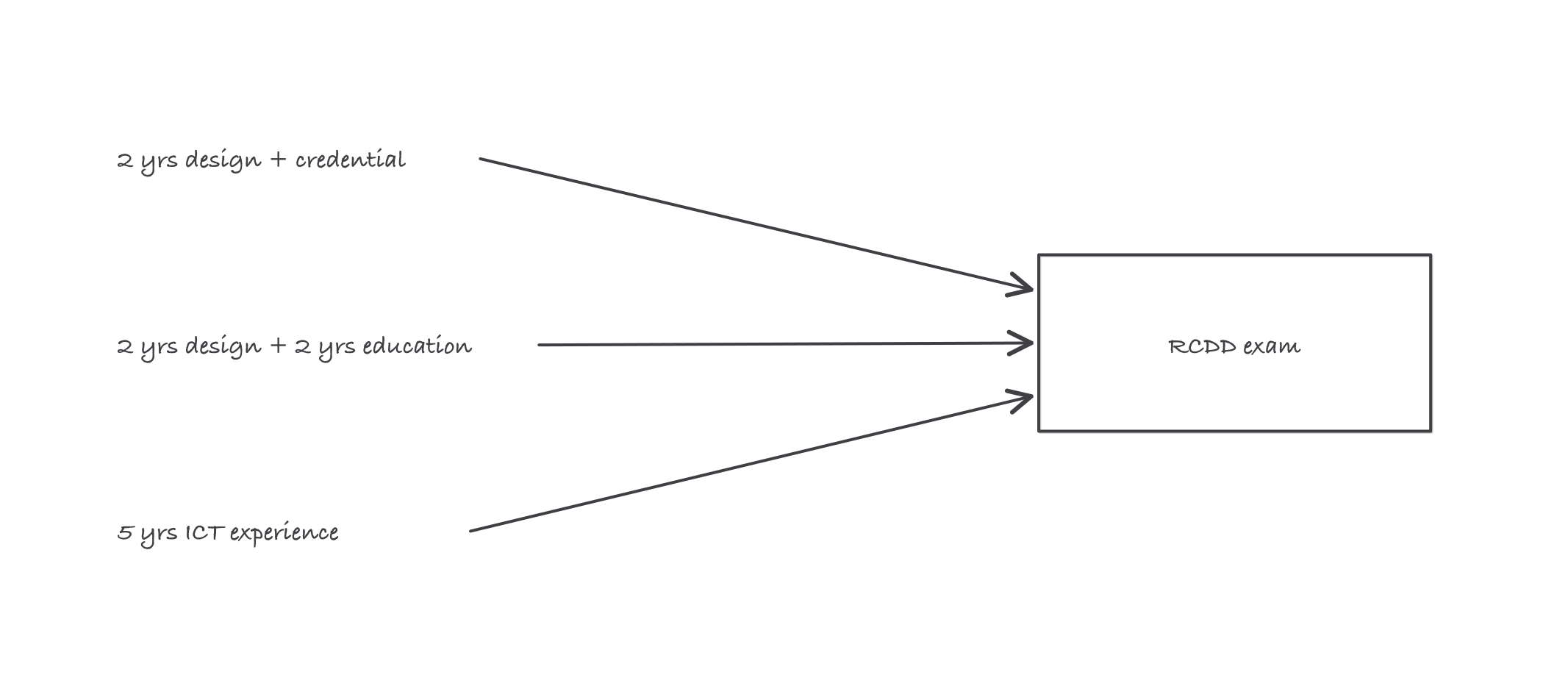
Three doors into the same room: credentialed designer, educated designer, or industry veteran
The exam
The RCDD exam tests design across the breadth of BICSI’s design body of knowledge: distribution systems, spaces and pathways, media and connectivity choices, and the design documents themselves. Verify the current exam format, question count and fees in the credential handbook before you apply: BICSI revises the handbook, and eligibility and exam details are pinned to the version in force (currently v15) when you apply.
Renewal: the 45-CEC cycle
The RCDD renews on a three-year cycle requiring 45 continuing education credits, plus one BICSI ethics course and one qualifying conference credit. Do the maintenance math: 45 CECs over 3 years is an average of 15 per year, every year, sustained for as long as you hold the credential. Budget it like a standing obligation (conference attendance, courses, documented learning), because a lapsed RCDD is an expensive thing to win back.
Where it bites
- Design experience is the eligibility currency. Pure installation years satisfy path 3’s five-year clock, but the exam itself is a design exam; candidates without real design exposure feel it.
- Handbook versions churn. Two versions of the credential handbook have circulated in recent years; the one in force when you apply governs your application. Download the current one from BICSI, not a forum copy.
- The RCDD does not replace a license. In states with limited-energy or contractor licensing, the design credential and the legal license answer different questions, and a project may need both.
Exam relevance
This lesson is about the exam gate itself. The design content it tests sits above this trade’s installation lessons: master the structured cabling, pathways and testing material first, because the RCDD assumes it as floor, not ceiling.