Qualifications · Low Voltage and Telecom
NICET Fire Alarm Levels III-IV: Recommendations and the Major Project
Part of Fire Alarm Technician, NICET Track · step 10 of 11 · next: Security and Alarm Licensing: The State Pattern
In learning paths: Fire Alarm Technician, NICET Track
Assumes you know: NICET Fire Alarm Levels I-II: Exams and Work History
NICET Fire Alarm Levels III and IV are the senior rungs: the levels that specifications name for project leadership and program-level responsibility. The exams get longer, but the real change is in what surrounds them: both levels require personal recommendations, and Level IV adds a Major Project, a documented submission of senior-level work.
*Learn the Trades is a free study resource. We are not a licensing body, an authorized training provider, or an exam administrator. Reading this page does not award any card, license, or certification. Always verify requirements with the issuing authority linked in the sources.*Why it matters on the job
Level III is the level job specifications most often attach to supervision and project responsibility, and Level IV marks the top of the program. These are the levels that move you from being staffed on projects to being the reason a company wins them: bid documents that require a senior NICET holder on the team make that person directly valuable to the business.
The two exams
| Level | Questions | Time | Fee |
|---|---|---|---|
| III | 115 | 170 min | $380 |
| IV | 120 | 290 min, incl. 30-min break | $435 |
Fees took effect August 1, 2026. Level III pacing: 170 / 115 = 1.48 minutes per question, about 89 seconds. Level IV is a different animal: 290 minutes includes a 30-minute break, leaving 260 testing minutes for 120 questions, 260 / 120 = 2.17 minutes per question. The extra time signals the question style: less recall, more scenario and judgment, the kind of question where you weigh a design or program decision rather than recognize a definition.
Beyond the exam
Both senior levels require personal recommendations: named people vouching for your competence and responsibility, on top of the documented work history that every level of the program requires. Level IV adds the Major Project: a substantial piece of your own senior-level work, documented and submitted as evidence.
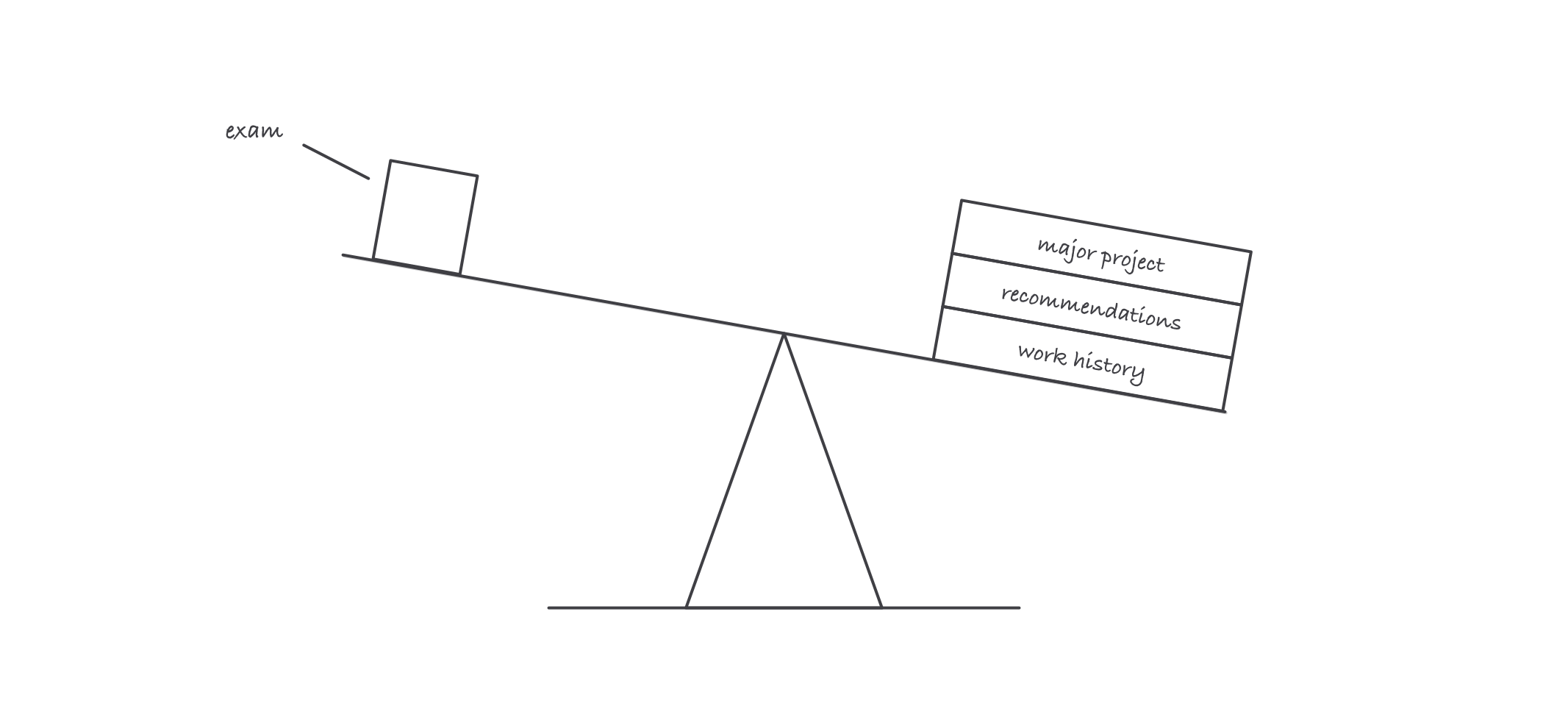
At Levels III and IV the evidence package outweighs the exam: the test is the smallest part of the application
Plan the evidence before you book the exam. Recommendations take other people’s time, and a Major Project needs to be documented while the project is live: drawings, scope, your specific role, outcomes. Assembling it retroactively from a job you finished three years ago is the hard way.
The full ladder in numbers
Total exam fees for all four levels at current rates: 235 + 325 + 380 + 435 = $1,375. Total seat time: 110 + 155 + 170 + 290 = 725 minutes, about 12 hours of examination across four sittings. Spread over a realistic career arc those numbers are small; the years of documented work history between the levels are the real cost, and the real value.
Where it bites
- The recommendations are not a formality. They are part of the application. Cultivate the senior engineers, AHJs and managers who can credibly vouch for you long before you need their signatures.
- The Major Project is evidence, not an essay. It documents work you actually led or carried senior responsibility for. If your current role never gives you that work, the gap to Level IV is a career-content problem, not a study problem.
- The three-year recertification cycle continues at every level. Seniority does not exempt you from logging continuing professional development.
Exam relevance
The senior exams reward breadth across the whole fire alarm discipline: system and circuit design choices, inspection, testing and maintenance obligations, emergency communications, and the interfaces where fire alarm meets other building systems. If the early levels tested whether you know NFPA 72, these test whether you can run work governed by it.