Qualifications · Electrical
The Master Electrician License
Part of Master Electrician Exam Prep · step 1 of 12 · next: The Master Exam: What Changes From Journeyman
In learning paths: Master Electrician Exam Prep
Assumes you know: The Journeyman Electrician License
The master electrician license is the highest individual credential in the electrical trade. A journeyman license says you can do the work. A master license says you can be responsible for it: designing installations, pulling permits, supervising journeymen and apprentices, and in most jurisdictions, qualifying an electrical contracting business.
*Learn the Trades is a free study resource. We are not a licensing body, an authorized training provider, or an exam administrator. Reading this page does not award any card, license, or certification. Always verify requirements with the issuing authority linked in the sources.*Why it matters on the job
The master license is the gate between working for someone and someone working for you. In most licensing jurisdictions, an electrical contractor business must employ or be owned by a master electrician who acts as the qualifying party. No master, no permits, no business. That is why the master license, not the contractor license, is usually the real career bottleneck: the contractor license is paperwork and insurance stacked on top of a master’s qualification.
It also changes your ceiling as an employee. Masters run jobs, stamp designs where allowed, and command the pay that goes with carrying the liability.
How the ladder works
Licensing is state or municipal, not federal, so details vary by jurisdiction. The pattern, though, is consistent across most of the country:
- Journeyman first. You hold a journeyman license and work under it. There is no jumping the queue in most jurisdictions.
- Time in grade. Typically around 2 or more years of experience as a licensed journeyman before you can sit the master exam. Some jurisdictions count total hours instead.
- The master exam. Harder and broader than the journeyman exam: expect design-level questions, calculations, and deeper code navigation. See the exam guide in the next lesson.
- Annual or biennial renewal, usually with continuing education tied to the current code cycle.
A verified example of how a state structures the ladder beneath this: Texas requires 8,000 hours of on-the-job training under a master electrician for the journeyman license, renews licenses annually, and requires 4 hours of continuing education per renewal cycle. Master requirements sit on top of that journeyman foundation.
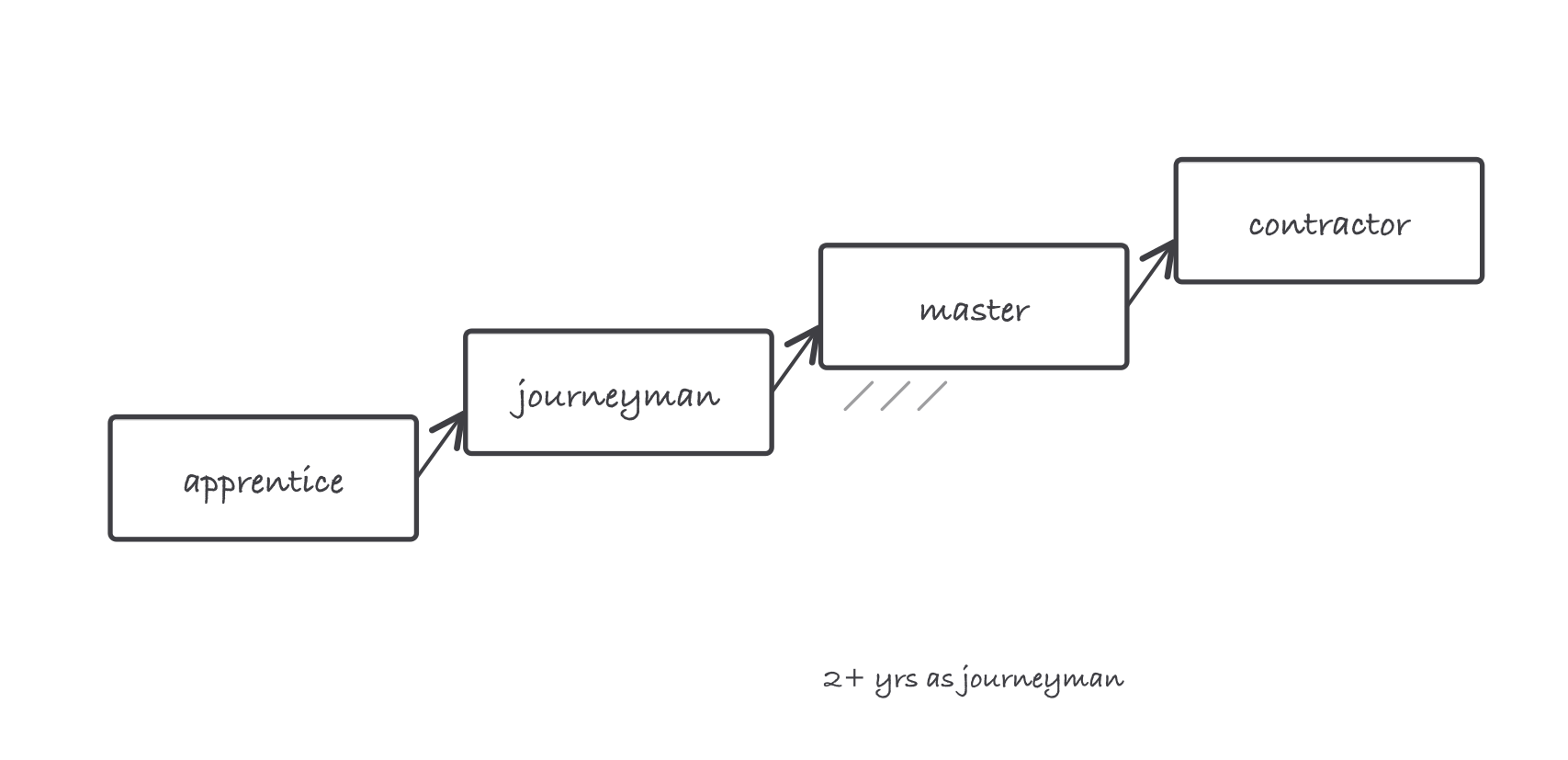
Master is the responsibility rung: designs, permits, supervision
Where it bites
- “Master” is not portable by default. Reciprocity exists between some states, but assume your master license is valid only where issued until you verify otherwise with the destination board.
- Municipal jurisdictions are real. New York State has no state electrician license at all; New York City licenses through the Department of Buildings, and Chicago licenses separately from Illinois. If you work in or near one of these cities, the city’s rules are the rules.
- Experience must usually be documented under supervision. Boards want verifiable hours signed off by the master you worked under. Keep records from day one as a journeyman.
Exam relevance
The master exam assumes everything the journeyman exam tested and adds load calculations, service and feeder design, transformer and motor applications, and heavier code navigation under time pressure. If your journeyman code skills are rusty, rebuild them before you book the exam.
Verified requirements
| Where | Expires | Renewal | Continuing education |
|---|---|---|---|
| Texas | Yes | 1 year | 4 hours per annual renewal cycle |
Information comes from issuing-authority sources. Confirm current rules, fees and eligibility with the authority before acting.