Qualifications · Plumbing
Medical Gas Certification
Assumes you know: Gas Pressure Testing
Medical gas certification qualifies a plumber to work on the piped gas systems in healthcare facilities, oxygen, medical air, vacuum, and their relatives, where an installation error can reach a patient’s lungs. The credential family is ASSE International’s 6000 series, with ASSE 6010 covering installers, and the governing installation rules come from NFPA 99, the Health Care Facilities Code. It is master-level specialisation: ordinary plumbing skills, held to an extraordinary standard of proof.
*Learn the Trades is a free study resource. We are not a licensing body, an authorized training provider, or an exam administrator. Reading this page does not award any card, license, or certification. Always verify requirements with the issuing authority linked in the sources.*Why this work is certified separately
A cross-connection in ordinary plumbing can sicken people; a crossed medical gas line can deliver the wrong gas to an anesthetized patient. NFPA 99 therefore treats the piping, the joints, the identification, and the verification of these systems as safety-critical, and the industry answers with personnel certification: the people who install, inspect, verify, and maintain medical gas systems each demonstrate competence to a standard written for their role. Gas Pressure Testing gave you the discipline of proving a fuel gas system tight; medical gas work extends that discipline to purity, identity, and documentation.
What makes the work different
The craft differences from ordinary copper work are specific and testable:
- Cleanliness is a material spec. Medical gas tube and fittings are supplied cleaned for oxygen service and kept capped; oil and debris that would be cosmetic elsewhere are contamination here.
- Joints are brazed, not soldered, and brazed while the line is purged with an inert gas, nitrogen, flowing through the pipe. The purge prevents oxide scale forming inside the joint, scale that would otherwise flake into the gas stream. Installer certification includes demonstrating this brazing competence.
- Identity is engineered. Outlets, valves, and piping are labeled and segregated by gas, and the system design makes cross-connection between gases physically difficult. The installer’s documentation habit is part of the safety system.
- Verification is a separate person. After installation and pressure testing, a certified verifier, independent of the installing contractor, tests the finished system, including confirming that each outlet delivers the gas its label promises, before patients depend on it.
What getting certified involves
ASSE 6010 installer programs combine coursework on NFPA 99 requirements, system components, and brazing practice with examination, written and practical, and expect qualified brazing skills going in or demonstrated during the program. Like backflow certification, the credential is time-limited, with recertification cycles and updates as NFPA 99 editions change. Prerequisites, program length, and fees are set by the certifying program; verify them with the program directly.
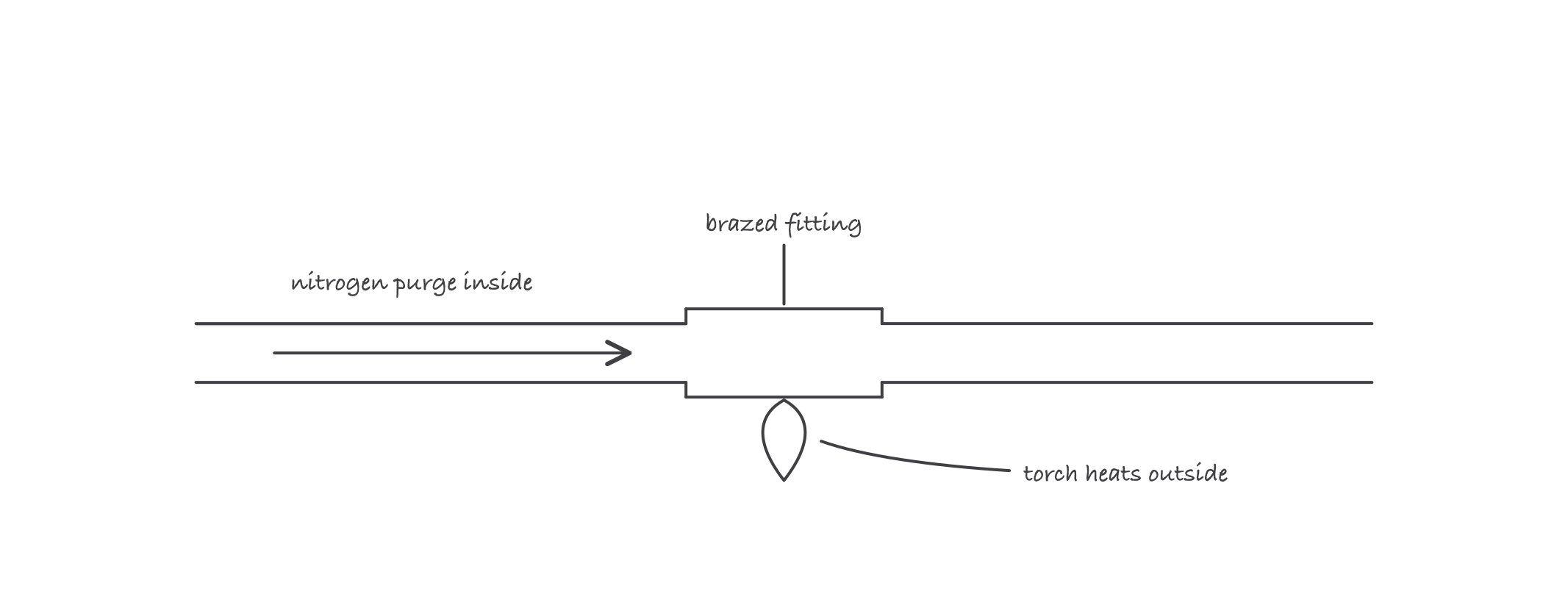
The signature skill: heat outside, inert nitrogen flowing inside, so the joint stays clean where the gas will travel
Where it bites
- Certification is per person, per role. The company does not hold the card; the individual doing the brazing does, and the verifier’s card is a different credential from the installer’s. Staffing a healthcare job means mapping cards to roles before bidding.
- Soldering habits are disqualifying here. Flux-and-solder thinking, or brazing without a flowing purge, produces joints that look sound and shed oxide into the line. The wet lab and the field both test for the discipline, not the appearance.
- The paperwork is the product. Test records, brazer identification, material certificates: healthcare authorities treat missing documentation as unproven work, and unproven work gets redone.
- NFPA 99 evolves by edition, and which edition applies is a project fact set by the jurisdiction and the facility. Confirm the edition before quoting requirements from memory.
Exam relevance
Medical gas examinations draw on NFPA 99’s installation requirements as taught in the certifying program: material handling and cleanliness, brazing with purge, valve and zoning arrangements, labeling, and the testing sequence that hands the system to the verifier. Candidates with strong Gas Pressure Testing fundamentals find the testing logic familiar; the healthcare-specific layer, gas identity, purity, and documentation, is where study time pays.
Verified requirements
| Where | Expires | Renewal | Continuing education |
|---|---|---|---|
| United States (federal) | Confirm with issuer | 3 years | Recertification requires a class of 2 to 12 hours depending on the program plus a written exam of 25 to 100 questions; some programs also require a hands-on practical. |
| United States (federal) | Confirm with issuer | 3 years | Recertification class plus written exam per ASSE's recertification schedule; some medical gas programs also require a hands-on practical. |
Information comes from issuing-authority sources. Confirm current rules, fees and eligibility with the authority before acting.