Qualifications · Mold Remediation
The S520 Standard of Care
ANSI/IICRC S520 is the professional standard for remediating mold-damaged structures and contents. It gives the people planning, performing, and checking a job one procedural reference for what the work must address.
*Learn the Trades is a free study resource. We are not a licensing body, an authorized training provider, or an exam administrator. Reading this page does not award any card, license, or certification. Always verify requirements with the issuing authority linked in the sources.*Why it matters on the job
A mold job brings several kinds of judgment into one room. Someone has to understand the building and materials, protect workers and occupants, control the work, document what happened, and decide whether the result meets the project criteria. S520 organizes those responsibilities around a shared standard.
That does not turn the standard into a recipe. Buildings differ, the source of moisture differs, and the affected materials differ. The standard gives the job a framework while the project documents and site conditions supply the particulars.
What the standard covers
IICRC describes S520 as a procedural standard for residential, commercial, and institutional buildings, their systems, and their contents. Its published scope includes building and material science, worker safety and health, inspection, documentation, structural remediation, HVAC remediation, contents remediation, and post-remediation verification.
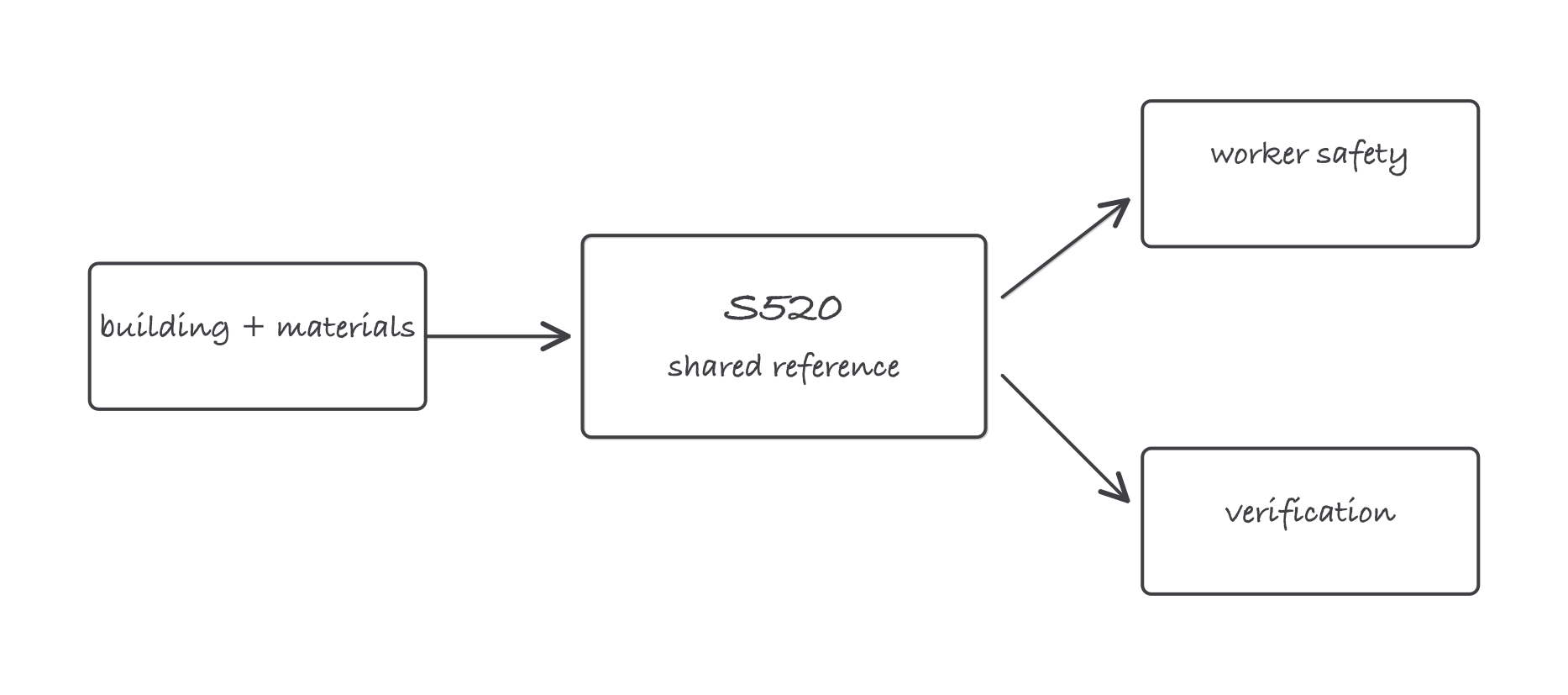
One standard connects the building, the work, and the verification without turning them into the same responsibility
The current public page identifies the 2024 Fourth Edition. Earlier editions remain listed, which matters when a contract names an edition rather than saying only “S520.” The edition on the contract is part of the job requirement.
Standard, contract, and law
Keep three layers separate:
- The standard describes professional mold-remediation procedures and precautions.
- The contract or protocol applies requirements to one property and one scope of work.
- A law or licensing rule comes from a jurisdiction and determines what that jurisdiction requires.
One document may refer to another, but they do not become interchangeable. A contract can require work to follow S520. A state can regulate who may perform the work. Neither fact makes S520 itself a state license.
A concrete exemplar: checking the edition
A project specification says the remediation must follow “ANSI/IICRC S520-2015.” The IICRC page identifies the current edition as 2024, but the contract names 2015.
Your first move is not to silently substitute the newest edition. Flag the mismatch and get written direction from the person controlling the project documents. The standard named in the contract and the current standard are two different references until the contract is clarified.
The full text is the working document
The detailed procedures live in the purchased standard. This page does not paraphrase clauses that IICRC does not publish freely. If a decision depends on a defined condition, a procedural threshold, or a verification requirement, open the edition governing the job and read the actual text.
That habit is part of competent remediation. A remembered phrase from training is not a substitute for the controlling document when the scope, occupant safety, or acceptance of the work depends on the wording.
Where it bites
- “Standard of care” does not mean universal law. Ask what made S520 controlling on this job: the contract, the protocol, an insurer, or a jurisdictional rule.
- An edition number is not decoration. A 2015 reference and a 2024 reference may not say the same thing.
- The assessor and remediator still have different jobs. A shared standard does not erase the separation between defining the project and performing it.
- Free summaries stop at the paywall. Use the public page for scope and edition status. Use the purchased standard for procedural decisions.
Exam relevance
Credential questions test the map before the clauses: what S520 is, who publishes it, what kinds of work it covers, and why a standard is different from a license or a project protocol. When a question turns on exact procedure, the governing edition is the source.