Qualifications · Mold Remediation
What EPA Guidance Is, and Is Not
Assumes you know: The S520 Standard of Care
EPA’s mold material is voluntary guidance. It helps building managers, maintenance staff, remediators, and contractors reason about prevention and cleanup, but it is not a federal mold license or an airborne mold standard.
*Learn the Trades is a free study resource. We are not a licensing body, an authorized training provider, or an exam administrator. Reading this page does not award any card, license, or certification. Always verify requirements with the issuing authority linked in the sources.*Why it matters on the job
People attach the word “EPA” to a sentence and hear a legal command. On mold work, that shortcut creates bad scopes, bad sales claims, and bad conversations with occupants. EPA tells you directly that its course is based on voluntary guidance and that it does not regulate mold or mold spores in the air.
The guidance is still useful. It frames moisture control as the key to indoor mold control, explains why all indoor spores cannot be eliminated, and gives building staff a way to judge whether a situation belongs in-house or with an experienced contractor.
The boundary in one picture
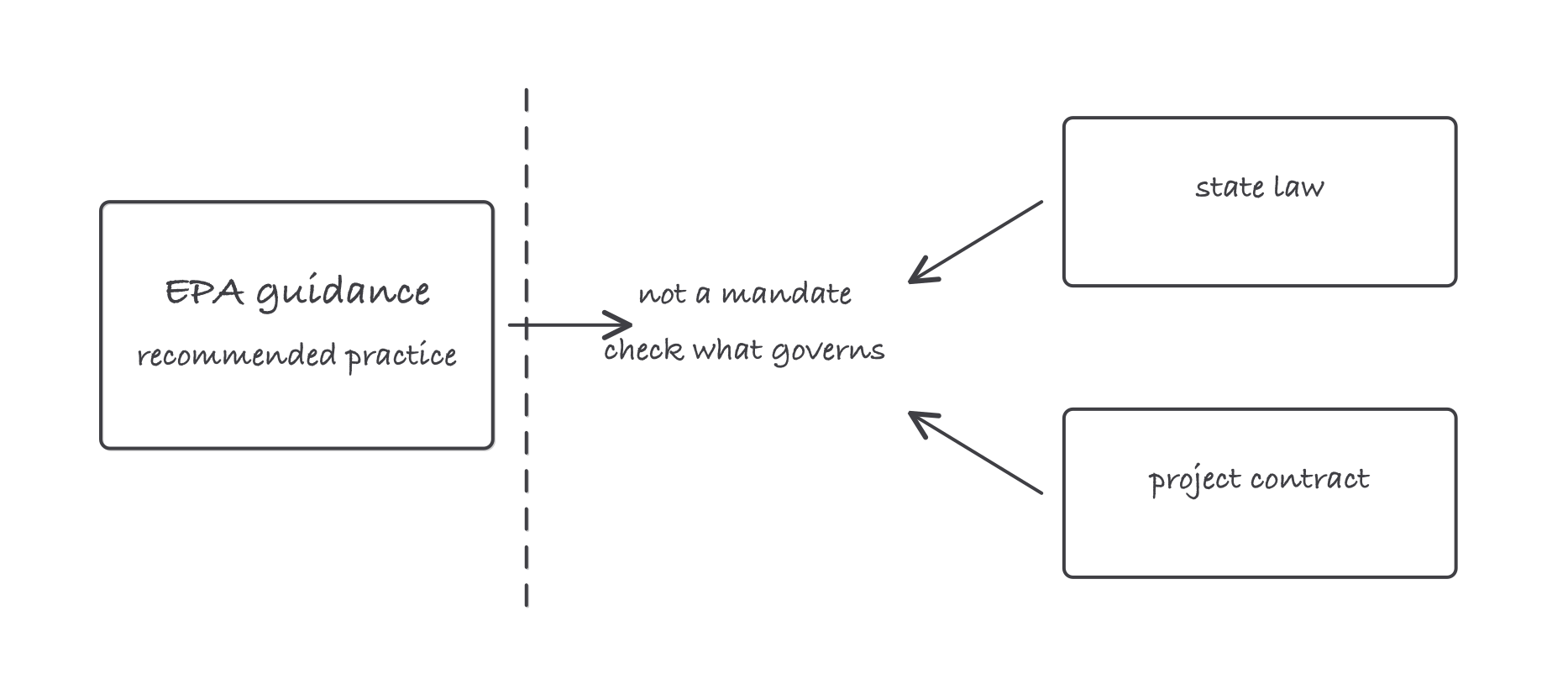
EPA publishes guidance; a licensing authority decides who may perform regulated work in its jurisdiction
What the guidance does say
EPA’s commercial-building guide starts from a physical fact: indoor mold growth follows excess moisture. Mold can grow on organic materials when moisture and oxygen are present, and controlling indoor moisture controls indoor growth.
The same guide says eliminating every indoor mold spore is impossible. The target is not a sterile building. The target is corrected moisture, removed or cleaned affected material as the situation requires, controlled dust and spores during the work, and a building that stays dry.
EPA also warns remediators against exposing themselves or occupants to mold-laden dust. That makes containment, work practices, and occupant communication part of the job rather than extras added after removal begins.
What the guidance does not do
The EPA course states three limits plainly:
- It does not cover every situation or every useful method.
- Its mold guidance addresses damage caused by clean water rather than flood water.
- Its health discussion is an overview, not individual medical advice.
These limits tell you when to stop using the guide as the only reference. Sewage, flood water, unusual occupant risk, and project-specific acceptance criteria need the sources and professionals appropriate to those conditions.
A concrete exemplar: the word “required”
A proposal says, “EPA requires air sampling after every mold remediation.” Before that sentence reaches a customer, test each part of it.
- EPA says its material is guidance.
- EPA says it does not regulate mold or mold spores in air.
- The proposal has not named a state rule, contract clause, or assessment protocol requiring the sampling.
The claim therefore has no stated authority. Rewrite the scope around the actual project requirement, or identify the jurisdictional or contractual source that makes sampling part of the job.
Where it bites
- Guidance is not a license. Completing an EPA course does not create authority to perform work regulated by a state.
- A recommendation is not a federal mandate. Name the actual authority before using “required.”
- Clean-water guidance has a boundary. Do not carry it into flood or sewage work as though the exposure and contamination were unchanged.
- No airborne federal standard means no universal clearance number from EPA. Acceptance criteria have to come from the project’s real governing documents.
Exam relevance
Expect questions that separate guidance from regulation. Know the positive facts too: EPA centers moisture control, treats total spore elimination as impossible, and presents its course as an overview with stated limits.