Business · HVAC/R
Becoming an HVAC Contractor
Assumes you know: HVAC Licensing by State
Becoming an HVAC contractor is the trade’s biggest single step: from working under someone’s license to holding the one everyone else works under. The technical bar is usually an exam; the real package is experience proof, insurance, bonding and a business that can survive its first winter.
*Learn the Trades is a free study resource. We are not a licensing body, an authorized training provider, or an exam administrator. Reading this page does not award any card, license, or certification. Always verify requirements with the issuing authority linked in the sources.*The typical package
State details vary (see HVAC Licensing by State), but the recurring requirements are:
- Experience proof, commonly two to five years of documented field experience, sometimes with a supervising-contractor sign-off.
- A trade exam, mechanical code, system sizing, refrigeration, gas, and safety; open-book code navigation in many states.
- A business and law exam, contracts, lien law, employment, insurance; the same material the general contracting section teaches in depth.
- Insurance and bonding at state-set minimums, plus workers comp the day you hire.
- The entity itself, registration, a qualifying party named, local registrations where cities require them.
What is specific to HVAC contracting
- Seasonality is the cash-flow story. Cooling season feasts, shoulder seasons starve; maintenance agreements exist to flatten exactly that curve, and they are the difference between shops that survive and shops that do not.
- Refrigerant compliance rides on the business: purchase records, recovery logs and technician certifications become the contractor’s responsibility.
- Equipment relationships matter more than in most trades, distributor terms and manufacturer programs materially change your margins and warranty position.
The business lessons that follow
Everything in the Business section applies from here: estimating and pricing, cash flow, employee versus subcontractor rules, and getting paid. The trade got you to the license; those lessons are about still being here in three years.
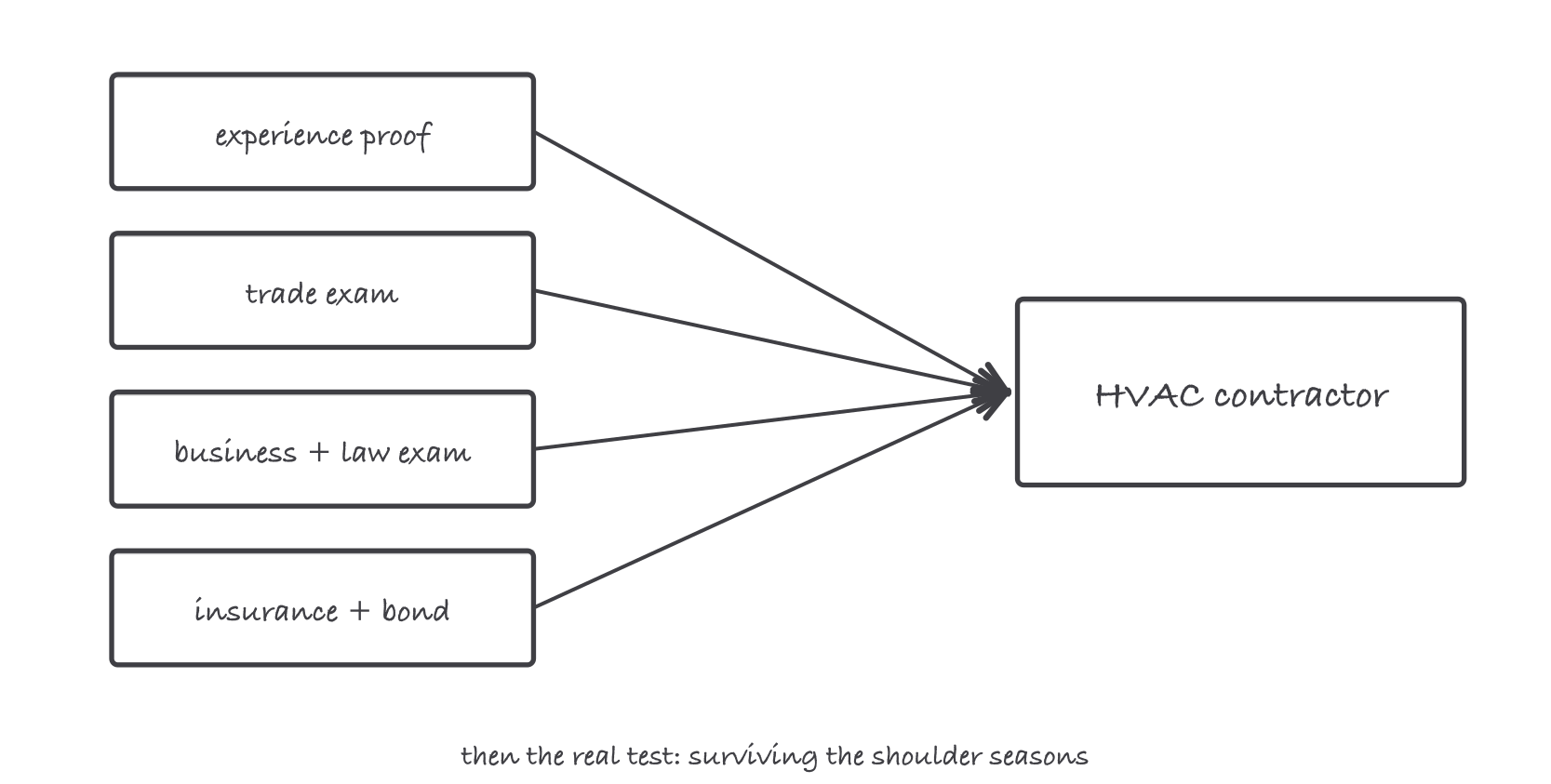
The package is standard; the seasonality is the part that kills shops
Where it bites
- Pricing service calls like a wage instead of like a business is the classic first-year mistake, your loaded cost per hour is roughly double the wage you used to earn.
- The license usually binds to a qualifying individual: plan for what happens to the business if that person leaves.
Sources
- Bureau of Labor Statistics, HVACR (career structure)
- NASCLA contractor business and law material (business-exam pattern, covered in the Business section)