Business · Electrical
Starting an Electrical Business
Assumes you know: The Electrical Contractor License
Starting an electrical business is mostly not an electrical problem. The license gets you to the starting line; what decides the next three years is pricing, cash flow, and the boring paperwork done right. Electricians rarely fail at electricity. They fail at receivables.
*Learn the Trades is a free study resource. We are not a licensing body, an authorized training provider, or an exam administrator. Reading this page does not award any card, license, or certification. Always verify requirements with the issuing authority linked in the sources.*The sequence that works
- Qualify. Master license (or your jurisdiction’s equivalent) in hand, contractor license package assembled: entity, insurance, bond, exams. The previous two lessons cover this.
- Choose a structure deliberately. LLC vs corporation vs sole proprietorship changes taxes, liability and how customers and insurers see you. The general contracting business subject covers the decision properly.
- Price from costs, not from competitors. Your loaded labor rate (wage plus taxes, insurance, vehicle, tools, dead time) is the floor. Markup on top is where the business lives. Guessing a round hourly number because the shop across town charges it is the classic first-year mistake.
- Control cash before you chase growth. Progress billing, deposits on materials, disciplined invoicing and lien-deadline awareness. A profitable job that pays in 90 days can still sink you in 30.
- Build the boring systems: job costing from day one, so you learn which work actually makes money; documentation habits; a renewal calendar for both licenses and every insurance policy.
What is different about electrical specifically
- The permit relationship. Your qualifier status is the business’s license to operate; protect it operationally (who pulls permits, who supervises) exactly as the board requires.
- Code-cycle churn is a cost. New NEC editions mean CE, sometimes new equipment practices; budget time for it.
- Service work vs contract work are different businesses. Service prices high and pays fast; contract work scales but stretches cash. Most healthy shops deliberately mix them.
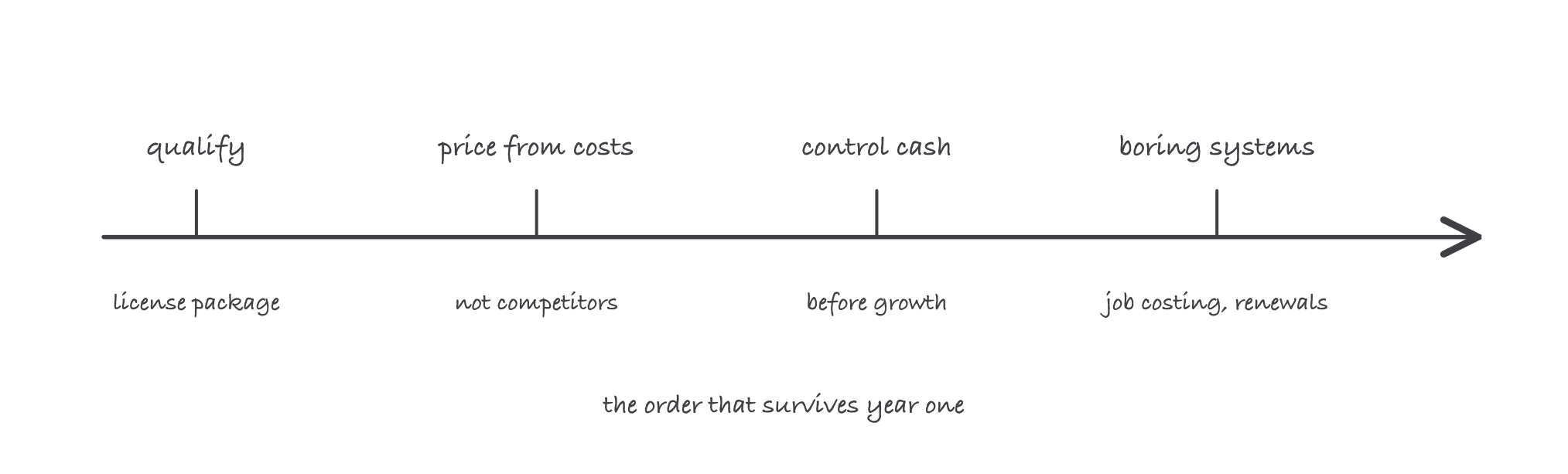
The license is step one of four, not the finish line
Where it bites
- Underbidding to win early work sets your market price. Cheap now is cheap forever with those customers.
- Hiring the first employee doubles your obligations, not your capacity: payroll, workers comp, supervision ratios under your license. Do it on purpose, not under pressure.